Lava Card review: what it really costs and who really gets one
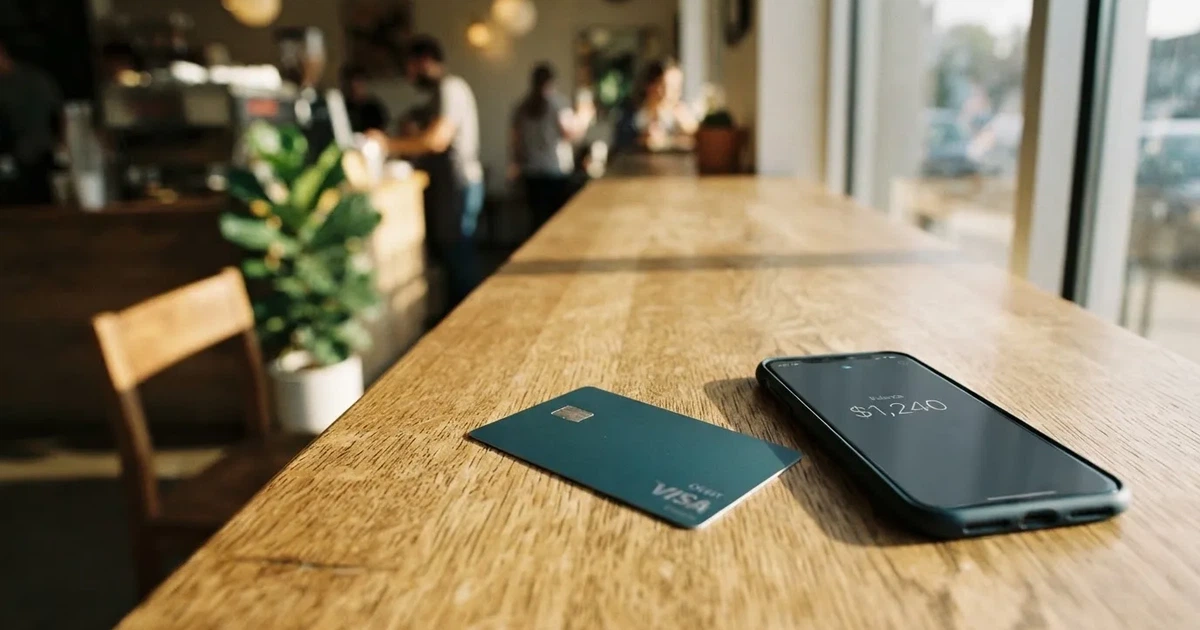
Lava is a crypto card that behaves less like a bank account and more like a prepaid wallet with a Visa number attached. You put value in — local currency or stablecoins — and the card spends from a US dollar balance, backed by collateral you hold on a supported blockchain. In return, Lava advertises that you get up to 5% of your spending back in bitcoin. That sounds like a straightforward trade, and on paper the fees are among the cleanest in the category: no annual fee, no foreign exchange fee, no spread on conversion. What stops it being a simple recommendation is not the price list. It is the gaps in it. The card’s public pages do not say what the issuance fee is, what the ATM terms are outside the International Terms document, how long verification takes, or which documents you must send. And the entity that runs the programme is not named on the homepage; the issuer is named only in the terms, and Lava states plainly that it is not a bank.

I’ll walk through who qualifies, what it costs, how you fund it, how it holds up in daily use and where it can go wrong — then line it up against three alternatives so you can see whether a different card fits your situation better. If you want the short answer first: this is a good card for a non-US holder who already holds crypto, wants bitcoin back on ordinary purchases, and can live with a short list of missing facts. It is a poor fit if you need a normal credit line, a savings function, or full disclosure before you commit money.
The conditions described here are current as of 21 October 2026.
The score: 7.1 out of 10
My overall mark for the Lava Card is 7.1 out of 10. That is not a rounding of a marketing claim; it is a weighted read of the six criteria below, and it sits where it sits because the fee structure pulls upward while disclosure and credit functionality pull downward. Here is how each criterion breaks down.
| Criterion | Mark | Why |
|---|---|---|
| Who can get it | 7 / 10 | Spending works at merchants in 150+ countries and the card is aimed at people outside the United States, with no country list published; but the terms only exclude US citizens and US sanctions-list names, which leaves other eligibility questions open |
| Cost | 8 / 10 | No annual fee, no currency fee and no spread, and a 2% ATM fee with a $1 minimum; the issuance fee is simply not disclosed |
| Top-up options | 7 / 10 | You can fund with stablecoins or local currency, and the collateral wallet sits on Ethereum, Polygon, Optimism or Arbitrum; specific coins are never named |
| Reliability and complaints | 7 / 10 | The issuer is Third National under a Visa licence and I found no complaints, but Lava says it is not a bank and collateral can be liquidated on a “Liquidation Event” |
| Everyday use | 6 / 10 | Visa, with both virtual and physical mentioned and a 2% ATM fee, but Apple Pay and Google Pay are not disclosed at all |
| Total | 7.1 / 10 | A clean fee list and a real issuer offset by missing disclosure and a product that is a spending wallet rather than a credit line |
The audience note behind that total is specific: Lava is built for non-US holders who want their purchases to come back as bitcoin. If that sentence describes you, the rest of this review will mostly confirm your expectations. If it does not, the cost and everyday-use marks tell you why the ceiling is where it is.
Who they will issue the card to
The published eligibility rule is narrow: you must attest that you are not a United States citizen and not on a U.S. sanctions list, and the card is intended for people outside the United States. Beyond that, the card’s public pages say nothing more about who gets approved. There is no country list, no residency requirement published, no tier structure, and no stated processing time for verification.
Two things follow from that. First, because there is no country list, absence of a country from Lava’s pages is not permission — the only exclusions stated are US citizenship and the US sanctions list. Second, the terms require true and complete information and exclude sanctions-listed persons, which is a standard formulation rather than a guarantee of approval.
What this means in practice depends on where you live, and I want to be direct about the three cases people ask about most:
- If you live in Russia, nothing in Lava’s public material addresses Russian residents specifically, and the terms say the card is meant for people outside the United States. That phrase does not exclude Russia on its own, but it does mean you cannot point to a published rule that says residents of Russia are eligible. Your ability to receive and use the card depends on delivery, verification and issuer risk decisions that are not stated publicly.
- If you live in another CIS country — Kazakhstan, Armenia, Georgia, Uzbekistan, Kyrgyzstan and so on — the position is structurally the same as Russia’s: not on any published exclusion list, but also not covered by any published inclusion. There is no “CIS region” carve-out anywhere in the terms.
- If you are a Russian citizen living elsewhere — the citizenship test in the terms excludes US citizens, not Russian citizens, and Russia is not named as an excluded jurisdiction. So citizenship itself is not the obstacle; the open questions are your country of residence, your proof of address, and whether the issuer’s screening treats your nationality as a risk factor. Screening on nationality is standard practice in this industry, and it happens regardless of what any webpage says.
The honest summary is that Lava’s eligibility disclosure is thin, and only the exclusions are certain. Treat “not stated” as “not promised” — the card’s public pages do not tell you your country is fine, and I would not plan around an approval that the documentation does not commit to. If you need certainty before you apply, the question to put to support is not “is my country allowed” in the abstract but “what do I need to send, and how long does it take” — because the latter is what actually decides your timeline.
How to get it
The application path is not documented in detail: Lava’s public pages do not state the KYC documents you must provide, the verification processing time, or the issuance fee. The terms do say that information you give must be true and complete and that you must not be on a U.S. sanctions list, but there are no tiers, no stated checks, and no published service levels.
The product itself is called the Lava Card, and Lava says it spends at 150 million merchants in 150+ countries. On the mechanics, Lava describes it in slightly different ways across its own pages, and the differences matter. The FAQ calls it a “secured” card that spends from your USD balance and explicitly does not offer unsecured credit; the International Terms call it a Visa credit card. Both virtual and physical cards are mentioned in the terms, and replacements are issued through the Lava account — but no countries, delivery times, delivery costs or replacement fees are listed anywhere public.
So the sequence a reader can actually reconstruct is short: find Lava, provide true and complete information, expect a verification step whose length is not stated, and then receive a card in a form the terms mention but do not describe. My advice is not to treat this page as an instruction manual. It is a record of what is and is not on the record, so that you know which questions to ask support before you send money or documents.
One practical point about the dual description: because the FAQ says the card is secured and draws on your USD balance, and the terms describe collateral and a Liquidation Event, you should assume there is no revolving credit line. Cash advances and balance transfers are explicitly not available. If you need to borrow rather than spend what you hold, this is the wrong product, whatever the “credit card” wording in the terms suggests.
What it costs: Fees
The headline cost story is genuinely good: no annual fee, no FX fee and no FX spread, and no exchange fee or spread on buying or selling bitcoin — but the issuance fee is not stated. That combination is what earns the cost mark an 8 out of 10. It is not a 10 because the one fee a prospective cardholder most wants to know before applying is exactly the one Lava does not publish.
Here is the full cost picture as it stands.

| Fee or limit | What is stated |
|---|---|
| Annual fee | None (“no annual fees”) |
| Issuance fee | Not stated |
| Foreign exchange fee | 0% |
| Cross-border fee | 0% |
| FX spread | None (“zero spread” on foreign currency) |
| Exchange fee / spread on bitcoin buy or sell | None, per Lava’s page |
| ATM withdrawal | 2%, $1 minimum, per the International Terms; a Lava page also describes ATM withdrawal as fee-free in all 50 US states, which is a US context. Free allowance and cash limit not stated |
| Spending limit | No fixed limit: it depends on the US dollar value of your collateral or available balance, can be changed or reduced to $0 at any time, and there is no minimum spend |
| Monthly fee or tier | None; a single tier for the card, with no paid card tiers on the card pages |
| Cash advance / balance transfer | Not available |
| Multi-currency balances | Not stated; the card spends from a USD balance |
| Monthly or daily transaction caps | Not stated |
Now let me put that against three everyday payments, because an abstract percentage means nothing until you know which line it lands on.
- A coffee in a country that is not the United States. The card converts from your US dollar balance at no FX fee and no spread, so the cost of the coffee is the coffee. This is the case Lava’s fee structure is genuinely built for, and it is the one that works cleanly.
- A hotel or a large online purchase abroad. Same 0% FX fee and 0% cross-border fee, so again the cost is the merchant’s price. The risk here is not cost but acceptance: a foreign BIN can be declined at a merchant that applies extra scrutiny, and a declined authorisation can leave a hold on funds for several days.
- Withdrawing cash at an ATM. This is where the fee list stops being free. The International Terms set 2% with a $1 minimum, and neither the free allowance nor a daily cash limit is stated — so the amount of your withdrawal can change the percentage you actually pay.
Two limitations belong in this section rather than in a footnote. Multi-currency balances are not stated; the card spends from a US dollar balance, which means your exposure to your home currency runs through the dollar, not around it. And on-chain network fees — the gas or bandwidth that the blockchain charges for your deposit — are charged by the network itself, not by Lava, so they appear in your cost even though they are not on Lava’s list.
How to Top up
You have four documented ways to put money in, and the coins you can use are never named. Lava says deposits can be made in local currency or in stablecoins. Its card page lists four routes: a stablecoin transfer, described as instant and available 24/7; a bank transfer from a local bank account; direct deposit; and borrowing US dollars against bitcoin via BLOC, which runs under separate terms with fixed rates from 6.50% to 8.50%. Lava says “no hidden fees,” but the deposit fee itself and the minimum top-up are not stated.
The collateral side is clearer about networks than about assets. The International Terms name the Supported Blockchain for your collateral wallet as Ethereum, Polygon, Optimism and Arbitrum. What is not stated anywhere is which specific coins or tokens qualify. That distinction is not pedantic: you may have assets on a supported network and still find that the asset itself is not accepted, so check before you transfer rather than after.
| Top-up route | Speed / terms | What is not stated |
|---|---|---|
| Stablecoin transfer | Instant, 24/7 | Which stablecoins, which networks, deposit fee, minimum top-up |
| Bank transfer from a local bank account | Not stated | Which banks, which countries, cut-off times, fees |
| Direct deposit | Not stated | Eligibility, minimum, timing |
| Borrow USD against bitcoin (BLOC) | Fixed rates 6.50% to 8.50%, separate terms | Borrowing limit, term length, what happens on default |
| Collateral wallet location | Ethereum, Polygon, Optimism, Arbitrum | Which coins or tokens inside those networks |
Two structural points about taking money out are worth knowing before you put money in. Cash advances and balance transfers are not available, so this card is not a way to reach cash through the credit system. And how you would withdraw a US dollar balance back to crypto or to a bank is not stated. For a card funded by selling or transferring crypto, “not stated” on the way out is a real question, not a detail — it is worth putting to support before you size up your balance.
Because the withdrawal route is undocumented, my practical posture is the same one I would take with any prepaid instrument: keep the balance that you are willing to treat as spending money until you have seen the exit work yourself.
Paying with it every day
Day-to-day spending is the card’s real job, and it does that job on a Visa number with both virtual and physical forms and a 2% ATM fee. Beyond that, several of the things people actually ask about are not disclosed, and I would rather name them than let you find out at the till.
On rewards, Lava’s headline is that you earn up to 5% back in bitcoin on every purchase. The detail is more graded. Lava’s own comparison article sets out 5% bitcoin back at partner merchants, 3% on other purchases for US cardholders and 1% for non-US cardholders, with an “up to 5%” headline. Rewards are issued once a transaction settles, there is a 100,000-satoshi minimum to redeem, and some merchants and categories are ineligible. Note what the grading means for you specifically: the headline 5% is a partner-merchant figure, and the non-US rate quoted in that comparison article is 1% on other purchases.
Included Visa benefits are listed and are conventional: extended warranty up to $25,000, global auto rental insurance, travel accident insurance and lost luggage insurance. Because Lava is not a bank, note that no deposit guarantee and no payout guarantee exist; the card programme operates under the supervision of the issuer, Third National, with governing law in Puerto Rico.
What is not stated on the daily-use side: whether you can add the card to Apple Wallet or Google Pay, and which merchant categories are blocked. Both are routine features on cards you may be comparing this against, and their absence from Lava’s pages is a real gap in the everyday-use picture — which is part of why that criterion scores 6 rather than higher.
Disputes have a defined path, which is better than most. You report a disputed charge within 60 days after it posts to your statement; the merchant is tried first; a chargeback resolved in your favour is credited to a current or future statement; and card issues go to the Issuer through the cardholder agreement channels. Under US law, US debit card reversal rights come from Regulation E and credit card rights from Regulation Z, and prepaid-card coverage varies and should not be assumed — so treat the 60-day window as the operative fact rather than a guarantee of a particular outcome.
The app is available on mobile and web, though the site does not link to the App Store or Google Play. One unofficial data point, from a third-party aggregator with data updated 2026-02-16 and not confirmed by Lava: the App Store listing “Lava: Secure Bitcoin Loans” shows 4.8 out of 5 from 132 reviews. That is a lending app listing rather than a card listing, so treat it as weak evidence about the card specifically.
What can go wrong
The most serious risk is not fraud or a complaint — I found none of either — it is that your collateral can be liquidated and your account can be suspended, on terms that are disclosed but easy to skim past.
Working through the failure modes in the order I would worry about them:
- Liquidation Event. The terms say collateral can be liquidated on a “Liquidation Event”, defined as payment unpaid for one calendar day, or collateral value below the charges. A collateral-backed card in a falling market is a different risk profile from a bank balance, and this is the mechanism that expresses it.
- Account suspension or cancellation at the issuer’s discretion. The Issuer may suspend or cancel the account at any time. Closure does not cancel repayment obligations, and prepayment carries no penalty — but the ability to switch the account off is not yours.
- It is not a bank. Lava states that it is not a bank. That is not a criticism; it is the shape of the product, and it means deposit-guarantee thinking does not apply.
- Unclear legal entity and issuer on the homepage. Lava’s homepage does not name the legal entity, the issuer or any licence. The issuer is named only in the terms: Third National, under licence from Visa, with an address at 2100 Southbridge Pkwy STE 650, Birmingham, AL 35209. Governing law is Puerto Rico and arbitration is in New York. Lava says it is not a bank.
- Acceptance risk at the merchant. A foreign BIN can be declined because a merchant’s lookup reveals the issuer country, and a declined authorisation can leave a hold on funds that stays for several days, typically up to 7.
- Reversibility. Blockchain transfers are irreversible. A deposit sent on an unsupported network, or to an address belonging to a different network, can be lost or need manual recovery with no guarantee. Stablecoins are not censorship-proof either: Tether says it disables tokens in wallets on the OFAC sanctions list and has frozen funds tied to illicit activity.
- Counterparty risk with a custodian. Custodial platforms have a history of failure — Mt. Gox at about US$350 million reported stolen across 2011–2014, Coincheck at about US$400 million in 2018, and Ronin Network at US$625 million in 2022. Lava does say it does not rehypothecate, that it does not trade, lend out or otherwise use your funds, and that its infrastructure minimises trust and eliminates single points of failure, with passkeys, account controls, and a daily spending limit you can set in the app. Whether insurance covers the balance is not stated.
Two structural reminders that sit underneath all of this. Visa and Mastercard do not issue crypto cards themselves; they license issuers and can suspend a programme. Visa terminated its global agreements with FTX on 13 November 2022 and the FTX US debit card was wound down by its issuer. WaveCrest, a Visa card issuer that supplied crypto card brands, was suspended by Visa in Europe in 2018, closing all its Visa programmes. Closures typically run in a familiar sequence: a notice period, then spending and loading stop, then users are asked to withdraw remaining balances. I am not suggesting that is imminent here — the issuer is named and licensed, and I found no official incidents, no user reports and no news of complaints. But it is the reason a programme manager’s continuity is never the same thing as a bank’s, and it is worth holding collateral you actually need elsewhere.
On the positive side, support is documented: 24/7 US-based client services, reachable at [email protected] or (347) 588-9745, described as connecting you directly to a real human, plus 24/7 Visa customer service. Whether support operates in Russian is not stated. Coverage was reported at launch by Bitcoin Magazine as a Visa credit card launch, and Starlink and Discord were added as partner merchants.
What to take instead
Lava is not the only option, and the honest comparison depends on which of two different things you want: a revolving credit card that pays crypto rewards, or a prepaid card you fund yourself. Lava sits in the second category but describes itself in the language of the first, so it is worth seeing how the alternatives split.
| Card | Type | Marked score | Annual fee | Key cost facts | Funding |
|---|---|---|---|---|---|
| Lava | Secured, collateral-backed | 7.1 / 10 | None | No FX fee, no spread; ATM 2% with $1 minimum; issuance fee not stated | Local currency or stablecoins; collateral wallet on Ethereum, Polygon, Optimism, Arbitrum |
| Gemini | Credit card, Mastercard World Elite | 4.9 / 10 | None | No foreign transaction fees; crypto conversion not applicable because rewards are paid in crypto | Not a prepaid card — a credit card paid off in fiat |
| Trastra | Prepaid debit card | 4.1 / 10 | Not stated | Fees not stated | “Topped up using cryptocurrencies in your Mover wallet”; coins and networks not named |
| RedotPay | Virtual and physical | 6.9 / 10 | No monthly or annual fee; account maintenance waived | Virtual card application 10.00 USD, physical 100.00 USD (not cancellable or refundable once paid); transaction fee 1.00%, 1.20% on a non-default currency; some merchants 1.5% with a 0.50 USD minimum | On-chain crypto deposit, or buying crypto in the app; USDT-TRC20 minimum 1 USDT after network fees |
If you want credit and rewards rather than a funded balance, Gemini is the structural opposite of Lava. It is a Mastercard World Elite credit card with no annual fee and no foreign transaction fees, and its rewards are graded by category: 4% on gas, electric vehicle and transit spending up to the first $300 a month, 3% on dining, 2% on groceries and 1% on everything else, paid instantly in Bitcoin or 50+ other cryptos on Gemini and changeable at any time. There is a 10% Vault Rewards rate at some merchants, capped and varying, plus referral terms of $50 crypto each, $250 per five referrals, up to 50 per year. The catch is that Gemini pays the balance in fiat, so it solves a different problem: it does not let you spend crypto you are holding. Its card page does not state eligibility, and Russia and Belarus are not mentioned.
If you want a prepaid card and live in Europe, Trastra is worth a look. It is a prepaid debit card accepted at Visa merchants worldwide, listed in 31 countries including Germany, France and the UK, with a stated plan to become available to all residents of the European Economic Area; for non-European residents the page says “Not at the moment,” so the rule appears to be residence-based. It is topped up using cryptocurrencies in your Mover wallet, though the coins and networks are not named. The reason I mark it low is disclosure, not function: no fees, no cost and no rewards are stated on the page, and Russia and Belarus are not mentioned. I have not included it as a recommendation, only as the clearest example of the same category with thinner information.
If you want the most explicit and complete disclosure of the four, RedotPay is the one to study — and, importantly, it is the one that will tell you plainly if your country is out. Two official lists word the rule differently, and I would read both. The KYC list of unsupported countries says that a citizen of any listed country cannot complete identity verification or use RedotPay’s services, and that the restrictions are based on local regulations and sanction policies, not on individuals. Russia, Belarus, Ukraine and Serbia appear on both lists; Georgia, Armenia, Kazakhstan and the UAE appear on neither. A separate card-issuance list dated August 28, 2026, covering 47 places, adds India, Indonesia, Morocco, Nepal, Singapore and Turkey as places whose residents are ineligible for both virtual and physical cards and cannot use them as a billing address — citizenship is not mentioned in that second list. That contrast between a citizenship-based list and a residence-based list is exactly the ambiguity Lava leaves open for you, and it is the single most useful thing in this comparison.
RedotPay’s economics are also spelled out: a 1.00% transaction fee that is the crypto conversion fee, waived on transactions in the default currency and 1.20% on a non-default currency; small authorisations of 1.00 USD or less waived for the first five per card per month and 0.2 USD after; declined transactions waived three per month and 0.5 USD after; some merchants carrying 1.5% with a 0.50 USD minimum, first three per month waived, including Gulf Health Counsel, Free Fire, PUBG Mobile, Brawl Stars, eFootball, Facebook Ads and Discord, with the fee table effective December 1, 2025. Its card application costs 10.00 USD virtual and 100.00 USD physical, the latter not cancellable or refundable once paid, with virtual replacements at 5.00 USD first and 10.00 USD each later; a 5 USD welcome reward cannot be applied to the issuance fee. There is a paid tier, RedotPay Pro, at 12.90 USD monthly or 129.00 USD annual. On rewards, no card cashback rate is stated.
Set against that, Lava’s cost advantage is real: 0% FX against RedotPay’s 1.00% and 1.20%, and no stated application fee against 10.00 and 100.00 USD. Lava’s disclosure advantage is weak, and RedotPay’s eligibility lists are the more useful thing to have when you are outside the US.
Who I would recommend it to
I would recommend the Lava Card to a person who already holds crypto, lives outside the United States, spends in more than one currency, and wants part of every purchase back in bitcoin without holding a credit line. Concretely, that means someone with a stablecoin balance or local-currency income who pays for subscriptions, travel and everyday goods abroad and is comfortable with a USD-denominated spending balance rather than a multi-currency one. The 0% FX fee and no spread make it a sensible default spending instrument in exactly that situation, and the collateral-wallet design means the collateral is not pooled into a lender’s balance sheet.
I would not recommend it as a first crypto card if any of these apply to you: you need credit rather than a funded balance; you want a card you can add to Apple Wallet or Google Pay today, since that is not disclosed; you need a bank deposit and deposit-guarantee protection, since Lava says it is not a bank; you want to draw cash cheaply, since the ATM fee is 2% with no free allowance stated; you are relying on the “up to 5%” as a flat rate, since the non-US figure in Lava’s own comparison article is 1% on other purchases; or you need to know exactly which coins and networks are accepted before you commit, because neither is named.
And for anyone reading this from Russia, or from another CIS country, or as a Russian citizen living elsewhere: the eligibility evidence here is an exclusion, not an inclusion. Lava’s terms exclude US citizens and US sanctions-list names and say the card is for people outside the US; they do not exclude Russian citizens, and they do not say that residents of your country are eligible either. Treat that as unknown, keep your sizing modest until you have confirmed the deposit and withdrawal routes with support, and do not read any statement on this page as a promise that your documents will be accepted.
Frequently asked questions
What is Lava Card?
Lava Card is a crypto payment card that spends from a US dollar balance you fund yourself, rather than drawing on a credit line. Lava says you can spend at 150 million merchants in 150+ countries, and that the card is secured by collateral held in a wallet on Ethereum, Polygon, Optimism or Arbitrum. It runs on Visa, with virtual and physical forms mentioned in the terms, and advertises that you earn up to 5% back in bitcoin. Lava states that it is not a bank.
How does Lava Card work?
You put money in — by stablecoin transfer, bank transfer, direct deposit, or by borrowing dollars against bitcoin through BLOC at fixed rates of 6.50% to 8.50%. That value sits as a US dollar balance, and the card spends from it. Because there is no fixed limit, your spending limit follows the dollar value of your collateral or available balance, and it can be changed or reduced to $0 at any time. Collateral can be liquidated on a “Liquidation Event”, meaning a payment unpaid for one calendar day or collateral value below the charges.
Is Lava a bank?
No — Lava says so itself. The issuer named in the International Terms is Third National, under licence from Visa, at 2100 Southbridge Pkwy STE 650, Birmingham, AL 35209. Governing law is Puerto Rico and arbitration is in New York. Because the programme is not a bank deposit, deposit-guarantee protection does not apply, which is the main practical difference from holding the same money in an ordinary account.
Is Lava Card available in my country?
There is no country list on Lava’s public pages, so you cannot confirm eligibility from them. The published rule is that you must not be a United States citizen and must not be on a U.S. sanctions list, and the card is intended for people outside the US. Neither Russia nor Belarus is mentioned. Absence of your country from the pages is not permission, so ask support what documents apply to residents of your country before you apply.
How much does the Lava Card cost?
The disclosed costs are low: no annual fee, no foreign exchange fee, no cross-border fee, no FX spread, and no exchange fee or spread on buying or selling bitcoin. ATM withdrawals cost 2% with a $1 minimum per the International Terms, while a Lava page describes ATM withdrawal as fee-free in all 50 US states, which is a US context. The issuance fee is not stated, and the free ATM allowance and cash limit are not stated either.
Is Lava Card free?
Partly. There is no annual fee and no paid card tier on the card pages — it is a single tier. But “free” covers the recurring cost, not the one-off or usage costs: the issuance fee is not disclosed, ATM withdrawals cost 2% with a $1 minimum, and on-chain network fees for a deposit are charged by the blockchain rather than by Lava.
How do I top up the Lava Card?
Lava lists four routes: a stablecoin transfer, which it describes as instant and 24/7; a bank transfer from a local bank account; direct deposit; and borrowing US dollars against bitcoin through BLOC, under separate terms at fixed rates of 6.50% to 8.50%. The collateral wallet sits on Ethereum, Polygon, Optimism or Arbitrum. The specific coins, deposit fee and minimum top-up are all not stated.
Can I add Lava Card to Apple Wallet?
Lava’s public pages do not say. Whether the card can be added to Apple Wallet or Google Pay is not disclosed, along with which merchant categories are blocked. The app itself is available on mobile and web, but the site does not link to the App Store or Google Play listings, so check with support before you plan around contactless mobile payments.
What are the main risks with Lava Card?
The main one is that collateral can be liquidated on a “Liquidation Event”, and the issuer may suspend or cancel the account at any time. Beyond that, Lava is not a bank, the legal entity and issuer are not named on the homepage, blockchain transfers are irreversible if sent on the wrong network, and a foreign BIN can be declined at some merchants. I found no official incidents and no user complaints, but the disclosure gaps are themselves a risk.
How do I withdraw money from Lava?
The public pages do not say. Cash advances and balance transfers are explicitly not available, and how to withdraw a US dollar balance back to crypto or to a bank account is not stated. If getting your money out matters to you, ask support before you deposit more than you are willing to have sitting there, and test the exit with a small amount first.
Where can I use Lava Card?
Lava says you can spend at 150 million merchants in 150+ countries, and the card works wherever Visa is accepted. The practical caveat is acceptance rather than coverage: a foreign-issued card can be declined because a merchant’s BIN lookup shows the issuer country, and a declined authorisation can leave a hold on funds for several days, typically up to 7. ATM use costs 2% with a $1 minimum.
Prepared by the Crypto Card Rating editorial staff.