Trastra Card Review: The Euro Prepaid Card With More Questions Than Answers
If you are reading this, you are probably trying to answer a fairly ordinary question: can I get a card that spends a euro balance I control, and what will it actually cost me? Trastra promises exactly that, through the Mover wallet, from a card issued by a licensed Lithuanian e-money institution. That is a real product with real numbers attached to it. It is also a small operation whose own public pages leave several of the questions you would want answered blank.
My score for it is 4.1 out of 10, and I want to be straight about where that number comes from before we go further. The costs are not terrible, the top-up story is genuinely attractive, and the card runs on ordinary Visa rails inside Europe. What drags the score down is a combination of things that are hard to unsee: eligibility that stops at the edge of Europe, a fee and limit page that documents the essentials but not the edges, a Trustpilot score of 2.0 out of 5 across 747 reviews, and third-party user reports of frozen funds and denied withdrawals that the card’s own pages do not address at all.
The conditions described on this page are current as of 21 October 2026 (verified against the Mover knowledge centre).
Verdict: 4.1 out of 10, and the reasons why
The card suits one specific person quite well: a resident of the European Economic Area who already holds crypto, wants to convert it to euros without a separate exchange step, and is content to keep that balance inside a prepaid card rather than in a current account. For that person the free crypto-to-euro exchange and the dedicated euro IBAN are the two features that justify the whole thing.
It suits everyone else poorly, for three separate reasons, and any one of them would be enough. If you live outside Europe, you cannot get it — the page says so directly. If you are the kind of customer who reads a fee schedule before opening an account, you will notice that the ATM allowance is missing, the document requirements for identity checking are missing, and the delivery time is missing. And if you have been burned by a crypto card before, a 2.0 Trustpilot score is going to stop you cold, fairly or not.
Here is the score broken down by criterion.
| Criterion | Mark | Why |
|---|---|---|
| Who can get it | 5 / 10 | Available in 31 listed countries, including Germany, France and the UK; promised for all EEA residents; non-European residents are told “Not at the moment” |
| Cost | 3 / 10 | EUR 9.00 to order, EUR 15.00 a year to keep, 3% on any purchase not in euro, EUR 2.25 to take out euros; delivery is free |
| Top-up options | 4 / 10 | Crypto top-up through the Mover wallet with a free exchange to euro, but no coins or networks are named |
| Reliability and complaints | 3 / 10 | Issued by UAB “Finansinės paslaugos ‘Contis’” under Bank of Lithuania licence No. 53; Trustpilot 2.0 of 5 from 747 reviews, with reports of frozen funds and denied withdrawals |
| Everyday use | 6 / 10 | Cash withdrawals accepted at ATMs across Europe, a dedicated euro IBAN, and — per an unofficial source — Google Pay and Apple Pay |
| Total | 4.1 / 10 | A workable euro card for a narrow audience, held back by availability limits, gaps in its own fee disclosure, and a poor public review record |
Two of those marks deserve a word of explanation before we get into the details. The everyday-use mark of 6 is the highest in the table and it is still not a pass: ATMs and an IBAN cover the fundamentals, but the page never names a virtual card and never mentions merchant categories that are blocked, so you are buying the basics on trust. The cost mark of 3 is not a comment on whether the fees are high in absolute terms — EUR 15 a year is not extreme — it is a comment on how little of the total cost picture the company has chosen to publish.
Will they give you the card?
They will give it to you if you live in one of 31 listed countries, and the page names Germany, France and the United Kingdom among them. It also says the card “will be available for all residents of the European Economic Area (EEA)”, which reads like a promise of coverage rather than a promise of date. The rule that matters most to you is this one: for non-European residents the page says “Not at the moment.” No qualifying date, no waiting list.
So the eligibility test is residence-based, not citizenship-based. That is worth being precise about, because people often assume the opposite. Neither Russia nor Belarus is mentioned anywhere on the page — not excluded, not included. What that means in practice is that a Russian citizen living in Berlin, Warsaw or Amsterdam falls under the same residence rule as anyone else in those countries, and a Russian citizen living in Moscow does not. Citizenship is not the gate here; where you sleep is.
For anyone reading this from outside the EEA, the honest summary is that this card is not a solution to your problem. Not because anyone has singled you out, but because the product has not been built for your region and the company says so plainly. If you are outside Europe and trying to get an ordinary card issued to you, this belongs on the shortlist of things to read about rather than the shortlist of things to try.
There is one further eligibility question the page leaves open, and I would not want you to guess at it. Whether a card issued in, say, France to a resident of France can be used by someone whose billing address is somewhere else is not stated. That matters because of how card checks work: a merchant can look up the issuing institution and country from the first six or eight digits of the card number, and apply extra scrutiny when that issuer country does not match the address being billed. A euro card issued in the EEA will not look unusual to a shop in the EEA, which is a genuine advantage of this product for its core audience.
How to get it
The sequence is short, and that is partly the good news and partly the problem. You open a payment account, you order the card, it is delivered to you, and you fund it from crypto in your Mover wallet. The order fee of EUR 9.00 is charged from your first top-up, and card delivery is listed as free to the 31 listed countries.
What the page does not tell you is more significant than what it does. The documents you will need for identity verification are not stated. Whether proof of address is required is not stated. The minimum age is not stated. How long delivery takes is not stated. What a replacement card costs is not stated. If you are the kind of person who wants to know on day one whether a passport and a utility bill will be enough, you will have to ask support, and the support address is a single email inbox at [email protected] with a knowledge centre at faq.viamover.com. The languages it operates in and its opening hours are not stated either.
What the page does cover on security is reasonable, and worth listing because it is the part most crypto card pages skip. Every transaction is verified by Visa and by 3-D Secure. Logging in takes your wallet password plus a two-factor one-time code. A new device or a new browser has to be approved by email. So the authentication story is a normal fintech story, not a crypto-anything-goes story.
One more thing about the card itself, because it changes how you should think about your money. It is a prepaid debit card. That means it spends a balance you have already loaded, not a line of credit against an account. There is no overdraft, no borrowing, and no bill arriving at the end of the month. It is accepted at Visa merchants worldwide. Whether a virtual card exists alongside the physical one is not specified on the page; the presence of ATM support implies a physical card, but that is an inference on my part rather than a published statement.
What it really costs: Fees and limits
Here is everything the company publishes about money, in one place, so you can see the shape of it without hunting.
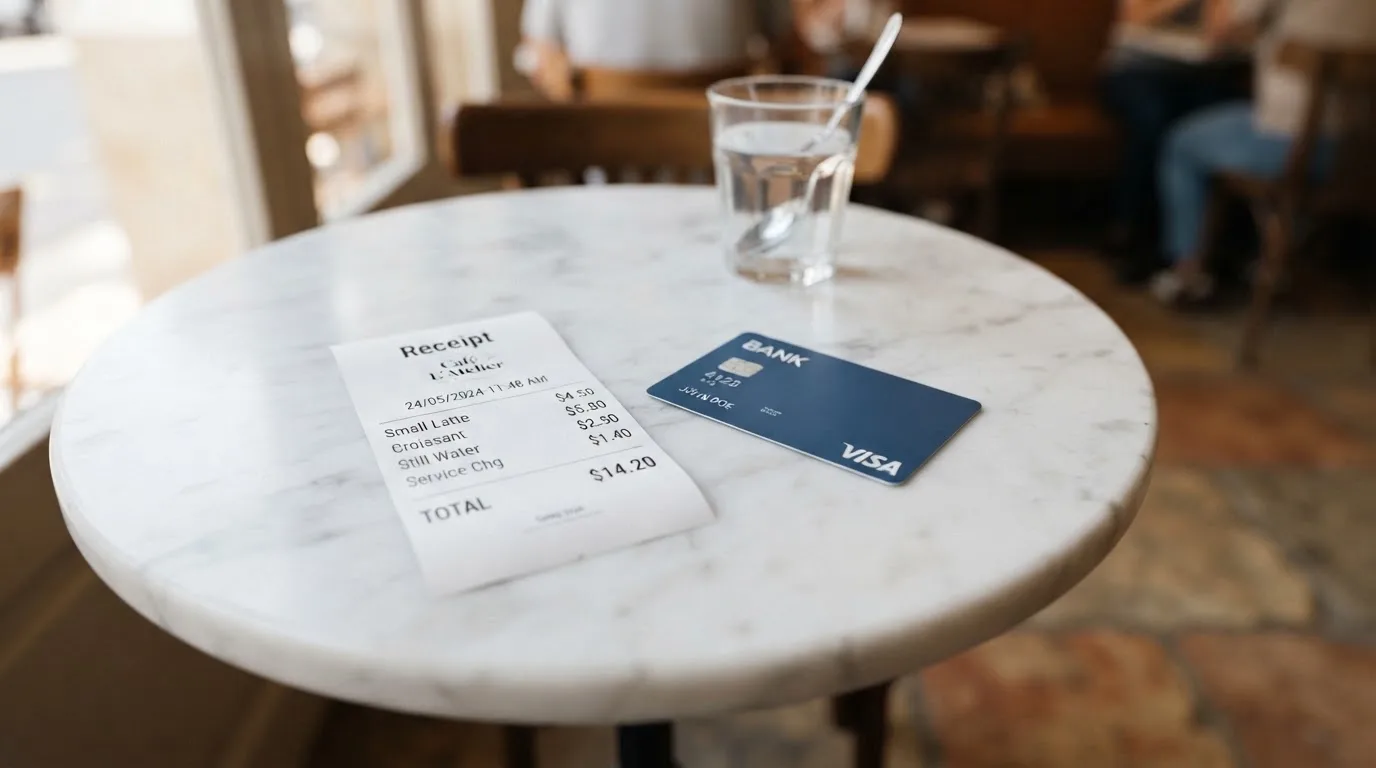
| Fee or limit | Amount |
|---|---|
| Payment account creation | Free |
| Card order | EUR 9.00, charged from the first top-up |
| Card delivery | Free, to the 31 listed countries |
| Card management fee | EUR 15.00 per year, not charged by Mover; first charge within 45 days of ordering |
| Purchase in a currency other than EUR | 3% |
| Internal card-to-card transfer | EUR 0.20 |
| Crypto to EUR exchange | Free, rate set at the time of the transaction |
| Balance inquiry at an ATM | EUR 0.35 |
| PIN change | EUR 0.40 |
| ATM withdrawal in euro | EUR 2.25 |
| ATM withdrawal in a non-euro currency, or outside the EEA | EUR 2.25 plus 3% |
| Maximum card balance | EUR 8,000 |
| Daily card spend | EUR 7,700 |
| Daily ATM withdrawal | EUR 300 |
| Overall daily spend, purchases plus ATM | EUR 8,000 |
| Weekly, monthly and annual limits | None |
| Monthly or annual account fee | Not stated |
A few things to notice. There is no weekly, monthly or annual spending cap at all, which means the daily limits are the only ceiling on your exposure — worth remembering on its own. The EUR 8,000 maximum balance is the real structural limit: this is a spending card, not a place to hold a large balance or run payroll from. The card management fee is not charged by Mover, which tells you the EUR 15.00 comes from the card side of the business rather than from the wallet you are already using.
Now let me run three ordinary payments through this, because fee percentages only mean something once they touch a real amount.
A EUR 9.00 card order fee, charged from your first top-up. That is the one-time cost to get the card, and because it is charged from the top-up rather than as a separate invoice, it is effectively the first transaction you make. It is a predictable starting cost.
A EUR 15.00 annual management fee. This is the ongoing cost of keeping the card, and it is charged within 45 days of ordering. It is a flat fee, not a percentage, and it is the main cost you should budget for year to year beyond your actual spending.
Taking EUR 100 out of a cash machine in Paris. EUR 2.25 is the flat fee for a euro withdrawal. Take the same EUR 100 out in a currency other than euro, or outside the EEA, and it is EUR 2.25 plus 3%. The page also warns that some ATM providers may add their own fees on top, which is the part that turns a predictable cost into an unpredictable one.
The honest characterisation of the cost picture is this: euro-to-euro is cheap, and everything else carries a premium. If your spending is entirely inside the euro area, this card is inexpensive to run. If you travel, or if a meaningful share of your subscriptions bill in dollars, the 3% is the cost of doing business and it is the single most important number on this page.
One gap I want to name once here and then leave alone: the page does not state how much you can withdraw without a fee, whether there is a free-allowance count, or what the ATM withdrawal fee looks like for additional attempts. The EUR 300 daily ATM limit is stated; the pricing of volume above it is not.
How to Top up
The funding story is the best thing about this card, and it is genuinely simple. You top up using cryptocurrencies in your Mover wallet. That is the mechanism the page describes, in those words. When the crypto arrives, the conversion to euro is free, with the rate set at the time of the transaction. No exchange fee, no spread disclosed on the page, no separate account to fund first.
The catch is the same one you have probably heard before, and it is a big one: no coins and no networks are named. Not one token is listed. Not one chain is specified. For a card whose entire appeal is that you convert crypto to euros for free, this is the single most consequential omission on the page. You are invited to send an asset to a wallet without being told which assets or which chains are accepted. If you send on a network the provider does not support, or to an address belonging to a different network, the transfer can be lost outright or need manual recovery from support with no guarantee attached.
There is a reason this gap bites harder here than elsewhere. Blockchain transfers are one-way. There is no equivalent of a recalled cheque. And the two most common dollar-pegged tokens have very different footprints: one has been issued across Ethereum, Tron, Solana, Polygon, Avalanche and others, while the other is natively supported on 38 networks as of 16 September 2026, including Ethereum, Solana, Base, Polygon PoS, Avalanche, Arbitrum and Stellar — and notably not on Tron, where Circle stopped supporting it in February 2024. Send the same symbol down the wrong chain and one of these two arrangements applies, not both.
Two smaller funding details. The EUR 9.00 card order fee comes out of your first top-up, and the page says it can be covered by Smart Treasury bonuses. The minimum top-up is not stated, and there is no stated option to add fiat directly — the described flow is crypto in, euro balance out. Fees for moving your balance back to crypto, and any handling fee for closing the account, are not stated.
The card can also move money in the other direction, which is worth knowing: it can be used for transferring money to local banks, on top of ATM withdrawals.
Paying with it every day
Day-to-day, this is a euro card with an IBAN. That sounds unglamorous and it is exactly why it is useful. You get a dedicated personal euro IBAN, so it behaves like an ordinary payment account for anything that expects a bank transfer rather than a card number — rent, a direct debit, an online payment that refuses prepaid cards.
Cash works too: withdrawals are accepted at ATMs across Europe. There is a caveat worth carrying in your head for a prepaid card specifically. A merchant can look at the first digits of your card number, see that it is a prepaid card issued in a particular country, and decline it — some merchants do this by policy, not by law, and the list of merchant categories that get blocked varies by issuer entirely. That is the general risk with this product category rather than a specific Trastra policy, and the Trastra page does not publish its blocked-category list.
On mobile wallets, I have to be careful about the source here. The company’s own self-description on its Trustpilot company page says the card can be used with Google Pay and Apple Pay. I did not find that claim confirmed on the card’s own pages, so treat it as unofficial until you see it in the app or in the issuer’s documentation. It is also worth knowing how this mechanism works before you assume it is automatic: a mobile wallet replaces your card number with a device-specific number stored in the Secure Element of the phone, never on the company’s servers, and each payment carries a one-time code. The card issuer can separately restrict that tokenised number — blocking it on magnetic stripe, phone or website use, for example.
On apps and support, the mobile apps exist for Android and iOS, and there is a web app at app.viamover.com. Store ratings I did not read, so I will not characterise them. Rewards are not stated on the page — there is no cashback rate, no points scheme and no fee for the card in anything other than the EUR 15.00 management fee.
The one everyday-use topic that is genuinely blank is disputes. The chargeback process — how you challenge a payment, what reason codes exist, how long it takes — is not stated anywhere on the page. If a charge goes wrong, the page gives you nothing to work from. That is a bigger absence than it sounds: a chargeback is the refund a card issuer orders to settle a dispute, with defined reason codes such as fraud, duplicate billing or goods not received, and prepaid-card coverage varies by jurisdiction and should not be assumed.
What can go wrong
Start with the thing a reader should weigh most heavily, because it is the only part of this review that involves other people’s money at risk.
The public review record is bad, and it is bad in a specific way. On Trustpilot, Trastra sits at 2.0 out of 5 from 747 reviews. Five-star reviews are 65% and one-star reviews 23%, and only 7 reviews in the last 12 months carry that split, which tells you the recent picture is thin as well as poor. Reading the recent reviews, earlier in the day the same page showed 1.8 from 758. The recurring themes in 2025 are blocked or frozen funds and denied withdrawals, between January and December; support that did not answer and sent copy-paste replies, January to May; a maintenance window during which the balance was inaccessible, March to June; and worries about insolvency or closure, March to June.
Two honesty caveats that belong in the same breath as those reports. They are user reports on a third-party site, unverified by me. And they concern the Trastra service, not necessarily the Mover card — the distinction matters if you are deciding whether to trust the wallet or the card, because those are different products with different risk profiles.
Unverified reports about a related company. There is no dated official news. Separately, third-party Trustpilot user reports mention a March 2025 email about the initiation of insolvency proceedings against a related entity, and May 2025 claims that the company is closing, with police information about bankruptcy proceedings. I could not confirm any of this from the company’s own communications. I am reporting that users said it, not that it happened.
Where the money actually sits. The issuer is UAB “Finansinės paslaugos ‘Contis’”, holding electronic money institution licence No. 53 from the Bank of Lithuania. That is a real licence from a real supervisor, and it is the single strongest fact in this review. The company is explicit about the flip side: this is an e-money product and it is not covered by the Deposit Insurance System of the Republic of Lithuania. That is the standard position for e-money, and it is still the thing to internalise. Your balance is safeguarded — the page says funds are held in a segregated account — but a safeguarded e-money balance is not a bank deposit. An e-money institution can issue e-money, payment cards and wallets, but it cannot lend, and it can be wound up.
Regulatory transition is happening in this market right now. The EU’s markets-in-crypto-assets regulation took legal effect in June 2023, with its rules on asset-referenced tokens and e-money tokens applying from 30 June 2024 and the remaining provisions, including crypto-asset service provider rules, from 30 December 2024. The transitional period for providers operating under national law runs until 1 July 2026 or until they are authorised or refused authorisation, whichever comes first. A card is regulated separately from the crypto side — it is a payment service under e-money and payment-services law — which is why a crypto card like this one sits on two licences rather than one. There is an interim public register of authorised providers, white papers and non-compliant entities maintained by ESMA, and it is worth knowing that a provider authorised in one member state can serve the whole EU.
A declined payment can leave money stuck for days. Declined authorisations may place a hold on funds that can remain for several days. Combined with a maintenance window in which a balance was inaccessible, that is the mechanism behind most of the “my money is frozen” complaints on that review page. Whether you can freeze the card yourself in the app is not stated.
No safety net on prepaid cards. In the US, debit card reversal rights come from one regulation and credit card rights from another, and prepaid-card coverage varies; it should not be assumed. Under 3-D Secure, liability for a fraudulent online payment can shift from the merchant to your bank, or, according to critics, to you. This product is a prepaid card in the European Economic Area, so US-specific rules do not apply — the general point stands: what recourse you have depends on the law of the country your issuer operates under.
I am not going to tell you it is safe, and I would be misleading you if I did. What I can tell you is what the failure modes are, so that you can size your exposure accordingly.
What to take instead
Three cards come up constantly when people compare crypto payment products, and they fail this comparison for different reasons. I have put them side by side so the trade-offs are visible rather than asserted.
| Trastra | Gemini | Lava | RedotPay | |
|---|---|---|---|---|
| My score | 4.1 / 10 | 4.9 / 10 | 7.1 / 10 | 6.9 / 10 |
| Card type | Prepaid debit, Visa | Mastercard World Elite credit card | Lava Card | Virtual and physical, Visa |
| Annual fee | EUR 15.00 | No annual fee | No annual fees | No account maintenance fee; Pro tier 12.90 USD monthly or 129.00 USD annual |
| Ordering cost | EUR 9.00 | Not stated | Not stated | Virtual 10.00 USD; physical 100.00 USD, non-refundable once paid |
| Foreign currency | 3% | No foreign transaction fees | No FX fees and no FX spread | 1.00% transaction fee; non-default currency 1.20% |
| Funding | Crypto in Mover wallet, coins and networks not named | Credit card, repaid in fiat | Local currency or stablecoins, networks not stated | On-chain crypto deposit, or buy ETH, USDC or USDT in the app |
| Rewards | Not stated | 4% gas, EV and transit on the first $300 a month, 3% dining, 2% groceries, 1% other, paid in crypto | Up to 5% back in bitcoin, conditions not stated | 5 USD welcome reward, spending only, valid 30 days; no cashback rate stated |
| Who can get it | 31 listed EEA countries; non-European residents not at the moment | Not stated on the card page | Not stated | Long restricted list, described below |
Lava scores highest at 7.1 and its fee story is the cleanest of the three: no annual fees, no FX fees and no FX spread, up to 5% back in bitcoin, spending at 150 million merchants in over 150 countries, and funding by local currency deposit or stablecoins. What I could not establish is who is eligible — the page says nothing about applicants, and nothing about Russian or Belarusian citizens or residents either way. That is a bigger gap than it sounds when eligibility is the first thing you need.
RedotPay at 6.9 is the most explicit about who it will not serve, which is unusual and arguably a mark of confidence. Its identity-verification page states that if you are a citizen of any listed country or region you cannot complete verification or use the service, and that the restrictions are based on local regulations and sanctions policy rather than on individuals. The list includes Russia, Belarus, Ukraine and Serbia. A separate card-issuance page, dated 28 August 2026 and covering 47 places, adds India, Indonesia, Morocco, Nepal, Singapore and Turkey as residents ineligible for both virtual and physical cards, and says they cannot be billing addresses — citizenship is not mentioned there. Georgia, Armenia, Kazakhstan and the UAE are on neither list.
Its cost structure is the most complex of the four: a 1.00% transaction fee for the crypto conversion, small-amount and declined-transaction fees after free allowances, and around 1.5% at a named list of merchants. A 100.00 USD physical card fee that cannot be cancelled or refunded once paid is a serious commitment to make before you know whether the product works for you.
Gemini at 4.9 is the odd one out structurally, and that is the whole argument. It is a credit card, not a prepaid card. You do not fund it with crypto; you pay it in fiat, and the rewards arrive in crypto. That removes the conversion step entirely and with it the 3% that makes Trastra expensive outside the euro area. But it also means you need ordinary credit and an income, and its eligibility is likewise not stated on the card page.
If your priority is the simplest possible fee structure, Lava is the one whose page states its fees most plainly. If your priority is not being counted against on citizenship and residence, RedotPay’s published exclusion lists let you check your own country in seconds, which is more than any of the others offer. If you are in the European Economic Area with crypto already in hand and want to spend it in euros, Trastra remains a reasonable option — that is simply the case it was built for.
Who I would recommend it to
I would recommend it to a resident of one of those 31 countries who already holds crypto, has decided they want to spend it in euros, and is treating the balance as spending money rather than savings. If that is you: open the account, top up with a small amount first, and verify the whole loop — coin, network, arrival, balance, first small purchase — before you move anything you care about.
I would not recommend it to anyone living outside Europe, because the company says it is not available to you and I have no reason to believe that will change soon. I would not recommend it as a place to keep money you cannot afford to have frozen for a week, given what the public reviews describe and the fact that an e-money balance is not a deposit. And I would not recommend it to someone who needs a card today with a fee schedule fully published, because three of the numbers you would need — the free ATM allowance, the identity documents, the delivery time — are not on the page.
The honest summary is that this is a competent small product for its core market, with a real licence behind it, sitting inside a regulatory transition that is still finishing, carried by a brand whose public reputation is currently poor. I scored it 4.1 out of 10, and I would not feel that was unkind. I would also not tell you not to try it. Read the fee table, keep the balance small until you trust the plumbing, and check the public register of authorised providers before you send anything.
Frequently asked questions
What is the Trastra card?
The Trastra card is a prepaid Visa debit card offered through the Mover wallet, with euro as its currency and a dedicated personal euro IBAN. It draws on a balance you load yourself rather than a bank account, so it cannot overdraw. The card is issued by UAB “Finansinės paslaugos ‘Contis’”.
How does the Trastra card work?
You open a payment account, order the card for EUR 9.00 from your first top-up, receive it free, and fund it with crypto in your Mover wallet. The conversion to euro is free, with the rate set at the transaction. You then spend that balance at Visa merchants, or withdraw cash at ATMs across Europe.
Is Trastra a bank?
No. The issuer is an electronic money institution, UAB “Finansinės paslaugos ‘Contis’”, holding licence No. 53 from the Bank of Lithuania. Such an institution can issue e-money, cards and wallets, but cannot lend. The company also states the product is not covered by the Deposit Insurance System of the Republic of Lithuania.
Who owns Trastra?
Trastra is separate from Mover, linked to it by partnership rather than ownership as far as the public pages describe. Mover partnered with Trastra, and Holyheld Labs is described as an authorised partner of Trastra Inc. Visa and Mastercard license issuers rather than issuing these cards themselves, and they can suspend a programme.
Is the Trastra card available outside Europe?
Not at the moment. The card is offered in 31 listed countries, including Germany, France and the United Kingdom, and is intended for all residents of the European Economic Area. The page tells non-European residents: “Not at the moment.” The rule appears based on residence, not citizenship.
How much does the Trastra card cost to use?
Ordering costs EUR 9.00 from your first top-up and the card management fee is EUR 15.00 per year. Purchases in a non-euro currency cost 3%. Withdrawing euros at an ATM costs EUR 2.25, or EUR 2.25 plus 3% for a non-euro currency or outside the EEA. The crypto-to-euro exchange is free.
How do I top up the Trastra card?
You top it up with cryptocurrencies held in your Mover wallet, and the exchange into euro is free. The important caveat is that no coins and no networks are named on the page, so confirm which assets and chains are accepted before sending anything. Sending on the wrong network can lose the transfer outright.
Does the Trastra card require KYC?
Yes, in substance, though the details are not spelled out. The page names a Visa identity check alongside 3-D Secure, two-factor authentication and email approval for new devices, but the required documents, any proof of address and the minimum age are all not stated.
Is the Trastra card safe?
That is a question about your own risk tolerance, and I will not answer it with a promise. The issuer holds a genuine Bank of Lithuania licence and funds sit in a segregated account. Against that, the balance is not deposit-insured and the Trustpilot score is 2.0 out of 5 from 747 reviews.
Is the Trastra card worth it?
Worth it if you are an EEA resident who already holds crypto, wants to spend euros cheaply, and is comfortable keeping a modest balance on a prepaid card. Not worth it if you need a card immediately, if the 3% foreign-currency charge would bite, or if you want a fully published fee schedule.
Prepared by the Crypto Card Rating editorial staff.