Bitunix card review: a card for people already inside the exchange
 Available in US
The Bitunix card is a Visa card that spends money you already hold on the Bitunix exchange, converted from USDT. That single sentence tells you most of what matters. It is not a bank account with a card attached, it is not a way to move money between countries at low cost, and it is not aimed at people who want a metal card in a postbox. It is a spending front end for a balance that is already sitting on a crypto platform.
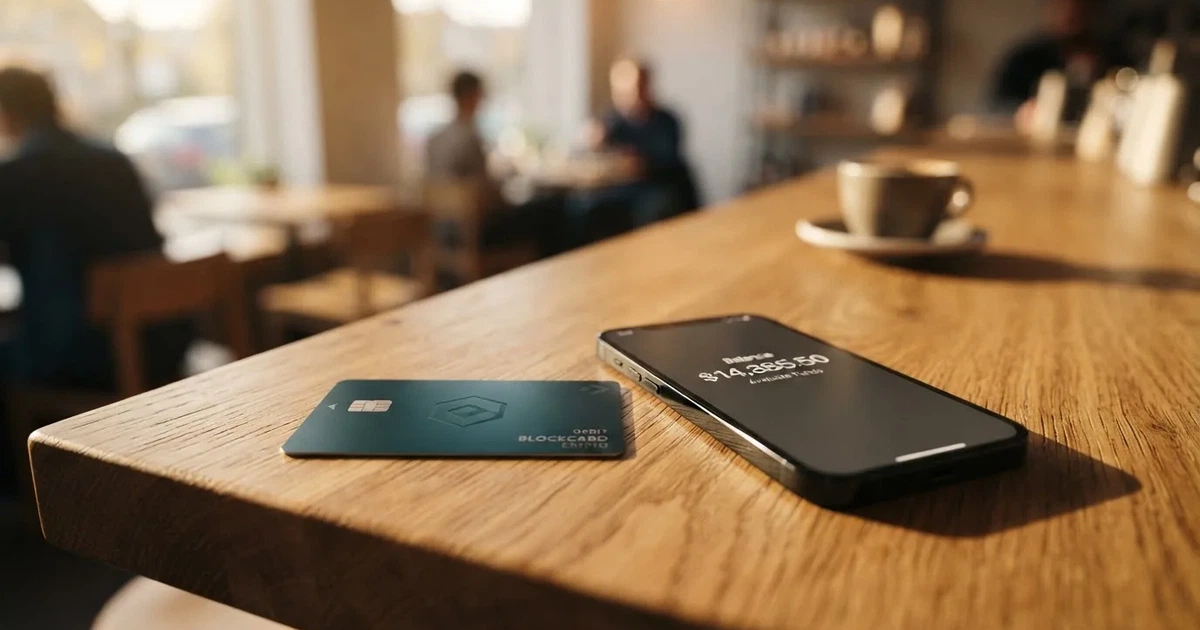
Conditions described here are current as of 21 October 2026, checked against the Bitunix help centre.
My score for it is 5.3 out of 10. That is an average of a card that is genuinely free to open and free to keep, and genuinely awkward in several places at once: only one cryptocurrency is supported, only USDT, the funding route is narrower than people expect, there is no physical card yet, no ATM in the first version, and no spending limits are published on the card page. The strengths are real but narrow. The card suits one person well: someone with a Bitunix account, a verified residential address, a habit of paying for things online, and no need to hold a foreign bank account. It suits that person less well the moment they want cash, a plastic card, or a second coin in the balance.
The score is not a ranking against every card on the market. It is a judgement about how well this card does its job for the person most likely to want it.
The score, line by line
| Criterion | Mark | Why |
|---|---|---|
| Who can get it | 7 / 10 | A published list of 80 countries and regions, explicitly not exhaustive, including the US, Canada, France, Turkey, Singapore, Hong Kong, China, India, the UAE and Brazil. The rest are not named. |
| Cost | 6 / 10 | Issuance, monthly and annual fees are all 0. Crypto conversion 0. FX markup 1.5% on top of the Visa rate, cross-border fee 0.5%, and a 1 USD monthly inactivity fee after 12 months. |
| Top-up options | 3 / 10 | Only USDT from the Spot, Futures or Earn accounts. Direct blockchain deposits to the card account are not supported. |
| Reliability and complaints | 4 / 10 | The company is named as Blue Rock Management Pte. Ltd.; the issuer and the licences are not named. Trustpilot shows 3.7 out of 5 on 819 reviews for the exchange, with account freezes mentioned and regulatory attention noted on the profile. |
| Everyday use | 5 / 10 | A virtual Visa card only at launch; the physical card is planned. Apple Pay, Google Pay and other wallets are supported, but ATMs are not supported in the first version. |
| Total | 5.3 / 10 | A card that is cheap to hold and narrow to use. |
Two lines deserve emphasis. The top-up score is the lowest on the card because of a design decision, not an oversight: money can only reach the card account from inside Bitunix. And the reliability score is low not because the card has a bad record, but because the card has almost no record yet, while the exchange it sits on does have one.
Will they give you the card?
Mostly yes, if you live in one of the listed places and your address checks out. The Bitunix help centre keeps a page called “Restricted Jurisdictions”, and it lists 80 countries and regions. The page says the list may include others, so it is not the full picture, and it is not the whole permission either. Among the names on it: the Russian Federation, Belarus, the United States, Canada, France, Turkey, Ukraine, Singapore, Hong Kong, China, India, the United Arab Emirates, Cyprus, Serbia, Armenia, Kyrgyzstan, Tajikistan, Brazil and Israel, and others.
The rule is by residence, not citizenship. That single distinction does most of the work in this section, and it is worth sitting with for a moment. If you live in one of the listed countries, that is what the card checks. Your passport’s country of issue is a separate thing, and the card’s public pages do not state a rule for it. So for Russian and Belarusian citizens living elsewhere, the card’s pages say nothing: whether a residence in, say, Cyprus or Serbia is treated differently from citizenship itself is not stated. If that is your situation, the honest answer is that you have to ask support before you move money, because the published material does not cover it.
What is stated about eligibility is thinner than what is not. Identity verification is required, and a confirmed residential address is required before you can apply. The card’s public pages do not state which documents are accepted, what age is required, how long verification takes, or what the specific rejection reasons are. There are KYC levels at the exchange level described somewhere in the help centre, but no card-specific level table is published. If a decision to refuse you is going to be made on thin information, that is where it will happen.
One more thing about eligibility, and this one is not about you. There is a pattern in this industry where a card is available on paper and then unavailable in practice because of country sanctions, network rules or issuer policy. Visa and Mastercard do not issue crypto cards themselves; they license issuers, and they can suspend a programme. In November 2022 Visa terminated its global agreements with FTX and the FTX US debit card was wound down. So the country list is a starting point, not a guarantee that a given card will work for a given person tomorrow. I mention this not to frighten anyone but because the Bitunix agreement itself does not name the issuer, so you cannot fully audit the chain from the card page.
How to get it
The process as published is short: sign up, complete verification, apply, and the virtual card is ready on approval. That is genuinely the whole sequence. There is no separate card app to install and no branch to visit; the card lives inside the Bitunix app, and support is reached from the app’s upper-right corner.
What the page does not say is as important as what it does. The document list is not stated. The minimum age is not stated. Verification processing times are not stated. Rejection reasons are not stated. And the card you get is a Visa, virtual only at launch; the physical card is described as planned for a future phase, called “Phase Two”, with an application not yet available.
The physical card has a delivery estimate of 7 to 20 business days once it becomes available, and its fees depend on the delivery location. Virtual card issuance and replacement are free. So if you are reading this in the market for a card you can hold, you are reading about a card that does not exist yet in your hand, and the physical version’s price list is not published.
The currency of the card is also not stated on the card page. There is a separate mechanism that determines what you actually spend, and it is described in the funding and daily-use sections. The short version: USDT converts to USD at 1:1 on the card, so the balance behaves as dollars. That is a conversion, not a promise about which currency the card number is denominated in.
My advice, if you are at this stage, is to treat the application as the easy part and the address verification as the real gate. Make sure the address you submit is one you can actually document and one that matches what any other proof you have sent to the exchange shows. Mismatched addresses are the kind of thing that turns a five-minute application into a support thread.
What it costs: Fees, limits and the everyday bill
On paper this is the cheapest card in the comparison. Issuance, monthly and annual fees are all 0. The crypto conversion fee is 0. Card replacement and cancellation are both 0. That is a real advantage and it is why the cost score is not lower.
The catch is that the free part is the easy part to advertise. The money is in the percentages, and in what the card page leaves blank.
| Fee or limit | Value |
|---|---|
| Issuance fee | 0 |
| Monthly fee | 0 |
| Annual fee | 0 |
| Crypto conversion fee | 0 |
| FX markup | 1.5% over the Visa rate |
| Cross-border fee | 0.5% on USD spending |
| WeChat Pay and Alipay surcharge | 3% over 200 CNY |
| Small-transaction fee | 0.3 USD per transaction for settlements under 10 USD, first 3 per month waived |
| Inactivity fee | USD 1 per month after 12 months |
| ATM fee | Not supported in the initial version |
| ATM fee, when the physical card exists | 2% per transaction on amounts over $100 per month, first $100 per month waived |
| Per-transaction limit | USD 10,000 |
| Daily limit | USD 10,000 |
| Monthly limit | USD 50,000 |
| ATM limits, when the physical card exists | $1,500 daily, $15,000 monthly |
Two gaps in that table are worth naming rather than glossing over. Network fees apply to USD and non-USD transactions, but the percentages are blank on the page. And the card page does not state general spending limits; the 10,000 / 10,000 / 50,000 figures come from the FAQ, not from the limits field on the card page. If a number matters to you, check the help centre article rather than the marketing page, and check both if the two ever disagree.
Now let me walk you through three ordinary payments, because a percentage only means something once you see it applied.
A subscription in dollars, say 20 USD a month, paid to a merchant in the US. On that one, the small-transaction fee does not apply, since it only touches settlements under 10 USD. You pay the Visa rate plus the 1.5% FX markup, which is about 0.30 USD on 20 USD, plus the 0.5% cross-border fee if the merchant is outside your own country, about 0.10 USD. Roughly 0.40 USD of cost on 20 USD of spending, before the network fee whose rate the page leaves blank.
A purchase in euros while your balance sits in dollars. Same mechanics, and here the 1.5% markup is the number to hold on to, because it is charged on the converted amount. On 100 USD of European spending the markup is 1.50 USD and the cross-border fee is 0.50 USD, so about 2 USD of cost. The conversion happens at the rate at the time of the transaction, which means the rate that applied on the day you paid is the rate you got, not a rate you can look up afterwards.
A 5 USD coffee bought through a wallet, or any small purchase. Here the small-transaction fee bites: 0.3 USD on a 5 USD payment is 6% of what you spent, on top of the FX markup. The first three such transactions each month are waived, so if small payments are a habit, the fourth one is where you start paying for the privilege. This is the fee I would think about hardest if small purchases are normal for you, and the card page does not state the threshold cleanly enough to rely on, so treat the 10 USD figure as the help centre’s number rather than as a promise.
Cashback is the offset, and it is worth more to some people than to others. Cashback depends on your exchange VIP level, and it is intended to offset the FX and cross-border fees: VIP 1 gets 1%, VIP 2 and 3 get 2%, VIP 4 and 5 get 4%, VIP 6 and 7 get 6%, VIP 8 gets 8%. There is one card type listed, called the Green Card, with the same limits for everyone. So the card itself does not get better as you trade more; your rewards do. Cashback is paid in USDT to the card account after settlement, and it excludes refunds, chargebacks, cash-like transactions and certain merchant categories. The balance yield is described as up to a figure that is blank on the page.
An unofficial figure circulates: a company press release in July 2026, carried by Chainwire and reported by outlets including Decrypt, said up to 8% cashback on eligible spending capped at 1,000 USDT monthly, and a yield up to 11.6% annually depending on the asset and conditions. Treat that as a company claim, not as something the card’s own pages confirm. The help centre’s tier table, which is the official version, stops at 8% with no monthly cap stated.
Top up: the one narrow door
This is where the card’s low score comes from, and it is the section I would read most carefully if you are considering it.
Topping up means moving USDT from your Spot, Futures or Earn account to the Card Account inside Bitunix. Payments then draw from the Card Account balance. There is no second door. External bank transfers are not supported, and direct blockchain deposits to the card account are not supported, which is why no card networks apply to the funding step at all. USDT is the only supported cryptocurrency, the conversion fee is 0, and USDT converts to USD at 1:1. Which blockchain network to use is not stated, and the minimum top-up is not stated.
I want to be precise about what this means, because “deposits not supported” is easy to misread as “deposits are broken”. It is not broken; it is closed. The card account is an internal balance, funded by an internal transfer. If your money is on another exchange or in your own wallet, it must first come to Bitunix, then move one step further. Each step is a step where a rule, a fee or a freeze can intervene.
Getting money back is where the asymmetry gets sharper. Only cashback and referral rewards are documented as movable: the card’s own help centre says you can transfer cashback from the Card Account to your Spot Account and then withdraw it. Withdrawing the general card balance is not described on that page. The card can be closed at any time in Card Management with no fee, and the terms say a positive balance is returned under applicable law and internal procedures, that identity verification may be needed, and that the balance may be held for a reasonable period to cover chargebacks.
That is a real difference in kind from a bank account. In a bank account, closing the account is a formality because the money is yours by law and the bank is obliged to pay it out. Here, the balance is returned under the applicable law and the provider’s procedures, possibly after extra checks. I am not saying the money will not come back. I am saying the promise is procedural rather than immediate, and I would not leave a large balance sitting in the card account without reading the agreement.
There is also a tax question hiding here, which I will not answer. In the US the IRS treats digital assets as property, so exchanging them for goods, services or dollars generally produces a taxable gain or loss, measured in local fiat currency at the fair market value on the date of the transaction. That means each card payment funded from crypto can be a separate disposal. What that means for you depends on where you live and what your holdings are; a qualified local accountant is the person for that, not a card review.
Paying with it every day
Once funded, the day-to-day picture is friendlier than the funding picture. The card can be added to Apple Pay, Google Pay, WeChat Pay, Alipay, PayPal, LINE Pay, GrabPay and Samsung Pay, all subject to the platform’s own terms and regional restrictions. There is no separate card app; everything happens in the Bitunix app.
Two practical things about mobile wallets are worth knowing in general, because they apply to any card you put in a phone. When a card number is tokenised into a device wallet, it is replaced by a device-specific number stored in the phone’s secure hardware, not on the platform’s servers, and each payment carries a one-time dynamic code rather than the real card number. And the issuer can restrict the tokenised number, for example blocking it on magnetic-stripe, phone or website use. So if a payment works in a shop but fails online, the restriction is on the token, not on your account.
Where the card can go has a ceiling that is not about geography. The card is virtual, so it is built for online and in-store card acceptance. ATMs are not supported in the initial version. No ATM, no cash, no tipping a waiter with plastic. When the physical card arrives and ATMs become available, the ATM charge is 2% per transaction on amounts over $100 a month with the first $100 waived, and the limits are $1,500 a day and $15,000 a month.
There are also the ordinary frictions of any foreign-issued or prepaid card, which the card’s pages do not discuss but which you will feel. A merchant can look up the issuer identification number at the front of the card number and see which institution and country issued it, and some merchants apply extra scrutiny when the issuer country differs from the billing address. That is why a card issued in one country can look foreign to a shop in another. Address verification, which compares the numeric parts of the billing address the buyer types against issuer records, is generally unavailable for foreign-issued cards, and unavailable verification can cause declines. A declined authorisation may also leave a hold on your funds for several days.
If something goes wrong, the dispute process is documented and it is not free in every case. Filing a dispute is free, but a 50 USD fee applies if it becomes a formal Visa chargeback; the FAQ says per case, the fee article says per transaction, which is a small but real ambiguity. Investigation takes several weeks and, in some cases, up to 90 days. Unauthorised transactions must be reported within 14 days of the transaction or the posting date. Merchant refunds usually take 5 to 14 business days, and the advice is to contact the merchant first. Chargeback rights are not guaranteed, and cash-like transactions may be ineligible. Cashback also excludes refunds, chargebacks, cash-like transactions and certain merchant categories, though the blocked list of merchant category codes is not given.
What can go wrong
I have grouped these by how much they would actually hurt you.
The issuer is not named. The card agreement names the company as Blue Rock Management Pte. Ltd. and refers to the issuing bank only as “the Issuer” without naming it. Licences are not stated. The card page names Bitunix.com only, with 2022 to 2026 in the footer. For most people this is a line they skip. For anyone deciding how much to leave on the card, it is the line that matters, because the chain of who holds your money runs through an institution you cannot name from the public pages.
The funds are not bank deposits. The terms say no entity assumes custody of fiat funds on behalf of users, and that card funds are not bank deposits and are not protected by a guarantee. That is not unusual for this category, and it is not fraud. It does mean there is no deposit guarantee behind the balance. Electronic money institutions are required in the EU to safeguard customer funds, by segregating them in dedicated accounts or insuring them, and even then those funds are not the same as bank deposits and may not sit under a deposit guarantee scheme.
The exchange’s complaint record. On Trustpilot, the Bitunix exchange profile showed 3.7 out of 5 on 819 reviews, with 546 of those in the last 12 months when read in October 2026; the star display shows 3.5. Separate readings of regional pages put it lower, around 2.5 to 3.1 out of 5 on roughly 392 to 550 reviews. The themes in user reports are poor customer service, a slow mobile app, account freezes triggered by extra verification, liquidation disputes and withdrawal delays. One report from October 2026 describes about $440 frozen for three months. The profile states the company has received regulatory attention. I want to be careful here: these are reports about the exchange, not card-specific complaints, and a card-specific search found none. But the card is a front end on that exchange, so the exchange’s reliability is part of the card’s reliability.
A shift in the rules. The restricted-jurisdictions list was updated on 8 October 2026. The card agreement shows “Last updated on 2026-07-22”, while its text refers to March 11, 2026. Rules in this category change. A card can be suspended by the network, a licence can change hands, a company can close a programme.
Platform risk is not hypothetical. Custodial platforms have a record of failures: Mt. Gox, where about $350 million was reported stolen between 2011 and 2014; Coincheck, about $400 million in 2018; and the Ronin Network, $625 million in 2022. Card programmes have been shut down as well: WaveCrest, a Visa issuer that supplied crypto card brands, was suspended by Visa in Europe in 2018 and all its Visa programmes closed; FTX’s US debit card was wound down after Visa terminated its agreements in November 2022. Program closures typically give notice, then stop spending and loading, then ask users to withdraw remaining balances. None of this predicts anything about Bitunix. It tells you what the failure mode looks like when it happens.
Crypto transfers are one-way. Blockchain transfers are typically irreversible, and there is no built-in recovery: the network cannot freeze or return funds. Stablecoins are not censorship-proof either, since Tether says it disables tokens in wallets on the OFAC sanctions list and has frozen funds tied to illicit activity. Stablecoins can also depeg. TerraUSD collapsed in May 2022 and USDC temporarily lost its peg in March 2023. USDT converts to USD 1:1 on this card, which is a conversion of a stablecoin into dollars, not a promise that the stablecoin is dollars.
Support hours and languages are not stated. Support runs through the app, the help centre, a contact form, Telegram and Discord. Which languages and which hours are not stated, and there is no published phone number.
The safeguards that do exist are reasonable. You can freeze and unfreeze the card in Card Management and in the app, adjust limits in Card Management, receive an email alert for transactions of 200 USD or more, enable two-factor authentication, and link up to 15 third-party wallets per card.
What to take instead
Bitunix does not exist in a vacuum, and if the funding restriction is the thing stopping you, there are three other cards I would look at. Here is how they compare on the same points.
| Bitunix | Bybit Card | Coinbase Card | OKX | |
|---|---|---|---|---|
| My score | 5.3 / 10 | 6.0 / 10 | 6.4 / 10 | 6.2 / 10 |
| Card | Visa, virtual only at launch | Virtual and physical; Mastercard or Visa prepaid or credit depending on region | Visa prepaid debit, virtual or physical | Mastercard, euro virtual debit |
| Where | 80 countries and regions listed, including the Russian Federation and Belarus | Argentina, AIFC (Kazakhstan), Georgia, Kazakhstan, Australia, Mexico, Brazil, Peru, Asia Pacific | All US states except Hawaii | EU plus Norway, from 28 January 2026; Iceland and Liechtenstein excluded |
| Card cost | 0 issuance, 0 monthly, 0 annual | Virtual free; physical from 5 USDT to 29.99 USD by region; no annual fee | No spending fees, no annual fees | None, per the May 2026 explainer |
| Funding | USDT only, from Spot, Futures or Earn inside Bitunix | Funding Account and Flexible Easy Earn; BTC, ETH, XRP, USDT, USDC, GRAM | Bank account link or crypto balance on Coinbase | USDC or USDG held in OKX Pay; no auto top-up |
| FX fee | 1.5% over the Visa rate, plus 0.5% cross-border on USD spending | 2% on the network rate in most regions; 7% Argentina; 1.5% Brazil; 1% Peru | No transaction fee, but a spread when Coinbase converts | No FX fee; conversion spread 0.1% per the newer explainer, 0.4% in the launch release |
| Cashback | 1% to 8% by VIP level | 2% to 10% by tier, crypto-funded spending only from 5 October 2026 | Optional, variable rate, US users only | 2% to 10% by level, USDG purchases only, monthly caps in EUR |
Bybit Card scores 6.0. Its advantage is funding breadth: it draws on the Funding Account and the Easy Earn balance, fiat first, and if fiat runs out it sells crypto at the One-Click Sell rate plus a conversion fee, across BTC, ETH, XRP, USDT, USDC and GRAM. Its cashback is richer on paper, up to 10% at the top tier, and from 5 October 2026 only crypto-funded transactions earn it. But its geography is narrow and, for the reader who types a CIS country name into the search box, awkward: the European Economic Area is excluded outright. Its fiat-service restricted list includes Belarus, the Russian Federation, Serbia, China and the United States, and it says Russian users can only make RUB transactions in fiat. There is no card-specific statement about Russian or Belarusian citizens, and no citizenship-versus-residence rule was found. One nice touch: the card currency depends on the country of your advanced identity verification.
Coinbase Card scores 6.4, the highest of the four. It is also the most restricted in the way that matters least to most people: every US state except Hawaii, and nothing else. In exchange it is the simplest to understand. A Visa prepaid debit card, virtual or physical, spending cash or crypto, with all crypto converted to US dollars for purchases and ATM withdrawals. Zero spending fees, no annual fees, no Coinbase transaction fees, though a spread applies when Coinbase converts. Fund it by linking a bank account or by depositing part of a paycheck. Optional crypto rewards on every purchase for US users, at a variable rate shown in the app. If you are in the US and want a card that behaves like an ordinary debit card, this is the one I would pick.
OKX scores 6.2. It is a Mastercard, denominated in euro, virtual, issued through an unnamed European licensed payment provider, and it reached the EU plus Norway on 28 January 2026, with Iceland and Liechtenstein excluded. No card fee, no transaction fee, no OKX FX fee, and a conversion spread the newer May 2026 explainer puts at 0.1% against 0.4% in the launch release. Funding is USDC or USDG held in OKX Pay, other coins must be converted first, there is no auto top-up, and a payment is declined if the balance is insufficient. Cashback applies only to USDG purchases, not USDC, with monthly caps in euro. The eligibility rule is by whether you are a user of the MiCA-licensed entity OKX Europe Ltd.; citizenship versus residence and Russia or Belarus are not stated.
One point that applies to the whole category, not just these four. Under MiCA, the EU’s markets-in-crypto regulation, e-money tokens may be issued only by a credit institution or an electronic money institution. The rules on asset-referenced tokens and e-money tokens applied from 30 June 2024 and the remaining provisions, including crypto-asset service provider rules, from 30 December 2024. Transitional arrangements let providers already operating under national law continue only until 1 July 2026 or until they are authorised or refused, whichever comes first. A card itself is a payment service regulated separately, so a crypto card often depends on two licences. If you want to check a provider, ESMA keeps an interim register of authorised crypto-asset service providers.
Who I would recommend it to
I would recommend the Bitunix card to one specific person. You already have a Bitunix account and you have verified it. You hold USDT and you are already spending it on things you buy online, in dollars, through services that accept a Visa card. You have no bank card that works where you need one, and you do not need cash, a physical card, or a second coin. You are comfortable that your balance is not a bank deposit, that the issuer behind the card is not named publicly, and that the money leaves your card account through an internal transfer in one direction.
For that person, the card is close to free and reasonably convenient. Issuance is 0, the monthly fee is 0, the conversion fee is 0, you can freeze and unfreeze it yourself, and you get cashback back at 1% to 8% depending on your VIP level. That is a good deal for the use it was built for.
I would not recommend it if any of these are true of you. You need cash: there is no ATM in the first version. You want to hold something other than USDT: it is the only supported cryptocurrency. You want to move money between exchanges or from a self-custody wallet: direct blockchain deposits and external bank transfers are not supported. You plan to hold a large balance: the general card balance is not documented as withdrawable, and closing the card returns it under the applicable law and internal procedures, possibly with extra verification and a hold. You want a physical card: it does not exist yet, and its fees depend on where it would be delivered. You are in a country not on the list, or you are a Russian or Belarusian citizen living outside the listed countries and want certainty: the card’s pages do not state a citizenship rule, and the list is explicitly not exhaustive.
If you fall in the second group and want the shape of this card rather than this card, the comparison above is the shortlist. Bybit for breadth of funding coins and richer cashback, Coinbase for simplicity if you are in the US, OKX for the euro and a low stated spread if you are in the EU or Norway.
And on the question that searches this topic most often: is it worth it. For a Bitunix user spending USDT online, yes, at a cost of zero to hold. For everyone else, the honest answer is that you are paying 1.5% on currency conversion plus 0.5% on cross-border dollars to get a card that spends one coin, has no ATM, and has no named issuer. That is a real service with real limits, not a free lunch.
Frequently asked questions
What is the Bitunix card?
It is a Visa payment card that spends money held on your Bitunix exchange account. You move USDT from your Spot, Futures or Earn account to an internal Card Account, where it converts to USD at 1:1, and the card spends that balance. Virtual only at launch.
How does the Bitunix card work in daily life?
You add the card to Apple Pay, Google Pay, WeChat Pay, Alipay, PayPal, LINE Pay, GrabPay or Samsung Pay and pay online or in stores. Only USDT is supported, converted at the day’s rate. You pay a 1.5% markup over the Visa rate plus 0.5% abroad, offset by 1% to 8% cashback.
Is Bitunix a bank?
No. The card’s own terms say no entity assumes custody of fiat funds for users, and that card funds are not bank deposits and are not deposit-insured. The company is named as Blue Rock Management Pte. Ltd.; the issuer is called only “the Issuer” and licences are not stated.
Who can get the Bitunix card?
Residents of the countries on the “Restricted Jurisdictions” list, which names 80 and says it may include others. Among them are the Russian Federation, Belarus, the US, Canada, France, Turkey, Ukraine, Singapore, Hong Kong, China, India, the UAE, Cyprus, Serbia, Armenia, Kyrgyzstan, Tajikistan, Brazil and Israel.
Does the Bitunix card require KYC?
Yes. Identity verification and a confirmed residential address are both required before you apply, and the sequence is sign up, verify, apply, then the virtual card is ready on approval. Accepted documents, minimum age, processing time and rejection reasons are not stated on the card’s pages.
How much does the Bitunix card cost to hold?
Nothing to hold it. Issuance, monthly and annual fees are all 0, as are crypto conversion, replacement and cancellation. The costs are percentages: 1.5% FX markup over the Visa rate, 0.5% cross-border, 0.3 USD on settlements under 10 USD with three a month waived, and USD 1 a month of inactivity after year one.
Can I use the Bitunix card in another country?
You can spend it wherever Visa is accepted, but the card will not look local. Merchants can see which institution and country issued it from the first digits and may scrutinise it when that differs from the billing address, while address verification is generally unavailable for foreign-issued cards. Cross-border spending in dollars costs 0.5%.
How do I top up the Bitunix card?
You move USDT from your Spot, Futures or Earn account to the Card Account inside Bitunix, and payments then draw from that balance. That is the only route: external bank transfers and direct blockchain deposits to the card account are not supported, so no network choice applies. Conversion is 0 at 1:1.
How do I get my money back off the Bitunix card?
The documented route covers cashback and referral rewards, which you can transfer from the Card Account to your Spot Account and then withdraw. Withdrawing the general card balance is not described. The card closes free any time in Card Management, and the terms say a positive balance is returned under applicable law and internal procedures.
Is the Bitunix card safe?
It has the usual protections: freeze and unfreeze in the app, adjustable limits, an email alert for transactions of 200 USD or more, two-factor authentication and up to 15 linked wallets. It lacks a named issuer, a published licence list, or a payout guarantee, and there is no deposit guarantee, as the card funds are not bank deposits. Report unauthorised transactions within 14 days.
Written by the editors at Crypto Card Rating.