AQUA card review: why I would not start here, and what to do if you already did
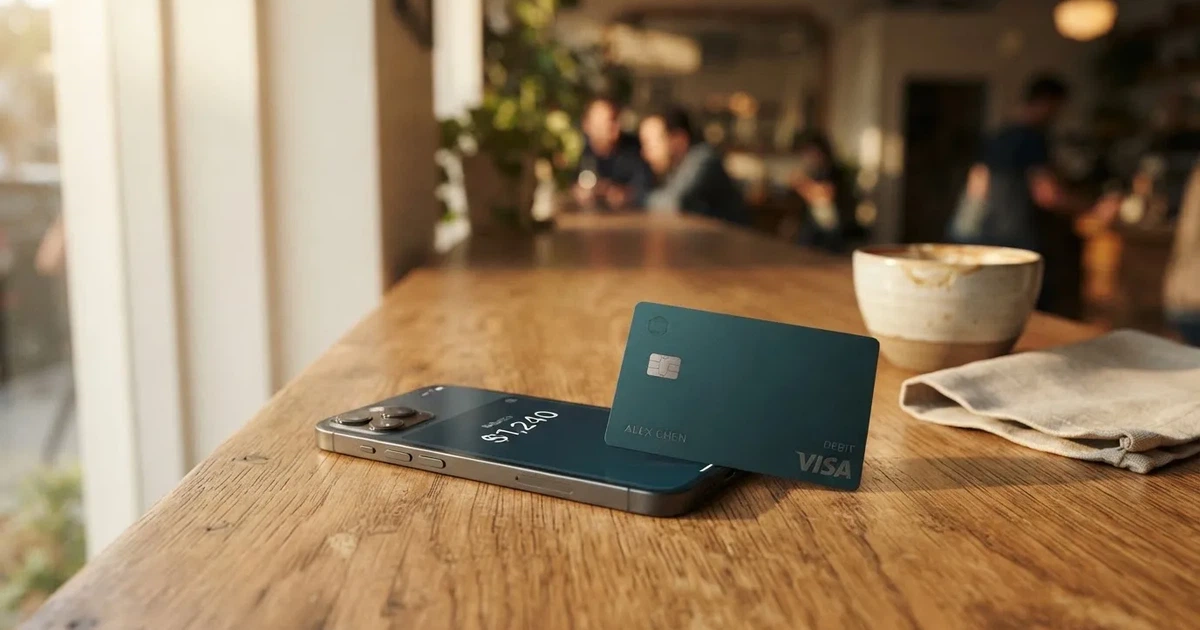
The AQUA card — formally the Dolphin Card, the Visa product tied to the AQUA wallet from JAN3 — is no longer available to new applicants. It was announced in beta on 21 May 2025, and it was suspended across every region on 4 December 2025 after an unspecified issue with the card provider that ran it. As of the checks on this page in October 2026, no relaunch has been announced, and no replacement provider has been named. If you read older guides promising a free, no-KYC Bitcoin card on top of the AQUA wallet, that promise is now stale.

That makes this a different shape of review from the usual ones I write. I am not weighing whether to recommend you apply; I am helping two distinct readers. The first is someone who already holds an AQUA / Dolphin card and wants to know what to do with the money still on it and whether anything will ever come back. The second is someone exploring crypto cards in general — perhaps because they cannot easily get an ordinary bank card — and wants to know whether AQUA belongs on their shortlist (it does not) and which live alternatives do.
Conditions on this page are current as of 21 October 2026.
Before going section by section, here is the shape of the product on the facts I could verify. I include these lines as a quick reference; every claim is unpacked further down with its source.
| Item | Value |
|---|---|
| Card name | Dolphin Card (the AQUA card) |
| Network | Visa |
| Form factor | Virtual only; no physical card was offered |
| Spending currency | USD only |
| Top-up assets | BTC, L-BTC or USDt on the Liquid network |
| Top-up fee / minimum | Not stated |
| Monthly spending limit | $4,000 USD |
| ATM withdrawals | Not stated |
| Apple Pay / Google Pay | Planned but not live at launch; tap-to-pay unavailable |
| Blocked merchant categories | Not stated |
| Rewards / cashback | Not stated |
| Tiers | A single virtual tier; no others described |
| Identity verification | JAN3 account + emailed verification code only; no ID document was required during the beta |
| App | AQUA wallet app (release 0.3.0 beta, blog dated 21 May 2025); app store ratings not stated |
| Issuer | Not publicly named |
| Status | Globally suspended on 4 December 2025; no relaunch found as of October 2026 |
| Refund path | USDT on Liquid via a secure request form on the JAN3 website |
Verdict
AQUA scores 2.4 / 10 in my framework, and that score is dragged down by one fact more than any other: you cannot get one. The card is suspended everywhere, with no published date for a return. Everything below that headline — the cost, the topping-up model, the planned mobile-wallet support — only matters to the small group of users who still hold a live card from the beta. For everyone else, this is a review of a product that has effectively ended, and the more useful thing I can do is point you to alternatives that still issue.
Across the criteria I score on, the picture looks like this:
| Criterion | Score | Why |
|---|---|---|
| Who can get it | 0 / 10 | Suspended globally on 4 December 2025 with no relaunch found |
| Cost | 5 / 10 | The official page never published fees; a third-party review also did not mention issuance or monthly fees, but neither is a published statement |
| Top-up options | 4 / 10 | BTC, L-BTC or Liquid USDt only, on the Liquid network |
| Reliability and complaints | 1 / 10 | Programme shut down within months of beta; remaining balances returned in USDT on Liquid, pending merchant refunds will not return to the card, and the card issuer was never publicly named |
| Everyday use | 2 / 10 | Virtual Visa only; Apple Pay and Google Pay were planned but did not work at launch, and tap-to-pay was not available |
| Total | 2.4 / 10 |
Who this card suits now is a short list. If you already have one and still have a balance, my advice is to follow the refund process below, not to wait for a relaunch that may never come. If you are a curious AQUA wallet user who wants to spend Bitcoin directly without converting through an exchange, you will need to look at one of the alternatives in the next sections. If you were hoping for an anonymous, no-questions-asked Bitcoin Visa, the closed status means you no longer have a choice to make — but read the risks section before assuming any of the alternatives you might consider offer that either.
Who this card does not suit is the much longer list. It does not suit anyone outside the original beta audience who now needs a card. It does not suit anyone who relied on Apple Pay or Google Pay, because those were promised and not delivered. It does not suit anyone who needs a card from a named, regulated issuer, because the card issuer was never disclosed in the public materials. And it does not suit anyone who would have been uncomfortable receiving their money back as USDT on the Liquid network instead of as US dollars to a bank account.
A quick framing of how I arrive at that audience call, in case you are weighing my score against another review. I score crypto cards on five criteria, all weighted roughly the same: who can actually get one, what it costs to hold and to use it, what the topping-up options look like, how reliably it has worked and what complaints look like, and how it functions at the cash register day to day. A closed programme scores zero on the first criterion regardless of the quality of the other four, because a card you cannot get is not a card. The “Who can get it” line is the single most important line on the page; everything else is what to do with the small group of people who got there during the beta.
What happened to the programme
The short timeline is unusually compressed. The Dolphin Card was announced by JAN3, the Bitcoin-focused company behind the AQUA wallet, on 21 May 2025, with a beta open to users outside the United States and Canada and an ambition to roll out US and Canadian cards “in the coming months”. The product was positioned as a simple way to spend Bitcoin from the wallet: a virtual Visa denominated in US dollars, reloadable, managed inside the AQUA app under a section called Marketplace. The card had one tier — virtual only, no physical version was described — and one spending currency: USD. Other currencies and multi-currency balances were not described on the public materials.
Verification at the beta stage was unusually light. To get a card during the beta you needed a JAN3 account, a working email address, and a verification code sent by email. There is no mention anywhere in the public launch post of uploading an ID document, a proof of address or any other identity check. That is consistent with the third-party CriptoNoticias review from 24 October 2025, which described sign-up as requiring only an email address with no identity verification. Light verification is part of why I am cautious about this card category in general (more on that in the risks section), but it is also part of what made the product briefly attractive to people looking for a low-friction option.
Apple Pay and Google Pay were announced as features that would arrive “in the coming months”, but the launch post itself makes clear those wallets were not live at launch and tap-to-pay was not available. It is not stated which merchant categories were blocked or restricted. There were no published fees — neither the issuance cost nor ongoing fees appear in the launch post, and the third-party review from CriptoNoticias also does not mention an issuance or monthly fee. The honest reading is that nobody outside JAN3 can tell you what this card would have cost in steady-state operation, because it never reached that stage.
Then, on 4 December 2025, every Dolphin Card worldwide was suspended “effective immediately”. The reason, in JAN3’s public statement reported by news.bitcoin.com, was an unspecified problem with its card provider; the provider itself was not named. Other AQUA wallet services were unaffected. JAN3’s CEO said, on 30 November 2025, that partners had informed him all cards were being suspended and that the team would look for alternative providers. As of the checks I made for this page in October 2026, no alternative provider has been named and no relaunch has been announced.
If you read the unofficial coverage, a CriptoNoticias reviewer from Argentina reported that a Spotify charge was rejected because the card was issued in the United States and the user’s country did not match. That fits with how card networks handle BIN-based country checks: a merchant can decline a transaction when the issuer country it reads from the card number does not match the customer’s address. The lessons from that are not specific to AQUA — they apply to any cross-border virtual Visa — but they are worth knowing if you decide to look at another card later.
If you already have the card
This is the section that matters most to the small group of readers who hold a beta Dolphin Card, and I want to walk through the practical steps in the order you should take them.
First, stop planning to spend from it. The card is suspended. Even if a residual balance technically remains, spending will not work, and continuing to treat the card as live risks confusion when an old subscription tries to charge it and fails.
Second, find the secure refund request form that JAN3 opened on its website after 4 December 2025 and submit it with the wallet address you want your refund sent to. The official line, as reported by news.bitcoin.com, is that remaining balances are being refunded in USDT on the Liquid network, and the refund can be directed either to an AQUA wallet or to any external wallet capable of receiving Liquid-network USDT. You will get an email confirmation, and the actual transfer starts only once Aqua receives funds from its provider. JAN3 has not published an expected timeline, and the refund fees are not stated, so do not assume the full balance will land back with you.
Third, look at your inbox for any pending merchant refunds. Anything you had requested from a merchant or a subscription service that was in flight on 4 December 2025 will not return to the Dolphin Card; the card is closed. The news.bitcoin.com reporting makes this explicit. After that, dispute or chargeback handling is not stated anywhere in the public materials, which means you should not assume you can recover a refund that way. Treat the card as a closed account and pursue merchant refunds directly through the merchants.
For context on what you would have been able to do while the card was live: the beta card had a spending cap of $4,000 USD per month, and could be loaded with BTC, L-BTC or Liquid USDt from the Card Management page inside the AQUA app. The beta blog post itself recommended a small test load first, noting that balances can take a moment to update. Top-up fees and minimum top-up amounts were not stated. ATM withdrawals were not described at all. On unofficial third-party reporting, on-chain BTC top-ups needed to wait for 3–4 network confirmations before they credited, and the BTC balance was converted to USD automatically. That conversion is part of why a USDT refund is the path JAN3 has chosen — it is the asset the card already worked in.
There is also a question of what happens to the top-up amount in the moment of conversion. Crypto transfers are typically irreversible, so once a top-up has been confirmed and converted, there is no clawback option if you spot an error afterwards. Liquid itself is a Bitcoin sidechain that runs under a federation model, with assets pegged in and out via a pegging transaction; that mechanism worked for the AQUA card during its beta but will not be available to you after suspension. It is worth saying that once the refund request is processed and the USDT is in your control, you are back to standard self-custody questions: do you have a wallet that recognises Liquid USDT, do you know how to move it to another network, and do you have the network fee (in BTC, for moving out of Liquid) to pay for that hop. If any of those answers is no, take the time to learn them before submitting the refund request rather than after.
The support channel for all of this is also not stated. The beta launch post named no support email, no chat and no in-app help desk; it pointed to terms of service for the country list. With the programme suspended, your best route for a real answer is the refund request form itself. Expect email replies to come from JAN3, not from a generic card-issuer customer service line, because the card issuer was never publicly named on the beta materials.
One more thing that matters operationally. If you hold tokens on the Liquid network that you cannot move easily because you are unfamiliar with Liquid, the refund will require you to learn that part of the stack before you can use it. Liquid is a Bitcoin sidechain issued by Blockstream, and it works differently from Bitcoin mainnet: addresses, fee mechanics and confirmation rules are not the same. If you cannot access a Liquid USDT wallet confidently, sort that out before submitting the refund form, because submitting to the wrong address puts the refund out of reach.
What can go wrong
Beyond the headline issue — that the card programme is closed — there are several structural risks that matter whether you are an existing holder trying to recover funds or a reader thinking about moving to an alternative.
The first risk is that nobody reading this review can point to a named, regulated issuer behind the AQUA card. JAN3 operates the programme, and AQUA is the consumer brand, but the issuing bank or licensed e-money institution that actually stood behind the Visa BIN is not disclosed in the public launch materials. In a normal card programme that issuer is the entity you turn to for chargebacks, complaints and, in the worst case, insolvency recoveries. With AQUA, the route to those protections was already unclear before the suspension and is now harder to trace.
The second risk is the closed status itself. I mentioned earlier that the Visa network suspended operations in Russia in March 2022, and that the FTX US debit card programme was wound down in November 2022 after Visa terminated its global agreements. WaveCrest, a Visa issuer that supplied several crypto card brands in Europe, was suspended by Visa in 2018, closing every programme it had backed. Programmes do close, often without warning, and the experience for users is messy. The pattern in those cases was a notice period, then a stop on loading and spending, then a request to withdraw remaining balances, often via a form on a website rather than automatically into the user wallet. That is essentially what happened here. If you build a real spending workflow around a single crypto card provider, you are exposed to this kind of cliff.
The third risk is geographic. The official line on which countries were eligible during the beta was vague: outside the US and Canada, with some merchants unsupported in certain countries; a complete country list was not stated. The terms of service were pointed to for the country list, but JAN3 did not publish them in the launch post. Unofficial reporting described a Spotify payment from Argentina being declined because the card’s issuer country (the United States) and the user’s country did not match — this is what merchants do when they see a foreign-issued BIN. For a Russian-speaking reader in Russia, in another CIS country, or living abroad, this matters in a specific way. If you are in Russia, an AQUA card in its beta would not have worked on the Russian card rails because the issuing network does not operate there, and the BIN it carried read as US-issued anyway. If you are in Belarus, the picture is similar and neither country was specifically stated as supported. If you are a Russian citizen living in a supported third country with a local ID, you would in theory have been eligible at the beta stage, but the issuer country and your billing country would still have to line up with the merchant’s expectation on a per-transaction basis, which is what tripped up the Argentine user. None of this is unique to AQUA — every foreign-issued Visa or Mastercard carries the same dynamic — but it is a structural thing to know before choosing any alternative.
The fourth risk is verification and sanctions exposure. JAN3’s beta verification was an email plus a verification code; no identity documents. That is unusual for a Visa card product even at a beta stage, and it is worth saying plainly: any regulated card programme you move to will almost certainly require identity verification, and many will check citizenship and country of birth separately from residence. EU KYC, for example, expects name, address, date of birth, nationality and an identity document, plus a sanctions check and a politically-exposed-person assessment. In a US context the customer identification programme wants name, date of birth, address and an identification number. If you are choosing a card because you cannot get an ordinary bank account, expect every legitimate alternative to ask for at least some of those things, and expect problems if your citizenship or country of birth is on a sanctions list.
The fifth risk is refund mechanics. USDT on Liquid is a refundable asset, but it is not a US dollar in a bank account, and there is no public statement on refund fees. There is also no chargeback safety net if the refund process goes wrong. Blockchain transfers are typically irreversible, so if a refund is sent to the wrong address or on the wrong network, there is no built-in recovery. Tether itself has published that it disables tokens in wallets on the OFAC sanctions list and has frozen funds tied to illicit activity, so stablecoins on a public ledger are not a way to escape sanctions screening at the issuer’s discretion.
A sixth risk worth flagging is stability. The refunded USDT is denominated in US dollars but issued on Liquid, and stablecoins are not guaranteed to hold their peg. Tether and Circle together account for about 90% of stablecoin market capitalisation according to BIS data from July 2025, and both have had operational incidents: USDC briefly lost its dollar peg in March 2023 during the US banking crisis, and there is a long history of smaller stablecoins failing outright. The dollar value of a USDT refund is therefore only as stable as Tether’s reserves are during the time it takes you to receive and redeem it. Most days that is fine; the days it is not, you would discover it through your wallet balance rather than through any warning.
A seventh risk, mentioned briefly above, is the broader regulation that may be catching up to this category. The EU’s MiCA regulation took legal effect in stages during 2024: rules on asset-referenced tokens and e-money tokens applied from 30 June 2024, and the remaining provisions, including crypto-asset service provider rules, applied from 30 December 2024. Under MiCA, e-money tokens may be issued only by a credit institution or a licensed electronic money institution. The transitional grandfathering period for providers already operating under national law runs until 1 July 2026 or until a MiCA authorisation is granted or refused. A Visa BIN tied to a publicly unnamed provider, with light identity checks and crypto-funded balances, is precisely the kind of card programme EU regulators have been pressing on, and that is one plausible reading of why an issuer might walk away from a programme abruptly.
I have not found any user report on Reddit or Trustpilot that would add a sixth, distinct risk. The public picture is dominated by JAN3’s own announcement and the news.bitcoin.com write-up of it. That is itself a signal: a brand with no ongoing community feedback is a brand with no ongoing product.
What to take instead
The alternatives in this section are live programmes that score meaningfully higher than AQUA in my framework and that aim to do at least part of what the Dolphin Card was trying to do: turn a crypto balance into spending power on a Visa or Mastercard rail. None of these is a perfect replacement, and the table below is meant to give you a feel for them rather than a side-by-side verdict, because their models differ enough that the right one for you depends on where you live and what you actually want to spend.
MetaMask Card scores 7.1/10 in my framework. It is a Mastercard, with a Virtual card issued instantly after approval and a metal card you can pre-order in the app; one card per user. The issuer is Monovate and the card provider is Crypto Life. Sign-up is open in 45 listed countries and territories (examples that appeared in the public country list include Andorra, Argentina, Brazil, Canada, Mexico, Germany, France, Spain and Uruguay); other regions can join a waitlist. US and UK sign-ups were temporarily closed at the time of the checks on this page; citizenship-versus-residence rules and any Russia/Belarus stance were not publicly stated. Top-ups are wallet-native: the card spends directly from your MetaMask wallet on Linea, Base, Monad or Solana, and the named tokens include mUSD, wETH, EURe, GBPe, USDC and USDT, with the page itself saying nine in total. On cost: the Virtual tier has no annual or maintenance fee, and Metal is $199 per year. The headline fees line says there is “a minimal fee” per transaction (the exact amount is not publicly stated), no MetaMask-added foreign-transaction fee, and Mastercard’s wholesale rate is used for currency conversion. Cashback is paid in mUSD into a Money Account: 1% on Virtual, 3% on Metal up to the first $10,000 spent then 1%; there is also a bonus multiplier via the Blackbird dining app.
KAST scores 6.1 / 10. Its model is more layered. You can hold up to 10 cards per user, with three tiers — Standard on Visa Platinum, Premium on Visa Infinite metal, Private on Visa Infinite gold-plated — and other designs including Pengu, Solana and Bitcoin variants. The account balance is in USD; stablecoin deposits are converted 1:1 with no spread. On cost, the Standard tier has no annual membership fee; Premium is $1,000/year and Private is $10,000/year, billed annually upfront. The fee line is generous on the basics — 0% on stablecoin top-up, 0% on USD card spend, 0% on Apple and Google Pay — but the foreign-exchange fee for non-USD spending is 0.5% to 1.75% depending on where you live, where you spend and which programme you are on; non-USD transactions under $25 carry a $0.10 flat; a declined transaction due to insufficient balance costs $0.50; and non-stablecoin tokens can be auto-converted at a fee shown in the app. Funding supports USDT, USDC, PYUSD and RLUSD on Ethereum, Solana, Polygon, Arbitrum and TRON; no bank account is required. Cashback in USD ranges from 1.5% on Standard (first $2,000 of monthly spend) to 3% on Private (first $40,000), with KAST Points on top. Eligibility is residence-based and shown at KYC; the public list is not published, but KAST’s own materials say an unsupported country means KAST is not available there, that an ID from a restricted region can override residence in a supported country, and that using a VPN does not bypass the check. Russia/Belarus is not mentioned in the materials.
Zeal scores 6.1 / 10. It positions itself as a Visa card connected to a self-custodial wallet, claiming spending reach in 150+ countries and a card programme that is live in the EU, the UK, Brazil, Colombia, Mexico, Japan, Singapore, the Philippines, Indonesia and Thailand. Citizenship versus residence rules and any Russia/Belarus stance are not stated. The card is virtual, addable to Apple Pay; a physical version is not stated. Account balances are held in EUR, USD and GBP. There is no published fee schedule on zeal.app or the App Store listing I checked; Zeal says it does not add an FX fee on top of Visa’s wholesale rate, though the underlying Gnosis Pay fees can still apply. Spend draws from a card Safe across the chains Gnosis Chain and Celo. Cashback is up to 4%, paid in GNO on Gnosis Chain, with GNO held in the card Safe to qualify, and the App Store also advertises up to 5% variable APY on EUR/USD balances.
| Card | Score | Network | Top-ups | Annual cost | Cashback | Eligibility signal |
|---|---|---|---|---|---|---|
| AQUA Dolphin Card | 2.4 / 10 | Visa (virtual) | BTC, L-BTC, Liquid USDt | Not published | Not stated | Closed; refunds via USDT on Liquid |
| MetaMask Card | 7.1 / 10 | Mastercard | Linea, Base, Monad, Solana wallet tokens | Virtual free; Metal $199/year | 1% Virtual, 3% Metal on first $10,000 then 1% | 45 listed countries; waitlist elsewhere |
| KAST | 6.1 / 10 | Visa | USDT, USDC, PYUSD, RLUSD on 5 networks | Standard $0; Premium $1,000; Private $10,000 | 1.5%–3% USD, plus KAST Points | Residence-based, list at KYC |
| Zeal | 6.1 / 10 | Visa (virtual) | Card Safe balances in EUR, USD, GBP | Not published | Up to 4% in GNO | Live in 10 named markets; 150+ for spend |
A few practical notes that come out of the comparison. If your main concern is geographic reach and being able to add a card to Apple Pay, both MetaMask Card and KAST support mobile wallets; AQUA had promised it but did not deliver. If your main concern is keeping the funding flow simple — topping up with USDT from a network you already use — KAST offers the broadest published stablecoin and network combination. If your main concern is staying as close to a self-custody wallet as possible while still having a Visa card number, Zeal’s card Safe model is the closest to that. MetaMask Card sits in between for most criteria.
A note on what these alternatives assume about you. MetaMask Card expects you to fund the card from a non-custodial wallet you control — you connect your wallet, the card spends directly from it on supported networks, and you keep your own keys. That is a meaningful shift from the AQUA model, where JAN3 effectively held the conversion between your wallet and the card. The trade-off is more responsibility for seed-phrase safety, which is your primary line of defence against loss. KAST is more custodial in feel: you top up with stablecoins, the app converts them to a USD balance, and the card draws from that balance like a prepaid card; that is a closer match to the AQUA “pre-load and spend” mental model. Zeal sits in between, with balances held in a “card Safe” inside the wallet rather than on a fully custodial platform.
Another note on country rules, because the alternative section is also where most readers’ eligibility questions actually land. MetaMask Card’s published list names 45 countries and territories with examples that include Andorra, Argentina, Brazil, Canada, Mexico, Germany, France, Spain and Uruguay; other regions can join a waitlist, and the page itself adds that “ineligible regions limit sign-ups, not spending”, which is a useful sentence to read carefully. KAST uses a residence-based list shown during KYC; the list itself is not published, and KAST’s own materials warn that an ID from a restricted region can override residence in a supported country, and that VPNs do not bypass the check. Russia and Belarus were not specifically mentioned in either programme’s public materials I read. Zeal claims spending reach in 150+ countries but says issuance depends on regional availability; the named issue markets include the EU, the UK, Brazil, Colombia, Mexico, Japan, Singapore, the Philippines, Indonesia and Thailand. None of the three was specific about Russia, Belarus, or the situation of a Russian citizen living outside Russia with a foreign ID; if you fall into any of those categories, the only way to get a definitive answer is to start KYC and see what the issuer accepts.
What none of these alternatives does — and what the Dolphin Card briefly gestured at — is offer a totally frictionless, identity-light way to spend Bitcoin on a Visa rail. Every live programme that scores well on my reliability criterion asks for some form of identity check, and every one routes through an identifiable issuer. That is a feature of the surviving category, not a quirk of any single brand.
Final verdict: who I would recommend it to
Honest answer: I would not recommend AQUA / Dolphin Card to anyone as a card to go and get, because you cannot. The honest answer for existing holders is narrower. If you hold a beta card with a remaining balance, your best move is to submit the official refund request form on the JAN3 website, send the refund to a wallet you control, and not wait for the card programme to come back. Treat any pending merchant refunds as something to chase directly with the merchants, and assume you will not see a chargeback route through the card itself.
If you are a Russian-speaking reader looking for a card because ordinary bank cards are hard to get where you live, AQUA is not on your list — it is closed. The relevant things from this review are the structural points, not the brand. Card networks check the issuer country against your billing country; if those mismatch, transactions can fail. Almost every legitimate alternative requires identity verification, and many screen citizenship as well as residence, which is a meaningful gate if your passport country is on a watchlist. On-chain transfers are irreversible, so sending USDT on the wrong network to the wrong address can be lost. Those are facts you should carry into any card decision, on any site.
Among the alternatives covered above, MetaMask Card is the strongest general pick if you live in one of its 45 supported countries and you already use the MetaMask wallet; you get a free virtual Mastercard, a clear cashback tier and a wallet-native spending model. KAST is the right pick if you want multiple cards on the same account and you are willing to step up to a $1,000 or $10,000 annual tier for the higher cashback and the metal card. Zeal is the right pick if your priority is keeping funds in a self-custodial wallet right up to the moment of payment and you live in one of its 10 named issue markets. None of those recommendations changes my AQUA verdict, which is that the product has effectively ended.
A closing observation that does not fit cleanly anywhere above. The fact that the Dolphin Card programme could be stood up, run for under seven months, and then shut down within a single afternoon without an external regulator stepping in tells you something about the structure of crypto card programmes in 2025. The card brand (JAN3 via AQUA) and the front-end (the AQUA wallet app) are essentially independent of the underlying issuer relationship: when the issuer relationship broke, the brand kept running its other services, and the holder’s recourse was a refund form rather than a banking regulator. That is the trade-off on the entire category, not just on AQUA. Every alternative in the table above also relies on at least one named or unnamed issuing partner, and every one of them could, in principle, have the same kind of day. The way to protect yourself is not to find a card programme that cannot fail, because none exists, but to keep balances low, to keep custody of your own crypto wherever you can, and to treat any refund path as a real contingency rather than a remote one.
Frequently asked questions
What is the AQUA card?
The AQUA card — also called the Dolphin Card — was a virtual Visa card issued through the AQUA wallet app from JAN3, announced in beta in May 2025. It was denominated in US dollars, could be loaded with BTC, L-BTC or USDT on the Liquid network, and was managed inside the wallet’s Marketplace section.
Is the AQUA card still available?
No. Every Dolphin Card was suspended worldwide on 4 December 2025 because of a problem with the card provider, and that provider has not been named in the public materials. As of October 2026 no relaunch or replacement provider has been announced.
Is AQUA a bank?
No. AQUA is a Bitcoin wallet brand operated by JAN3. A real card programme sits on top of a licensed bank or e-money institution that issues the card numbers; for the Dolphin Card, that issuing institution was not publicly named in the launch materials.
Can I use AQUA card in Russia or Belarus?
The launch materials said the beta was open outside the US and Canada and pointed to terms of service for the full country list; Russia and Belarus were not specifically addressed. Even when live, an AQUA card read as US-issued to merchants, which can cause declines when issuer and customer countries do not match.
How does the AQUA card refund process work?
After the 4 December 2025 suspension, remaining balances were refunded in USDT on the Liquid network via a secure request form on the JAN3 website. The refund can go to an AQUA wallet or any external wallet that can receive Liquid USDT; processing starts once JAN3 receives funds from its provider, with an email confirmation.
How do I add AQUA card to Apple Wallet or Google Pay?
You cannot, because Apple Pay and Google Pay were planned features that the launch post said would arrive “in the coming months” but did not work when the beta launched. The programme is now suspended, so this is no longer available.
Is the AQUA card safe?
JAN3’s CEO has said user funds are safe. The bigger question is structural: the issuer was not publicly named, the programme was suspended within months of beta, and refunds are in USDT on Liquid rather than fiat to a bank account. Blockchain transfers are irreversible, so a refund to the wrong address is unrecoverable.
How do I delete my AQUA account?
The public launch materials did not document an account-deletion flow. Because the card programme is suspended and other AQUA wallet services are unaffected, the practical question is whether you want to stop using the AQUA wallet app itself; for that, the in-app settings or the JAN3 support contacts are the route to check.
Is the AQUA card worth it?
No, for new applicants, because you cannot get one. For existing holders, the question reduces to whether you can recover your balance through the USDT-on-Liquid refund process; that has no published fee, no published timeline, and pending merchant refunds will not return to the card. Look at the alternatives above if you are choosing now.
What is the best alternative to the AQUA card?
It depends on you. For a free virtual Mastercard with wallet-native spending in one of 45 supported countries, MetaMask Card is the strongest pick. For tiered cashback and multiple cards under one account with an annual fee, try KAST. For a self-custody-backed Visa in one of 10 named issue markets, try Zeal.
Written by the editors at Crypto Card Rating.