Tegro card review: what the no-KYC promise actually costs you
If you have stumbled on Tegro while looking for a way to spend USDT without handing over a passport, the pitch is short and attractive: a Telegram bot, a virtual Visa, no documents. That pitch is accurate, as far as it goes. What it leaves out is where the money sits, who issues the card, what a top-up really costs, and what happens if the operator behind it disappears. I went through the public terms and the pages the company puts in front of users, and this is what I found.
The conditions described here are current as of 21 October 2026.
Before the detail, the headline: Tegro is a thin, cheap interface to someone else’s Visa programme, not a bank, not an exchange, and not much more. That simplicity is genuinely useful for a narrow job, and genuinely risky for anything you care about.
Verdict: 4.7 out of 10, and who should actually want it
Tegro scored 4.7 / 10 in my assessment. That is not a rounding error either side of the line — it is a card that does one job visibly and cheaply, and leaves the parts of a financial product that usually matter most unsaid.
| Criterion | Mark | Why |
|---|---|---|
| Who can get it | 7 / 10 | Works wherever Visa is accepted; countries are not listed, and people from sanctioned countries are excluded |
| Cost | 3 / 10 | $13 issuance once, no subscription or monthly fee; 4% top-up fee; $50 minimum, so a $50 card costs $65 |
| Top-up options | 4 / 10 | USDT on Tron (TRC-20) only; other networks must be converted to TRC-20 first |
| Reliability and complaints | 4 / 10 | Issuer described only as a “Visa programme partner bank”; operator is Libermall LLC, licences not disclosed; no complaints found, one positive review |
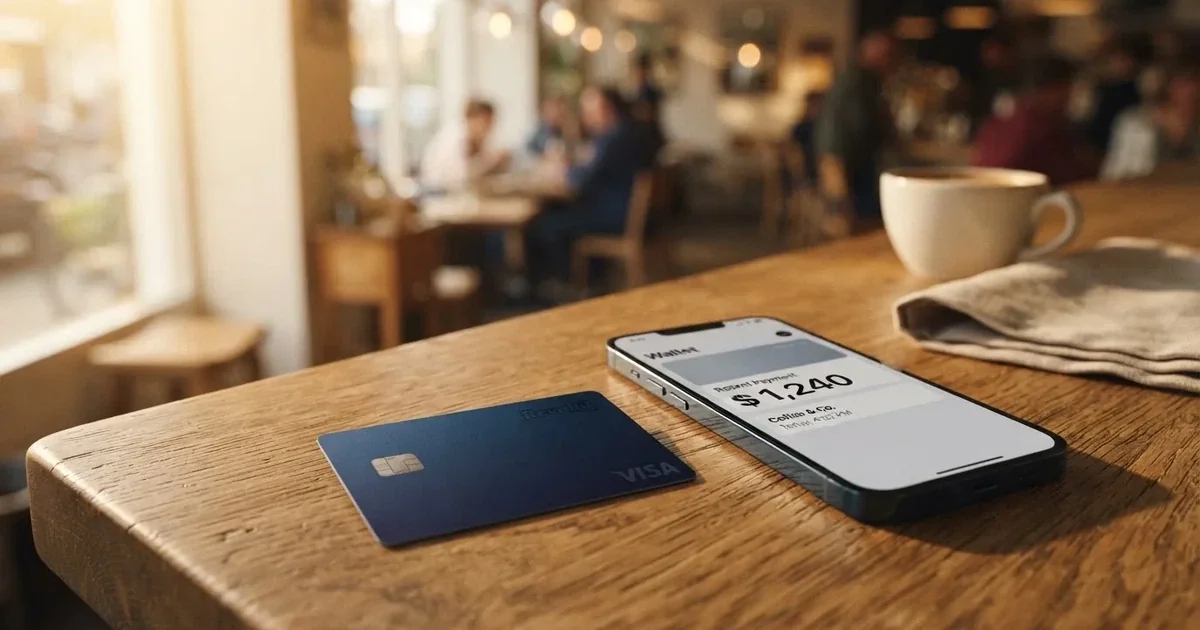
| Everyday use | 5 / 10 | Virtual Visa in a Telegram bot only; Apple Pay and Google Pay supported; no plastic, no ATM |
So who does that suit? Someone who already holds USDT on Tron, spends it casually, and genuinely cannot or will not complete identity verification. If you are in that group, there is not much else on the market that does this cleanly, and the price — $13 plus 4% — is not predatory.
Who it does not suit: anyone building a financial life on this. If you want a card you can raise a dispute through, freeze from an app, load with a bank transfer, or use at a cash machine, this is the wrong product, because none of those things are offered or described.
Will they give you the card
Short answer: the card’s own pages do not publish a country list at all. The stated position is that it works “wherever Visa is accepted”, and nothing is said about Russian or Belarusian citizens or residents either way.
That absence matters more than it sounds. A country list is the single most useful piece of information on a card’s site, because it tells you in advance who the issuer accepts. Here there is no list — not a hidden one you have to guess at, just none in the public pages. So you cannot answer “can I use this in my country?” from the information given. You can only read the general Visa acceptance claim and then find out.
What the terms do say is more specific about exclusions than about eligibility. To open the card you confirm that you are 18 or older and that you are not in a country under international sanctions. The service is unavailable to people from sanctioned countries and to people on sanctions lists. No country is named.
That sanctions language is doing real work in your case, whichever of the three situations you are in:
- If you live in Russia, you are looking at a card whose issuer is not identified and whose own documents say the service is closed to people from sanctioned countries and sanctions lists. I cannot tell you whether that includes you, because no country is named either way. Ask support in writing before you send anything, and keep the answer.
- If you live in another CIS country, the same ambiguity applies, and the risk is that your own bank blocks a transfer to a card operator or an exchange-like service. That is a decision for your bank, not for Tegro.
- If you are a Russian citizen living elsewhere, your citizenship is exactly the kind of detail a sanctions screening process looks at, separately from where you live. The card’s pages say nothing about how nationality is treated, so you are again relying on an unstated policy.
The absence of KYC is the same fact seen from two directions. It removes a barrier and it removes your protection at the same time. I will come back to what that costs you later.
How to get it
Three steps, and that is genuinely all: open the Telegram bot, order a card, and send USDT on TRC-20 to the address the bot gives you.
What you get is a virtual card. The product is Visa — the site’s header also mentions Visa/Mastercard, so treat the network as Visa unless support tells you otherwise. The currency is not stated. Card amounts and limits are in USD, which is the only currency clue you get.
There is no plastic. The card details arrive in the Telegram chat, so there is nothing to be delivered and nothing to wait for. If you were picturing a physical card in an envelope, that is not what this is.
On verification: the virtual card is sold as no-KYC — “no passport, no selfie, no verification” — and a Telegram account is enough. That is the honest version. The caveat sits in the same documentation: verification is required for “part of the products” with extended features, which involves name, date of birth, citizenship, address, ID and a selfie. Monitoring of unusual activity can also trigger a request for more information. The card’s own pages do not state what happens if verification fails or why someone might be refused.
That is worth pausing on. “No KYC” here means “no KYC for the basic virtual card”. It is not a promise that no one will ever ask you for documents.
The steps in short:
- Open the ordering bot @TegroCardbot in Telegram.
- Order the card; there is no application form.
- Send USDT on Tron (TRC-20) to the address the bot issues.
- Read the card number and expiry from the Telegram chat.
What it really costs: Fees
The headline numbers are cheap and the running costs are not trivial. Issuance is $13 once. There is no subscription and no monthly fee — the site is explicit about that. The top-up fee is 4% of the amount. The minimum card balance is $50, and the worked example on the site is that a $50 card costs $65 in total.

The real cost adds up quickly for smaller amounts. Loading $50 means paying $50 plus $2 (the 4% fee) plus $13 (the one-time issuance fee), or $65 in total. The $13 issuance fee is a fixed cost, so it eats a smaller percentage of your balance as the load size increases.
| Item | What it says |
|---|---|
| Issuance | $13, one time |
| Monthly fee | None; no subscriptions |
| Top-up fee | 4% of the amount |
| Minimum card amount | $50 (a $50 card costs $65 total) |
| Conversion fee / FX spread | Not stated |
| ATM | Not stated; no plastic card, ATM not mentioned |
| Start limit | $1,000 |
| Daily / monthly spend limits | Not stated |
Two of those rows are blank, and the blanks are the interesting ones. The foreign exchange fee and conversion spread are not stated, so you cannot calculate what a euro or Turkish lira purchase will cost you. That is not a minor gap: if you buy things outside the dollar, the conversion cost is the number you will actually feel in your own currency.
Limits are equally vague. The starting card limit is $1,000, and the terms say only that limits depend on the card type and may change. There are no daily or monthly spend figures.
Then the everyday cases, with the fees that actually apply:
- Paying a $30 subscription in dollars. No top-up fee applies at the moment of payment — the 4% was taken when you loaded. What applies is the card limit and whatever the issuer’s terms turn out to be, and those are not published.
- Paying a $30 subscription in euros. What applies is an FX fee and a conversion spread that are not stated. This is the cost you are least able to predict.
- Loading any amount. 4% of your load is taken on top as a fee. Whether larger loads are cheaper in percentage terms is not stated, so do not assume they are.
If you want a second opinion before committing money, run those three numbers yourself: 4% of your usual load, plus $13, plus an FX cost you will have to ask support to quote.
How to top up: Top up the card
Top-ups are the narrow part. The card is funded with USDT on the Tron network (TRC-20) only. Anything else has to be converted into TRC-20 first.
Practically, the bot issues a deposit address and a unique amount for each transfer, and the balance is credited automatically once the transfer is recognised. No codes to paste, no manual approval step — which is a real convenience compared with card platforms that expect you to submit a blockchain transaction for review.
The constraints:
- USDT TRC-20 only. USDC on Tron is not a native option since Circle stopped supporting it there in February 2024, and USDT on Ethereum, Solana or Polygon has to be converted first.
- Minimum balance $50, with the 4% fee and the $13 issuance on top.
- No fiat top-up is offered. There is no bank transfer, no card-to-card funding, no cash.
- Who pays the Tron network fee is not stated. On-chain costs are charged by the blockchain rather than the card provider, so assume a small TRX charge exists but check rather than assume it is zero.
The single network requirement is the constraint that decides this card for most people. If your USDT sits on Ethereum or Solana, you now have a conversion step, and each conversion is another thing that can go wrong.
Paying with it every day
Day to day, the card behaves like a prepaid Visa: you load it, and it spends the loaded balance. It cannot overdraw, which is a genuine comfort for anyone budgeting in a volatile asset.
Apple Pay and Google Pay are supported. That is the more important line on this page than it looks. Since you have no plastic, a mobile wallet is how you will pay in a shop that wants to tap. Both platforms replace your card number with a device-specific token, so the raw number you were given in the Telegram chat is not what a tap carries — but it also means your card has to be accepted by the wallet, and I would add it and test it early rather than at a till.
There is no app. Everything happens in the Telegram bot @TegroCardbot: ordering, balance, and support. If your Telegram account is compromised or you lose access to it, that is where your card control sits.
Not described anywhere: cashback or rewards. No reward scheme is mentioned. Blocked merchant categories are also not stated — I could not find a list of what the card refuses to pay for. Some issuers block gambling and similar categories by policy rather than by law, and the blocked list varies by issuer, so on this card you would be finding out at the till. For anyone who travels, that is worth knowing before it is a surprise.
If a payment goes wrong, the terms say refunds and disputes are handled under the rules of the payment systems and our partners’ timelines. The stated route is: try the merchant first, then support. No time frames are given. The governing law is Wyoming, USA — which tells you whose rules will be applied if it comes to a dispute, and is not a place you will be.
What can go wrong
The company structure is the thing to understand before anything else. The card is issued by an unnamed “Visa programme partner bank”. Tegro is the interface you order through and the support you talk to. The operator named in the terms is Libermall LLC, and the terms page is titled “Libermall Card” — a different name from the one you order under. Company entity details and licences are not stated.
What that means in practice: Tegro is not the issuer, and the issuing bank is not something you can look up on the page. If your money is frozen, declined or lost, the party who controls the card programme is a bank you were never told the name of. That is the single biggest structural risk here, and it is bigger than the 4% fee.
The custody arrangement follows from this. The card is custodial: an issuing partner bank holds the card, and Tegro sits in front. Nothing describes two-factor authentication, an instant in-app freeze, or deposit insurance. Tegro may pause an operation or restrict access when it sees risk. The card’s own guidance is the standard one: never share your PAN and CVV, and do not store them unencrypted.
Reversibility is limited in a way you should plan for. Blockchain transfers are irreversible — the terms say so directly. Once USDT is on its way to a deposit address, it cannot be recalled. On the way out, the card’s pages do not state a withdrawal process or what happens to a balance if the account is closed; they do say you may stop using the service at any time and that the operator may suspend or terminate access for violations, legal requirements or fraud prevention.
The track record is thin in both directions. I found one 5-star Trustpilot review, dated 5 June 2026, calling the card simple and noting that support and clear limits and fees will be important. No substantive complaints, and no Reddit threads. A Product Hunt-style listing on hunted.space shows 0 upvotes, 1 comment and no user feedback. One caveat worth carrying: that Trustpilot page is for tegro.cash, a possibly related brand, not confirmed to be this card. So the evidence base is a single positive review, which is not a track record in either direction — it is a lack of one.
No dated regulatory events turned up in my checks. The sanctions exclusion is stated as a rule rather than as something that has happened.
Support itself: a Telegram channel @Tegro_bot, which says it replies within a day. The ordering bot is a separate handle, @TegroCardbot. The site is in Russian and English. Support hours are not stated — “within a day” is not the same as “within working hours”.
What to take instead
The comparison depends on what you are actually short of. If you are short of KYC, Tegro is unusual and the alternatives mostly do not fill that gap. If you are short of network choice, fee transparency or a dispute process, there are cards that do more.
| Tegro | MaxSwap | Karta | Worldwide | |
|---|---|---|---|---|
| Score | 4.7 / 10 | 5.2 / 10 | 7.9 / 10 | 4.2 / 10 |
| Card | Virtual Visa | Virtual Mastercard | Visa Signature, virtual and physical | Virtual Mastercard, four tiers |
| Issue cost | $13 once | $50 card with $25 first deposit, issuance listed 77.125 USD | Virtual from 5.00 USDT (FAQ shows “30 USDT 5 USDT”, apparently the old price struck through); physical from 100.00 USDT | Standard from 2,900 RUB/year; Premium from 3,900 RUB/year; Promo 2,390 RUB issue, 0 RUB maintenance in year one; Business from 12,900 RUB/year |
| Top-up fee | 4% | 4.5% + $1 | Crypto top-up free; Promo tier 0% | SBP top-up with no transfer fee; App Store product shows 0.00 USD per operation |
| Payment fee | Not stated | 0.25 USD + 0.4% | 1.5%; SEPA 1.5% + EUR 2; SWIFT (USD) 1.4% + $2 | 0.00 USD per card operation |
| Networks | USDT TRC-20 only | Not stated: ADA, ALGO, AVAX, BCH, BNB, BTC, DOT, ETH, HBAR, HT, KRRX, LINK, LTC, MATIC, NEAR, SHIB, SUSHI, TON, TRX, USDC, USDT, XLM, XRP | USDT/USDC on Tron, Ethereum, BNB Smart Chain, Polygon, Arbitrum, Optimism, Base, Solana; fiat via ACH, SWIFT, domestic wire, SEPA, PIX, SPEI and others | SBP from any Russian card (credited in 1–3 minutes); App Store product adds USDT TRC-20 |
| Rewards | Not stated | Not stated | Cashback claimed, rate not stated; referrals in KARAT points (1 KARAT = 0.01 USDT) | Not stated |
Three observations from that table.
MaxSwap, at 5.2 / 10, is the closest analogue and is not obviously better. Its top-up is 4.5% plus $1 — steeper than Tegro’s 4% — and its payment fee of 0.25 USD plus 0.4% is disclosed where Tegro’s is not. Its advantage is network choice: a long list of coins, though the specific networks are not stated. Its site claims no geographical restrictions and says nothing about Russia, Belarus, or citizenship versus residence.
Karta, at 7.9 / 10, is the one I would actually look at first if you want a real card. It works in 200+ countries and territories where Visa is accepted, availability “depends on local regulations and partner coverage”, excluded countries are not mentioned, and citizenship versus residence is not stated. It is virtual and physical, free crypto top-ups, 1.5% per card payment, and it accepts eight networks plus a long list of fiat rails. Its own pricing has a wrinkle: the FAQ shows “30 USDT 5 USDT”, which looks like an old price struck through, so confirm what you are actually charged. Bank withdrawals are listed as coming soon.
Worldwide, at 4.2 / 10, comes from the other direction entirely. Its Telegram mini-app card is ordered and topped up “from Russia without a VPN”, which is a positioning, not a rule — eligibility rules and countries are not described, and nothing says where the card is issued. Pricing is in rubles, in tiers: Standard from 2,900 RUB/year, Premium from 3,900, Promo at 2,390 RUB issue with zero maintenance in the first year, Business from 12,900. Top-up by SBP from any Russian card, credited in 1–3 minutes, with no transfer fee; FX is described only as close to the exchange rate, with no percentage given. If you want to know how a Russian-facing operation describes its limits, this is the comparison — and it describes them barely any better.
Who I would recommend it to
I would recommend Tegro to one specific person: someone already holding USDT on Tron, who spends small amounts, who cannot complete KYC, and who treats the balance as cash rather than as savings. For them the product does what it says, at 4% plus $13, with no paperwork.
I would recommend against it to anyone who plans to hold a balance they would be upset to lose. Not because anything about the card looks fraudulent — I found no complaints and one positive review — but because the issuer is unnamed, the operator is an entity called Libermall LLC, licences are not disclosed, and custody sits with a bank you cannot identify from the page. Add a Telegram-only control surface, no app, no stated freeze, no stated two-factor authentication, no stated withdrawal route, and a terms page that stops at “handled under the rules of the payment systems and our partners’ timelines”. That is not a scam profile. It is a thin one.
The check I would make before sending a single dollar: ask support, in writing, three questions. Which bank issues the card, and under which licence? What is the FX fee and conversion spread on a non-dollar purchase? What happens to my balance if I close the account? None of the three answers is on the site, and the answers are worth more to you than the 4%.
Frequently asked questions
What is the Tegro card?
Tegro is a virtual Visa card sold through a Telegram bot, funded with cryptocurrency rather than a bank account. You open the bot, order the card, and send USDT to a deposit address the bot issues. It is not a bank account, and it is not an exchange. It is best understood as a thin interface in front of someone else’s Visa card programme, which is also why the fee and licence questions below are worth asking before you load it.
Does Tegro require KYC?
Not for the basic virtual card. The card’s pages advertise “zero KYC” and say a Telegram account is enough, with no passport, no selfie and no verification. Verification is required for “part of the products” with extended features, involving name, date of birth, citizenship, address, ID and a selfie, and unusual activity can trigger a request for more information. Expect that a no-KYC product can change its onboarding policy without much notice.
Is Tegro a bank, and who owns it?
No, Tegro is not a bank. The card is issued by an unnamed “Visa programme partner bank”, and Tegro is the ordering and support interface. The terms name Libermall LLC as the operator, and the terms page is titled “Libermall Card” rather than Tegro. Company entity details and licences are not stated on the public pages, which is the first thing I would want answered in writing.
What is the minimum deposit and what does it cost?
The minimum card balance is $50. On top of that, the issue fee is $13 once and the top-up fee is 4% of the amount. The site’s own worked example is that a $50 card costs $65 in total. There is no subscription and no monthly fee, which is the part of the pricing that is genuinely simple.
What network do I have to use to top up?
USDT on Tron (TRC-20) only. USDT held on other chains has to be converted into TRC-20 before it can be deposited, and USDC on Tron is not a native option. The bot issues a deposit address and a unique amount, and the balance is credited automatically — no codes, no manual approval. Who pays the Tron network fee is not stated.
Can I use the Tegro card in my country?
The card’s public pages list no countries at all; the only statement is that it works wherever Visa is accepted. The terms say the service is unavailable to people from sanctioned countries and on sanctions lists, and you must confirm you are not in a country under international sanctions, but no country is named either way. So for anyone living in Russia, in another CIS country, or abroad as a Russian citizen, there is no published answer to check — ask support and keep the reply.
Does Tegro have a physical card and can I use an ATM?
No physical card exists — the site says “no plastic” — and the card details are simply delivered in the Telegram chat. ATM cash withdrawal is not mentioned anywhere in the public pages. In practice a virtual card with no ATM is fine if you pay by phone, because Apple Pay and Google Pay are both supported; it is not fine if you need cash.
Is the Tegro card safe to use?
There is no evidence of a scam here: I found no substantive complaints, one 5-star Trustpilot review from 5 June 2026, and no Reddit threads. But that review is on a page for a possibly related brand, so the record is thin rather than clean. The structural risks are real: an unnamed issuing bank, custody with that bank, no app, no stated two-factor authentication or instant freeze, no stated withdrawal route, and irreversible transfers both ways.
How do I add Tegro to Apple Pay?
Apple Pay and Google Pay are both supported, and on this card they are close to mandatory, because there is no plastic to hand over. Add the card from the Telegram chat details into the wallet, then pay a small amount and check it before you rely on it. Note that the wallet replaces your card number with a device-specific token, so keep the number itself private, and never share your PAN or CVV with anyone who messages you.
What happens if I need a refund or want to close my account?
The terms say refunds and disputes are handled under the rules of the payment systems and the timelines of the company’s partners, with no time frames given; the route is to try the merchant first, then support. Governing law is Wyoming, USA. For closing, the terms say you may stop using the service at any time, and the operator may suspend or terminate access for violations, legal requirements or fraud prevention, but they do not state what happens to a balance on closure.
Written by the editors at Crypto Card Rating.