Cryptomus card review: a virtual card for people who already live in crypto
The Cryptomus card is not a bank card in the ordinary sense. It is a virtual Visa or Mastercard you create inside a crypto exchange account, fill with USDT or USDC, and then spend as if it were fiat money. There is no plastic to wait for, no branch, and — on the evidence I could check — a fee schedule that the company’s own pages describe only loosely.

I gave it 4.7 out of 10. That is not a rounding error, and it is not a condemnation. It is a precise description of a narrow product: for someone who already holds USDT, already has a Cryptomus account, and wants to pay for a subscription or a service in dollars without selling crypto on a spot exchange for every single invoice, the card does one thing competently. For almost everybody else — and especially for anyone who needs an ordinary bank card, or who wants a physical card, or who wants to know in advance exactly what a payment will cost — the gaps outnumber the features.
The conditions described here are current as of 21 October 2026.
Table of Contents
Scorecard: the card against six criteria
Here is how the total breaks down, criterion by criterion, with the reasoning behind each mark.
| Criterion | Mark | Why |
|---|---|---|
| Who can get it | 8 / 10 | Open to “most countries worldwide”, subject to local regulation; the actual country list is not published and may change |
| Cost | 3 / 10 | $4 issuance and a 3.2% top-up fee are clear; monthly fees, FX markup and payment fees are not stated; an unofficial source quotes a 3.9% FX fee |
| Top-up options | 5 / 10 | USDT and USDC only, with no networks named; the list may expand |
| Reliability and complaints | 3 / 10 | The issuer and the contracting entity are not named on the cards pages; Trustpilot shows 2.4/5 across 521 reviews; documented card blocks and AML holds |
| Everyday use | 4 / 10 | Virtual only, Visa and Mastercard, NFC phone payment mentioned; Apple Pay and Google Pay only on a third-party listing; no ATM detail |
| Audience fit | Crypto users who pay online with USDT | The card is built around stablecoin balances, not around everyday banking |
| Total | 4.7 / 10 | A specialist tool with real gaps in cost transparency and recourse |
Read the total honestly: the two strongest marks (access and, implicitly, ease of getting started) pull up the average, while cost and reliability pull it down hard. If those two matter most to you — as they do for most people — then 4.7 is the number that should decide it.
Will they give you the card
Yes, probably. Cryptomus says the card is available in “most countries worldwide”, and adds that availability may be restricted by local regulation. That is as far as the public pages go on geography, and it matters that you read that carefully: there is no published country list, and the card company says the list may change. So “most countries” is not a promise you can check in advance for your own address. You find out at sign-up.
Two further points are simply not stated on the public pages, and I would rather say so than invent them:
- Whether eligibility runs on residence or citizenship. These are different tests in this industry, and they can exclude people who would otherwise qualify. The pages do not say which applies.
- The position for Russia and Belarus. Not stated. A third-party blog from 2026 claims Russians can obtain the card, but that is an unverified claim from a site with no obligation to be right, and I did not find it corroborated anywhere official. Treat it as a rumour, not a fact.
The broader background matters here, and it is worth understanding before you sign up for anything. Separately, nationality is recorded and screened separately from residence in KYC systems, because sanctions screening and issuer risk policy apply to citizenship and country of birth, not only to your address. A card that is open to residents of a country may still refuse a citizen of another one, and that refusal is routine, not an insult.
So the honest answer to “will they give me the card” is: probably yes if you live in a country the platform actually serves, but you cannot verify your own eligibility from the public pages, and citizenship is a separate axis you cannot check either. If your situation involves crossing a sanctions boundary, I am not going to offer advice on that here — ask the company directly in writing and keep the answer.
There is one more thing worth knowing about who gets through the door, because it applies regardless of where you live. Sanctions screening and issuer risk policy are routinely applied to citizenship and country of birth as well as to your address, which means two people with identical addresses can be treated differently. Combined with the March 2022 suspension of Russian-issued cards abroad, this is why people leaving Russia started looking for foreign-issued cards in the first place, and why “most countries worldwide” gets read so carefully in that situation.
Who gets refused, and who never applies
Since the pages name nobody, the honest list of refusals is one I cannot write from official sources — and that absence is itself the finding. Nobody publishes a declined-profile list, so people who would be refused cannot recognise themselves in advance and stay out. The only thing you can do is run the checks above yourself: your residence, your citizenship, your document type, and the destination country you will spend in.
A practical note that costs you nothing: the KYC partner used by comparable platforms sometimes accepts only identity documents issued in the same country as the applicant. That kind of rule exists across this industry even when a particular card company does not advertise it. If your passport and your residence are in different countries, ask before you upload anything, because a rejected document can cost more time than an upfront question.
How to get it
The route is short, and that is one of the card’s real strengths. Cryptomus says you register on the platform and pass KYC before you can get a card. After that:
- Virtual cards only. Both Visa and Mastercard are offered, described as “10+ BINs”, multi-currency, with the currencies themselves unnamed.
- Issued in minutes on the company’s description.
- No physical card at all. The company states the card is “issued instantly and works immediately after activation”.
- NFC phone payment is mentioned, which implies you can hold the card in your phone wallet for contactless payments.
What the pages do not state: which documents you need, whether proof of address is required, what the minimum age is, how many KYC levels exist, how long verification takes, or on what grounds an application is rejected. That is a lot of unanswered questions stacked on top of a process that is described in a single sentence. If you are someone who needs to know exactly what document to photograph before starting, or who wants a published rejection-reason list, this is not the card for you — not because it is dishonest, but because it is silent.
The same silence applies to activation, which the company does mention. “Works immediately after activation” implies an activation step, and there is no published description of what that step involves, whether it is automatic, or what happens when it fails.
Fees: what it really costs
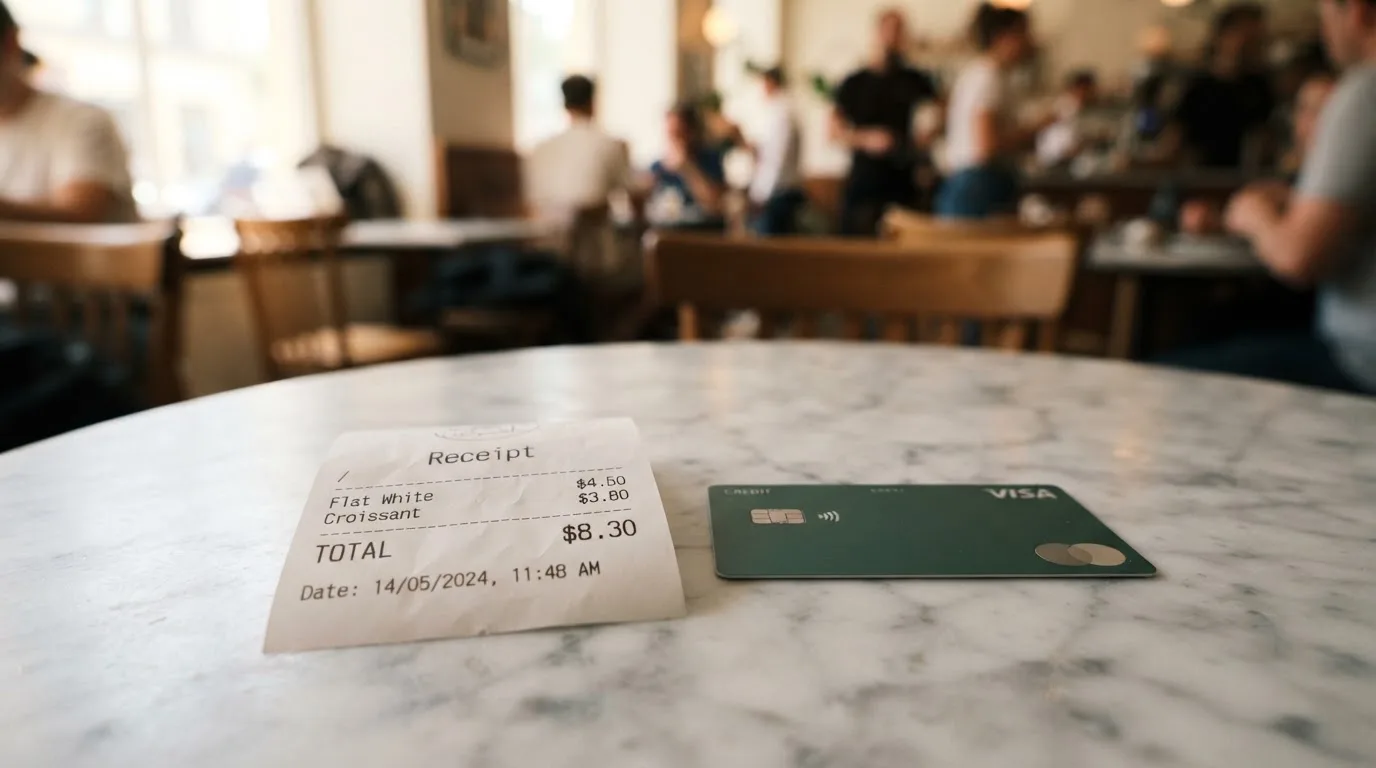
This is where the card is weakest, and I would start here before anything else. The costs table below mixes what Cryptomus states with what it does not state, because the gaps are as informative as the numbers.
| Item | What the card says |
|---|---|
| Issuance fee | $4 |
| Monthly fee | Not stated; optional maintenance or inactivity fees may apply depending on card type |
| Top-up fee | 3.2% |
| Conversion rate | Crypto is converted to fiat at the market rate at the time of top-up |
| Payment / conversion fees | “May vary” — no figure given |
| FX fee | Not stated officially; a third-party listing quotes 3.9% |
| ATM withdrawal | Not stated officially; two third-party listings contradict each other |
| Daily spending limit | Not stated officially; one third-party listing says $10,000 |
| Monthly spending limit | Not stated officially; one third-party listing says $25,000 |
| Network gas for a deposit | Charged by the blockchain, not by the card provider |
Several patterns jump out. First, the only two hard numbers are $4 and 3.2% — and the 3.2% is charged on the top-up, not on the purchase, which people routinely misread. If you move $100 in, $3.20 goes to the platform before you spend a cent.
Second, the FX fee is the number that would actually hurt you if you hold a non-dollar balance, and it is not stated. A third-party listing gives 3.9%, which I cannot confirm and which you should not plan around as gospel — but treat it as a working assumption for stress-testing your costs until the company publishes a figure.
Third, limits are not stated, and the two unofficial figures that do exist ($10,000 daily, $25,000 monthly) come from an undated third-party listing. Plan against your own history, not against them.
Now let me run three ordinary payments through this, so you can see which fees actually bite:
A $20 monthly subscription, paid from a $20 USDT top-up. You pay 3.2% on the $20 top-up to the platform. The card says the crypto converts at the market rate at top-up, so no separate conversion fee applies to that tranche. If your payment crosses a currency boundary, an unstated FX fee appears on top. Net: you lose the 3.2% fee plus any FX markup.
A flight purchase, topped up just in time from USDT. The top-up costs 3.2%. Payment fees are “may vary”, so your real cost on this one is the 3.2% plus an unknown. This is the case where the missing numbers hurt: on a small payment the unknown is rounding, on a larger one it is a decision.
Paying a foreign merchant in euro while your balance is dollar-based. Here the unstated FX fee is the whole story. A 3.9% figure, if accurate, turns a purchase into a higher dollar amount before you have spent anything. This is the payment where you should look hardest before you commit.
| Pros of the cost structure | Cons of the cost structure |
|---|---|
| Two prices are published: $4 issuance, 3.2% top-up | Monthly fee and inactivity fee depend on “card type” with no tiers named |
| Crypto converts at the market rate at top-up, so timing is your choice | Payment and conversion fees are “may vary” — no number at all |
| No physical card means no shipping cost | FX fee is unstated; a third party quotes 3.9% |
| No plastic to lose | Gas is charged by the blockchain on top of everything else |
You also cannot currently reverse-engineer the tiers. The page invites you to “choose a card that fits your needs” and says some fees depend on card type — but no tiers are named anywhere, so you cannot compare a basic card against a premium one. You are being asked to choose without being shown the menu.
Top up: how the money gets in
Topping up is the cleanest part of the design, and the reason the card exists at all. The card is funded in fiat, loaded from USDT or USDC, at a 3.2% top-up fee. The list of accepted coins may expand, but at the time of checking it is those two.
What you will not find: the minimum top-up, and the fiat top-up options — that is, whether you can add money by bank transfer or card directly. Both are not stated. You load from crypto.
That single design choice has consequences downstream, and they belong here rather than in a footnote:
- Networks are not specified. If you send USDT on the wrong chain, the deposit may be lost or need manual support recovery with no guarantee, because blockchain transfers are irreversible. Before your first transfer, confirm the network and the deposit address in the app — this is the single highest-risk moment in the whole flow.
- You need the gas token. On Ethereum, fees are paid only in ETH, so a wallet holding USDT and no ETH cannot send it. Tron-based transfers burn TRX. Sending a small amount of the native token first is the habit experienced users develop.
- USDC over TRC20 is not a native option, since Circle stopped supporting USDC on Tron in February 2024. If your USDC sits on Tron, that is not the path.
- Stablecoins are not perfectly stable. TerraUSD collapsed in May 2022 and USDC briefly lost its peg in March 2023. The 3.2% fee is stable; the value behind it is not guaranteed to be.
How to get the balance back off the card — to a bank, to crypto, or at closure — is not stated. There is no published withdrawal or account-closure procedure. For a prepaid-style balance that is a genuine gap, because the money is not yours until the platform releases it.
Paying with it every day
Day to day, the card is competent within its limits. Virtual Visa and Mastercard, add it to a phone wallet for contactless payments, spend the fiat balance.
- Mobile wallets. The official pages mention NFC phone payment but do not name Apple Pay or Google Pay. A third-party product listing does name both as supported. I cannot confirm it, so test it yourself with a small payment before relying on it.
- In-app controls. The app is in the App Store and Google Play and offers expense control and transaction history. App ratings are not stated.
- Rewards. Nothing. The cards page mentions no cashback or rewards programme.
- Blocked merchant categories. Not stated. This matters if you travel: gambling (MCC 7995) and similar categories are commonly blocked on crypto cards by issuer policy, and the blocked list varies by issuer.
- Disputes and chargebacks. Not stated. If a purchase goes wrong, there is no published procedure for raising it, which is exactly the moment you need one.
- ATM. Not stated officially. Two third-party listings flatly contradict each other: one says ATM use is unavailable because the card is virtual-only, the other lists an “unlimited” ATM withdrawal limit. Both undated. Since the card is virtual, the first is more plausible, but I will not present that as fact.
Two category behaviours explain most surprise declines. Merchants can look up the BIN to see which institution and country issued a card, and may apply extra scrutiny when the issuer country differs from your billing address — which is why a foreign-issued card can look “foreign” to a shop. And address verification is generally unavailable for foreign-issued cards, which causes declines on its own. A declined authorisation may leave a hold on your funds for several days, up to about a week. So a decline is often not a problem with your balance; it is your card’s origin being visible.
What can go wrong
Nothing on this list is a prediction. These are documented reports I read while checking the card, plus structural facts about who actually controls your money.
The issuer is not named. The public cards pages do not name the issuing bank or the entity you contract with. This matters more than it sounds. A crypto card typically involves three parties: the network (Visa or Mastercard) sets the rules, the issuer is a licensed bank or e-money institution that holds the card programme, and the crypto brand is often only the programme manager and front-end. When something goes wrong, “who controls this card programme?” is the first question worth asking, and here I could not answer it from official pages.
The networks can switch a programme off. Visa and Mastercard license issuers and can suspend a programme. Visa terminated its agreements with FTX on 13 November 2022 and the FTX US debit card was wound down. WaveCrest, a Visa issuer that supplied several crypto card brands, was suspended by Visa in Europe in 2018, closing all WaveCrest-issued Visa programmes. The usual pattern in a closure is a notice period, then spending and loading stop, then users are asked to withdraw remaining balances.
The complaint record. Trustpilot shows 2.4 out of 5 from 521 reviews. Two things about that number matter. First, the reviews are mostly about the payment service, not the card, so read it as a signal about support quality rather than a card verdict. Second, the distribution is stark: 43% one-star and 49% five-star, and Trustpilot flags the page as “may be associated with high-risk investments”. A bimodal score like that usually means many people are fine and a meaningful group are not.
Within that, the card-specific report I found was on 24 September 2026: a virtual card was deactivated after a $1,200 transaction and a refund was refused. The company’s explanation was that the issuing bank blocked the card after high decline rates, and that Cryptomus does not control that card programme. That is at least an honest answer — and it is also the whole problem in one sentence: the party you pay is not the party that decides whether your card works.
I also saw recurring AML/KYC holds on funds between August and October 2026, on 30 August, 6 September, 14 September, 17 September and 6 October, plus complaints about slow support and tickets closed as duplicates. This is where knowing the regulatory shape helps. KYC obligations require institutions to verify customers and monitor transactions; where due diligence cannot be completed, EU rules require them to refrain from the transaction or, where necessary, end the relationship. That is why accounts get frozen pending documents — it is the system working as designed, not a personal judgement about you. But it does mean a hold can sit on your money for a period you do not control.
Third-party sources also disagree about the fees themselves — one says a free virtual card with 0.5% conversion, which flatly contradicts the $4 and 3.2% I read on the official page. I have used the official numbers throughout this review, and I would treat any differing third-party figure as unverified.
Custody. The card’s security features are 3D Secure authentication, freeze and unfreeze, biometric authentication, and an assurance that no one can withdraw funds or pay without your knowledge. A CertiK project page is linked. The custody model and any insurance are not stated. That is the gap to understand: with a custodial wallet the provider holds the credentials, so you must trust the provider completely; a seed phrase is typically 12 to 24 words, and anyone who obtains it can restore the wallet and spend the funds. Custodians do fail — Mt. Gox (about $350 million reported stolen, 2011–2014), Coincheck (about $400 million, 2018), Ronin Network ($625 million, 2022). And stablecoins are not censorship-proof: Tether says it disables tokens on OFAC-sanctions-listed wallets and has frozen funds tied to illicit activity.
Support. A Telegram bot (cryptomus_support_bot), [email protected], and an FAQ. Languages and hours are not stated. Given the duplicate-ticket complaints, I would treat the Telegram bot as the fast route and email as the record-keeping route.
A note on your taxes, not advice on it. In the US the IRS treats digital assets as property, so exchanging them for goods or services generally produces a taxable gain or loss, measured in local fiat currency at fair market value on the transaction date. Each card payment funded from crypto can therefore be a separate disposal event. Whether that applies to you depends on your jurisdiction and your personal position — this is a question for a professional in your country, not for a card review. I say that only because a card that converts silently can leave you with a long list of small disposals you never noticed you made.
Who controls your money here
The missing issuer name is not a documentation quibble; it decides who you argue with. In this model the network sets the rules, a licensed issuer holds the programme, and the crypto brand is often only the manager and front-end. When your money is in a custodial wallet, the provider holds the credentials and you must trust it completely — a seed phrase is typically 12 to 24 words, and anyone who holds it can restore the wallet and spend everything in it. Transfers are irreversible, and no network can undo one.
That risk has materialised before, repeatedly. Mt. Gox lost roughly $350 million between 2011 and 2014; Coincheck about $400 million in 2018; the Ronin Network $625 million in 2022. Stablecoins are no escape from this: Tether says it disables tokens in wallets on the OFAC sanctions list and has frozen funds tied to illicit activity.
Who closes programmes, and what closure looks like
Card programmes can be switched off by the network. Visa terminated its agreements with FTX on 13 November 2022 and the FTX US debit card was wound down by its issuer. WaveCrest, a Visa issuer that supplied several crypto card brands, was suspended by Visa in Europe in 2018, closing every WaveCrest-issued Visa programme. A typical closure runs in three stages: a notice period, then spending and loading stop, then users are asked to withdraw their remaining balances. One 2026 closure reported by a secondary source ended new loads on 8 July 2026 and spending on 8 August 2026 — single source, unconfirmed, but the shape is what these events look like.
What to take instead
I looked at three alternatives on the same basis. All three score higher than the Cryptomus card.
| Card | Score | Access | Format | Standout feature | Main drawback |
|---|---|---|---|---|---|
| Cryptomus | 4.7 / 10 | “Most countries worldwide”, no list published | Virtual only | Cheapest published top-up fee (3.2%) | Costs, limits and issuer unstated |
| Bitrefill | 6.8 / 10 | Subject to partner eligibility criteria | Virtual and physical Visa | 2% cashback, no cap — 1% on crypto deposits, 1% on purchases | Inactivity fee after 12 months; amounts not stated |
| UPay | 6.1 / 10 | 180+ countries claimed; some countries not served | Virtual and physical, personal and business | Broad support claim | Fees not stated; ID must match user’s country |
| Kemy | 6.0 / 10 | “190+ countries”, restrictions apply | Unlimited virtual cards plus one physical Mastercard | Physical card with DHL Express included | Expensive: $250 issuance and $10/month physical |
Where each one wins:
Bitrefill is the one I would look at first, because it is the only card here that names a rewards rate rather than a mystery fee: 2% total cashback with no cap, split as 1% on each crypto deposit and 1% on each purchase. It offers both virtual and physical Visa, its terms imply a euro card currency since crypto deposits are converted to euros, and it funds from a long list — Bitcoin, Lightning, Ethereum, USDC, USDT, Solana, BASE, Polygon, Li.Finance, Apple Pay, Google Pay, Visa and Mastercard — with SEPA transfer also supported. Its terms are explicit that access is “subject to eligibility criteria” and that further requirements “established and verified by our partners” apply, and it charges 1.99% for a SEPA pay-in. The card page calls it free through the app, but the issuance amount, the monthly fee and the inactivity fee that kicks in after 12 months without spending or cash-out are all unstated.
If you want the widest stated reach, UPay claims support in 180+ countries, offers virtual and physical cards for both personal and business use, and converts payments to USD, EUR, AED and others. It funds from BTC, ETH, USDT and USDC. Two cautions: its fees are entirely unstated, and its KYC partner accepts only identity documents issued in the same country as the user — which is a stricter rule than most people expect and a real obstacle for anyone whose documents and residence do not match.
If you want a physical card and don’t mind paying, Kemy offers unlimited virtual cards plus one physical Mastercard with contactless, valid three years, one per user, with DHL Express included. But at $250 issuance and $10 a month for the physical card, or $15 and $2 a month for a virtual one, it is by far the most expensive here — and its transaction fee is 3.5% plus $1, with $0.80 for a failed transaction. Its own main-account deposit fee is shown as 8% in a summary and 5% in a section, which is a small but telling inconsistency. Still, its country coverage — “190+ countries” — is the most specific number any of these cards publish.
Who I would recommend it to
I would recommend the Cryptomus card to one person: someone who already holds USDT or USDC, already uses Cryptomus for other reasons, pays for a small number of recurring online services in dollars, and has accepted the 3.2% top-up as the price of not selling crypto each time. For that person, a card that appears in five minutes, works immediately after activation, and needs no plastic is genuinely convenient.
I would not recommend it to anyone who needs a primary card, who is sensitive to FX cost, who travels and pays in many currencies, who withdraws cash, who needs a physical card, or who wants to read a clear fee schedule and a clear complaints procedure before committing. The 4.7 reflects that: excellent access, adequate funding, and then thin answers on everything you would need in order to trust it with a meaningful balance.
The one thing I would ask before depositing anything: what is the maximum you are willing to have sitting on a virtual card whose issuer is not named and whose fee table is incomplete? Set that number yourself, keep it there, and treat the balance as spending money rather than savings. Then, before your first on-chain deposit, confirm the network and address in the app — that is the moment with no undo.
Frequently asked questions
What is the Cryptomus card?
It is a virtual payment card issued through the Cryptomus crypto platform, available on Visa and Mastercard networks. You do not receive plastic: the card exists as card details inside your account, appears in minutes, and works immediately after activation. Spending draws on a fiat balance you load from USDT or USDC, with a 3.2% top-up fee. It is a payment tool for crypto holdings, not a bank account.
How does the Cryptomus card actually work?
You register and pass KYC, choose a virtual Visa or Mastercard, and top it up. Your crypto is converted into fiat at the market rate at the moment of top-up, and the card then spends that fiat balance like a prepaid card, so it cannot go negative. Because the balance is pre-loaded rather than drawn from a current account, each payment depends on having topped up first. Contactless payment by phone is supported through NFC.
Is Cryptomus a bank?
No — it is a crypto platform, not a bank, and its public card pages do not name an issuing bank or the contracting legal entity. In this category the usual arrangement is a licensed bank or e-money institution that holds the card programme, with the crypto brand as the programme manager and front-end. That distinction is what decides who controls your card when something fails, and here the official pages do not answer it.
Who can get the Cryptomus card?
Cryptomus states “most countries worldwide”, subject to local regulation, but publishes no country list and says the list may change. Whether the test is residence or citizenship is not stated, and neither is the position for Russia or Belarus. A third-party 2026 blog claims Russians can obtain it, but that is unverified and I found no official corroboration. Practically, you discover your own eligibility only at sign-up.
Does getting the card require KYC?
Yes. Cryptomus says you must register on the platform and pass KYC before you can be issued a card. What you will not find published: which documents are needed, whether proof of address is required, the minimum age, how many verification levels exist, or how long it takes. Note also that due diligence rules require institutions to freeze or end relationships where verification cannot be completed, which is why accounts hold funds.
How much does the Cryptomus card cost?
Two figures are published: a $4 issuance fee and a 3.2% top-up fee. Everything else is either unstated or variable — monthly and inactivity fees depend on card type with no tiers named, payment and conversion fees are described only as “may vary”, and the FX fee is not stated officially, though one third-party listing quotes 3.9%. Spending limits are also unstated. Budget from your own history rather than from unofficial numbers.
Can I top up the Cryptomus card with fiat?
Not from what the public pages say. The card is funded in USDT or USDC, with a 3.2% fee, and fiat top-up options are not stated. So the practical sequence is: hold stablecoins, transfer them in, let the platform convert at the market rate, spend. Two things to check before your first transfer: which network to use, since sending on an unsupported chain can be lost or need manual recovery, and that you hold the network’s native token for gas.
Is it safe, and is Cryptomus safe to trust?
The card advertises 3D Secure, freeze and unfreeze, and biometric authentication, which are standard safeguards. What is not stated is the custody model and any insurance, which is the part that matters for your balance. Bear in mind that custodial providers have a documented failure history — Mt. Gox, Coincheck, Ronin Network — and that a seed phrase of 12 to 24 words in the wrong hands restores and spends the wallet. The card is a convenience layer; treat the balance on it as spendable, not as savings.
Is the Cryptomus card free?
No. Issuance costs $4, and the top-up fee is 3.2% of what you load. Some unofficial third-party listings claim a free virtual card with 0.5% conversion, but those contradict the company’s own pages and I treat them as unverified. Where a figure appears on an official Cryptomus page, I have used it here and nowhere have I substituted a number of my own.
Where can I use the card, and why do payments get declined?
Anywhere cards are accepted, but virtual-only and foreign-issued, which explains most declines. Merchants can look up the BIN and see the issuer and country, and may scrutinise a card whose issuer country differs from the billing address. Address verification is generally unavailable for foreign-issued cards, causing further declines, and gambling and similar categories are commonly blocked by issuer policy. A declined authorisation can leave a hold on your funds for several days.
Prepared by the Crypto Card Rating editorial staff.