Zeal card review: the crypto card you hold yourself, and the shutdown hanging over it
I have been through the Zeal card’s own pages, the Gnosis Pay documentation behind it, the app store listings and the reviews people have left, and I want to be straight with you about what I found: this is a genuinely nice product wrapped around an issuer that has announced it is closing the whole consumer programme on 20 December 2026. That date should shape your decision more than anything else on this page. If you are planning to hold this card past the end of the year, you are not buying a payment card, you are buying a countdown.
Everything below reflects what the card’s public pages say on the date shown under the first paragraph. I have not opened an account or moved money through it, so treat me as a reader who read carefully rather than as a customer.
The information in this review is current as of 21 October 2026, based on Zeal and Gnosis Pay public documentation.
Table of Contents
- Verdict: 6.1 out of 10, and the score hides why
- Who will they give you the card to?
- How to get it, and what they will ask you for
- Fees and what a payment actually costs you
- How to top up
- Paying with it every day
- What can go wrong, and what has already gone wrong
- What to take instead
- Who I would recommend it to
- Frequently asked questions
Verdict: 6.1 out of 10, and the score hides why
My score for the Zeal card is 6.1 out of 10. A number that sits almost exactly in the middle tells you very little on its own, so let me show you what sits underneath it, because the shape of this score is the whole story: strong on cost and on everyday mechanics, weak on something you cannot fix by shopping around — reliability.
| Criterion | Mark | Why |
|---|---|---|
| Who can get it | 7 / 10 | Spending works in 150+ countries, but whether the card is issued to you depends on eligibility and where you live; the programme runs in the EU, UK, Brazil, Colombia, Mexico, Japan, Singapore, the Philippines, Indonesia and Thailand |
| Cost | 8 / 10 | Officially there is no sum published at all; Zeal adds no foreign-exchange fee of its own. Unofficial sources say ordering and delivery are free, replacement is 4.99, the monthly fee is 0, and the first five ATM withdrawals are free before 2% |
| Top-up options | 5 / 10 | It spends balances in Safe stablecoin accounts in EUR, USD and GBP on Gnosis Chain and Celo, but Zeal never names the individual coins for its own card |
| Reliability and complaints | 2 / 10 | Gnosis Pay is closing the consumer card at 23:59 UTC on 2026-12-20, GNO cashback ends 2026-09-30, there was an exploit of a module on 2026-06-01, and Trustpilot sits at 3.5 out of 5 from 17 reviews against 2.3 for the issuer |
| Everyday use | 8 / 10 | A virtual and a physical Visa, Apple Pay, and ATM withdrawals on Gnosis Pay’s tariff; unofficial sources add Google Pay |
| Total | 6.1 / 10 | A good card attached to a programme that is ending |
So who does it suit? In plain terms, this is a card for someone who already keeps their own crypto wallet, who spends in euros, dollars or pounds, and who wants stablecoin balances sitting behind an ordinary Visa number rather than moving money to an exchange first. Self-custody is the appeal: your money stays in a Safe you control, so no institution can freeze it on its own initiative. If that is you, and you are prepared to hold the card only for the months it has left, the mechanics are genuinely good.
Who does it not suit? Anyone who needs a card their employer can reimburse, or one with a chargeback route they trust. Anyone who is uneasy being the only line of defence against a stolen seed phrase. And anyone who just wants a cheap way to pay for things without thinking about networks — this card asks you to care about which chain a token sits on, and that is a real ongoing cost of attention that never appears in the fee table.
One more thing before you go further. Zeal is not a bank, and it does not pretend to be. The app developer is grwth lbs ltd; Zeal is self-custodial software and is not regulated; the card programme is managed by Gnosis Pay Co Ltd (UK company number 14919639); and the card itself is issued by Monavate Limited, an FCA-authorised e-money institution licensed by Visa Europe. That chain of responsibility is normal for this category and it is reassuring — but it is also the chain that Gnosis Pay has just announced it is walking away from.
Who will they give you the card to?
Officially, the card’s own pages say spending works in more than 150 countries, and that issuance “depends on eligibility and regional availability”. The Gnosis Pay card programme is live in the EU, the UK, Brazil, Colombia, Mexico, Japan, Singapore, the Philippines, Indonesia and Thailand. Zeal’s own app update notes have added card support for Mexico, Colombia and Bolivia.
That sentence — issuance depends on eligibility and regional availability — is doing a lot of work, and you should read it as a gate rather than a promise. There are two lists tangled up in this category: the countries where the card can be used, and the countries where you can be issued one. Spending in 150+ places does not help you if you cannot get the card in the first place.
Here is what I can piece together about the gate, and I want to flag clearly which parts are the card speaking and which are other websites guessing:
- From Zeal and Gnosis Pay: the programme countries listed above, and an explicit condition of eligibility and regional availability.
- Unofficial, from third-party card comparison sites: the European Economic Area and the UK are named as requirements, while the order screen has shown the EU, Switzerland, Iceland and Norway. The same sources describe 36 countries as available and 21 as restricted, and list Latin America entries including Argentina, Brazil, Colombia and Mexico. One of those sites lists Bolivia as both supported and coming soon at the same time, which tells you how much to trust a comparison table.
The single most important question here, and the one I cannot answer from the card’s public pages: what the citizenship and residence rules are, including for Russia and Belarus, is not stated. Nobody at Zeal publishes it, and nobody in the documentation I read fills the gap. If you are in Russia or Belarus, that means you are being asked to rely on a comparison site’s guess about a regulated onboarding process, and I would not do that without asking support directly.
Now, what about Russian speakers specifically? This matters a great deal, so let me be concrete rather than vague. The card’s rules turn on two separate things that KYC systems always check apart: where you live, and what citizenship and identity document you hold. Sanctions screening and issuer risk policy are applied to citizenship and country of birth as well as to your address. That is background, not a Zeal-specific rule, but it is why the two answers can differ.
- People living in Russia: the card’s pages do not name Russia as a supported programme country, and eligibility is not published. The sensible reading is that a Russia-based address is not on the list. I want to be clear that this is my inference from the programme list, not a rule Zeal has printed.
- People living in other CIS countries: several CIS states appear in the programme’s neighbourhood rather than in it — the programme lists EU and UK states plus a specific set of Latin American and Asian countries. Kazakhstan, Armenia, Georgia, Kyrgyzstan and Uzbekistan are not on the list I read, and the rule for countries nobody has named is simply not stated. Armenia and Georgia being absent is notable, because people often assume proximity to the EU is enough. It is not.
- Russian citizens living elsewhere: this is the group with a real chance, and also the group with the most ways to be refused. If you live in a supported country and hold a citizenship the issuer accepts, you are in the pattern the programme is built for. If you live in a supported country but your passport is Russian, the issuer screens nationality separately, and its policy on that is not published. Do not assume a local address solves it, and do not assume a Russian passport disqualifies you either. Ask.
On top of all that sits the network history that makes cards like this attractive to people who cannot get an ordinary one. After Visa and Mastercard suspended operations in Russia in March 2022, cards issued by Russian banks stopped working abroad, and that is a key reason people who left look for foreign-issued cards at all. A self-custodied crypto card is one of the few routes that does not depend on a traditional bank in your country of residence. That is the real opportunity here. It is also exactly why the eligibility rules are so guarded, and why you should treat a rejected application as a possibility rather than an inconvenience.
How to get it, and what they will ask you for
The signup route is short on paper: get the app, sign in with Ethereum, and you are into Gnosis Pay onboarding, which includes KYC. Verification is handled through Sumsub. Zeal’s own site does not set out the KYC steps itself — it points at Gnosis Pay’s documentation.
Here is the honest split again. Officially, the following are not stated anywhere in the card’s public pages: which documents you need, what age you must be, how long verification takes, what the KYC tiers are, what the rejection reasons are, and how or when a physical card is delivered. Zeal says physical cards are offered; it does not say to which countries, in what time, or at what cost.
Unofficial sources, from third-party comparison sites, fill in a plausible picture: full identity and address verification, age 18 and over, a government ID or passport plus proof of address issued within the previous three months, verification through Sumsub, and an explicit warning that uploading documents does not guarantee approval. An older fee page mentioned by one of these sites once listed delivery within ten days of shipping verification, though the date of that page is unclear — I would not plan a holiday around it.
For context on why this step is so heavy-handed: KYC is not the card being fussy. Regulated businesses must verify customers and assess risk under anti-money-laundering and counter-terrorism-financing law, including ongoing monitoring and suspicious-activity reporting. In the EU, customer due diligence covers name, address, date of birth, nationality and identity documentation, a sanctions check, the purpose of the relationship, and whether you are a politically exposed person. In the US, the customer identification programme requires name, date of birth, address and an identification number, and electronic systems also validate proof-of-address documents against records. If due diligence cannot be completed, EU rules require the institution to hold off on the transaction or the relationship and, where necessary, end it. That is why accounts freeze pending documents, and it is worth understanding before it happens to you rather than after.
There is one point worth pausing on, and it is about the shape of the thing you are installing. Zeal’s app shows iPhone support for iOS 16.2 and later, including Mac with M1 and Vision Pro. When you open an app that can see your wallet, you are running a piece of software with deep access to your funds. The card’s documentation points to a security policy on GitHub, an audited wallet, Safety Checks and transaction previews, biometric passkey authentication, real-time transaction alerts and the ability to freeze the card in the app. Those are the right features to insist on. The seed phrase is still the master key: it is typically twelve to twenty-four words in an unencrypted form, and anyone who obtains it can restore the wallet and spend your funds. Blockchain transfers are typically irreversible, so a stolen key has no recovery path — the network cannot freeze or return anything.
One practical question I would want answered before applying: what exactly happens to the card and to balances held in the Safe if you stop using it. Zeal states that Earn balances in USD or EUR are withdrawable around the clock with no lockups, and that funds in a Safe stay accessible because you control them. But the steps and fees for withdrawing the card balance are not stated, and neither is what happens to a balance sitting on the card at the moment it closes. With a closure date on the calendar, that is not a footnote. It is the first question to ask.
Fees and what a payment actually costs you
Zeal publishes no fee schedule at all — on its own site or in the app store listing. That absence is worth understanding rather than merely noting: the figures below come from third-party sources, and they are not confirmed by the card. What Zeal does say officially is that it charges no additional foreign-exchange fee, that conversion happens at the Visa wholesale rate, and that Gnosis Pay fees — for example on ATM withdrawals — may still apply.
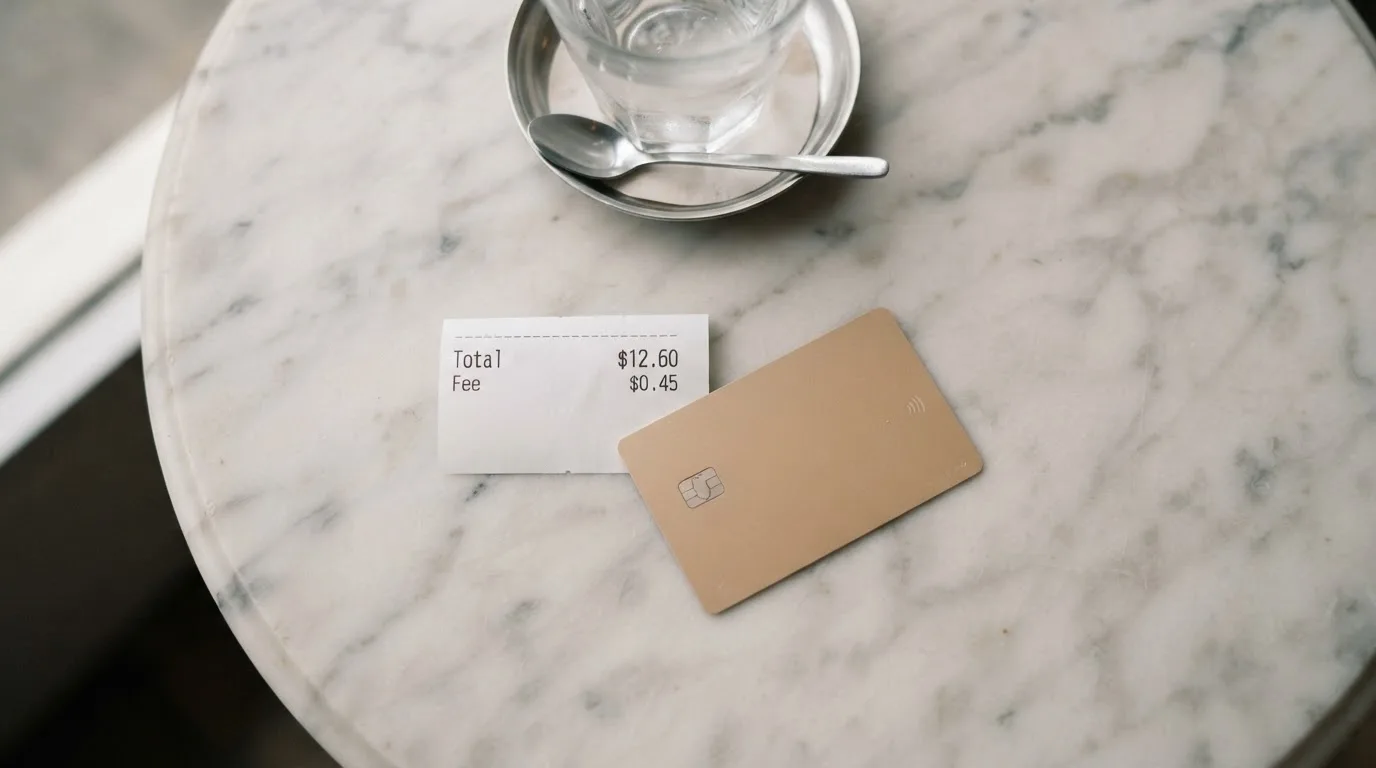
| Fee or limit | What the card says | What third-party sources say (not confirmed) |
|---|---|---|
| Card order | not stated | Free |
| Monthly or annual fee | not stated | 0 |
| Physical card delivery | Physical cards offered; countries, time and cost not stated | Free |
| Replacement card | not stated | 4.99 (EURe / GBPe / USDCe) |
| Foreign exchange | No additional FX fee from Zeal; conversion at the Visa wholesale rate | — |
| Card purchase fee | not stated | An older Gnosis Pay fee page listed EUR 30.23 including shipping, on a page of unclear date (unofficial, not confirmed by Zeal) |
| ATM withdrawals | Possible, subject to Gnosis Pay fees; amount and allowance not stated | First 5 withdrawals or 200 units per month free (whichever comes first), then 2% per withdrawal; 250 per withdrawal, 500 per day |
| Per-transaction limit | not stated | 5,000 |
| Rolling 24-hour limit | not stated | 8,000 (EURe / GBPe / USDCe) |
| Cashback | Up to 4%, paid in GNO, requires GNO held in the card Safe; rates can change | App Store also advertises up to 5% variable APY on EUR/USD balances |
| Tiers | Single card product, no paid tiers | — |
Now let me walk you through three ordinary payments and show you which of these lines actually bites. This is the part fee tables never do, and it is where you find out whether a card is cheap for you or merely cheap-looking.
A coffee in your own currency. Suppose you hold euros and buy in a eurozone café. There is no conversion, no FX fee from Zeal, and no Gnosis Pay transaction fee is published. This is the cheapest possible version of the card, and it is genuinely cheap.
A coffee abroad. Say a dollar café while your balance is in euros. Zeal converts at the Visa mid-market rate with no additional fee of its own. What you can still be hit by is the underlying conversion movement between the moment you tap and the moment the transaction settles, plus whatever the issuer’s own rules charge — and Zeal points you to Gnosis Pay’s fee documentation for those. This is a Visa rate, which is good, and it is not the same as zero cost.
A cash withdrawal. This is where the unofficial numbers matter most, and they are not flattering in one direction and very good in the other. Five withdrawals a month, or 200 units, free — then 2% per withdrawal. If you treat this as a normal debit card and use it as cash machines several times a month, you will pay that 2% every time. Use it as a travel card that spends rather than one that hoovers up notes, and the first five are free.
Two limits deserve the same warning. The unofficial 5,000 per transaction and 8,000 rolling 24-hour figures are not trivial ceilings if you are used to an ordinary bank card, and Zeal itself simply says limits are not stated on its pages — it redirects you to Gnosis Pay documentation. So the number you should plan against is the one in your app, not the one in my table. Check it before you need it.
On cashback, be careful. Up to 4% paid in GNO, and you only qualify while you hold GNO in the card Safe — meaning you are holding a volatile token in order to earn a reward on spending. That is a position with market risk attached to a percentage, and the card is explicit that rates can change. The App Store listing additionally advertises up to 5% variable APY on euro and dollar balances, which is a different product dressed in similar language. Do not confuse the two, and do not treat either as interest.
A final category note, because it explains a cost you will meet elsewhere in crypto: on-chain network fees for your deposit are charged by the blockchain, not by the card. Sending an ERC-20 token requires ETH for gas, so a wallet holding USDT with no ETH cannot send. On Tron, fees are paid through bandwidth and energy, often by burning TRX. Neither fee is on Zeal’s books, but both come out of your wallet.
How to top up
Zeal spends from balances held in the card Safe: stablecoin accounts in EUR, USD and GBP, on Gnosis Chain and Celo according to the Gnosis Pay documentation. The exact coins Zeal itself accepts for its card are not stated. What third-party sources add is that the card accounts hold EURe, GBPe and USDCe, that a SEPA top-up arrives in one to two business days, that conversion, off-ramp and gas fees are 0%, and that bridging via Ethereum needs gas.
What is officially not stated is more consequential than that list of gaps suggests: the card top-up fee, the minimum top-up, and the network fee for a crypto top-up. On bank transfers, Zeal does say something useful — euro transfers are processed by Monerium ehf and other transfers by Unblock LT UAB — but the fees are not stated.
Let me push you a little on what self-custody actually buys here, because that is the section where I think readers most often misread their own situation. Your funds stay in your own wallet or Safe; the card spends from them rather than from a balance held by a company. The genuine upside is that no bank or company can freeze or seize the funds — that is a real and unusual advantage, and it is the honest core of the pitch. The genuine downside is that nobody can recover them either. Lost funds are likely unrecoverable. You carry sole responsibility for key loss, for phishing, and for clipboard-hijacking malware that silently swaps an address you copied. Those are the same risk profile as the wallet itself, not an added fee on top of it.
Then there is the network problem, which is where most first-time users lose money. Blockchain transfers are irreversible. A deposit sent on a network the provider does not support, or to an address belonging to a different network, can be lost outright or need manual support recovery with no guarantee of success. On Ethereum-compatible chains, sending the token to the right address on the wrong chain is precisely this mistake. Check the network before you confirm, every time.
One more piece of background you should not skip, because it undercuts a common assumption: stablecoins are not censorship-proof. Tether states that it disables tokens in wallets on the OFAC sanctions list and has frozen funds tied to illicit activity. Circle stopped supporting USDC on Tron in February 2024, so “USDC over TRC20” is not a native option. And stablecoins can and have depegged — TerraUSD collapsed in May 2022, and USDC briefly lost its peg in March 2023 during the US banking crisis. The “1:1” description you will read is a claim about reserves, not a guarantee: Circle says USDC is redeemable 1:1 for US dollar and fully backed by cash and cash equivalents, mostly in an SEC-registered government money market fund, with monthly reserve attestations. Meanwhile the BIS in July 2025 put roughly 90% of stablecoin market capitalisation in USDT and USDC between them, so the category itself is narrow and concentrated.
Regulation shapes this too, and in the EU specifically. Under MiCA — Regulation (EU) 2023/1114, in legal effect since June 2023 — rules on asset-referenced tokens and e-money tokens applied from 30 June 2024 and the remaining provisions, including crypto-asset service provider rules, from 30 December 2024. E-money tokens may be issued only by a credit institution or an electronic money institution. Providers operating under national law could continue only until 1 July 2026 or until a MiCA authorisation was granted or refused, whichever came first, and ESMA keeps a public interim register of authorised CASPs that you can check. A card, meanwhile, is a payment service regulated separately under e-money and payment-services law, so a crypto card often depends on two licences at once. If you want to see whether a provider is authorised, the register is public information and worth five minutes of your time before you deposit anything.
Paying with it every day
This is the part Zeal does best, and it is why the card scored 8 out of 10 on everyday use in my table.
The card is a Visa. Zeal describes it as a virtual card for online use that you can add to Apple Pay, alongside a physical card, issued by Monavate Limited with Gnosis Pay Co Ltd. Accounts exist in EUR, USD and GBP, with Earn accounts in USD or EUR. Apple Pay support is stated in the app store listing. ATM withdrawals are possible on Gnosis Pay’s tariff. Google Pay is not stated by Zeal, though third-party sources report it as supported along with the claim that Google Pay is not subject to the physical-card contactless limit — and the same sources still do not say which merchant categories are blocked.
On the software side: iPhone on iOS 16.2 or later, Mac with M1, Vision Pro; latest version 0.33.3 from 1 September; UK App Store rating 4.5 out of 5 from 17 ratings when I read it. That is a small sample and I would not lean on it. Dispute handling is not stated on Zeal’s site or its app store listing, and third-party sources also leave it empty — which, in a review that already has a 2 out of 10 on reliability, is the gap I would worry about most.
Some context on the mobile wallet part, since it is genuinely the safest way to use any of these cards. Apple Pay replaces your card number with a device-specific Device Account Number held in the Secure Element, never on Apple’s servers, and each payment carries a one-time dynamic security code. The issuer can also restrict the tokenised number, for example blocking it on magnetic-stripe, phone or website use. Tap-to-pay through a phone wallet removes the physical card from your pocket and adds a layer that simply does not exist on a bare card.
Then the parts that catch people out, which are category-wide rather than Zeal-specific. A merchant category code is a four-digit number classifying a business by type, and gambling sits under MCC 7995, which many issuers block by policy rather than by law — and the blocked list varies by issuer. Zeal does not publish its list, so you cannot check in advance. Address verification compares the numeric parts of the billing address you typed with the issuer’s records; it is mainly offered in the US, Canada and the UK and is generally unavailable for foreign-issued cards, which causes declines. And because the first six or eight digits of a card number identify the issuing institution, a merchant can look up that you hold a card issued in another country and apply extra scrutiny — which is why a foreign card can look foreign to a shop.
Two more, and these are the ones that make people think they were overcharged. A declined authorisation may leave a hold on your funds that can remain for several days, typically up to seven. And 3-D Secure — Visa’s brand is Visa Secure, Mastercard’s is Identity Check — adds an identity step to online payments, where the issuer either approves frictionlessly or challenges you with a one-time code or biometric. Under 3-D Secure, liability for a fraudulent online payment can shift from the merchant to your bank, or, per its critics, to you.
On the cashback, one practical tip. The 4% is paid in GNO and requires GNO in the card Safe, and GNO cashback eligibility ends 2026-09-30. So the reward is now gone on the stated date regardless of anything else in this review — factor it into any calculation you make about whether the card pays for itself.
What can go wrong, and what has already gone wrong
This is the section I would read twice. I gave reliability 2 out of 10 and I want to justify it precisely, because the two lowest marks in this review — cost and reliability — sit in the same company.
The closure. Gnosis Pay has announced that it will close its consumer card and web app at 23:59 UTC on 2026-12-20 and move to business customers. The notice to cardholders is dated 2026-09-21, with other outlets reporting it on 2026-09-25. Users are directed to partner apps for a replacement card, with MiniPay named. Safe funds stay accessible and the web app remains in limited form for withdrawals. That is the schedule, and it is a plan for how the shutdown proceeds rather than a promise that nothing will be awkward about it.
Zeal’s own position is not stated. One secondary report says Zeal has not confirmed its future plans, and I could not find a Zeal statement. So if you are considering this card, the honest position is that the app you would be using has not publicly said what it does when its issuer’s programme ends. That is not a reason to panic; it is a reason to keep your balance somewhere you can reach it and not leave funds parked on the card.
Cashback has already ended. GNO cashback eligibility ends 2026-09-30, ahead of the card programme’s own closure on 2026-12-20.
Security history. A secondary source reports an exploit of an ERC-1271 module affecting card Safes on 2026-06-01. Self-custody means nobody can freeze your funds, and it equally means nobody can reverse a theft. Zeal states plainly that deposits are not insured and “Your principal is at risk.”
Support and complaints. On Trustpilot, zeal.app sits at 3.5 out of 5 from 17 reviews (the page also displayed 3.7 when I looked). Reading the individual reports: a January 2026 one-star review on support requests going unanswered, with Zeal apologising publicly; another 2026 review about a scam transaction and slow dispute handling, where Zeal replied that card disputes take time. App store reviews mention problems moving balance to the card and slow support. These are individual, unverified reports — I want to be clear about that — but the pattern is consistent. The issuer’s own score is worse: Gnosis Pay on Trustpilot at 2.3 out of 5 from 38 reviews, with 58% one-star according to a third-party source in August 2026, citing slow or unanswered tickets. When the card’s operations depend on the issuer’s support desk, that number is part of the product.
No published dispute route. Zeal does not state how disputes work, and third-party sources do not fill the gap. A chargeback is a refund ordered by the issuer with a reason code such as fraud, duplicate billing or goods not received; US debit card reversal rights come from Regulation E, credit card rights from Regulation Z, and prepaid-card coverage varies and should not be assumed. What none of that gives you here is a stated procedure.
Language and time zone. Support channels listed are Discord and X, with no email, chat or hours given. The site runs in English, French, German, Spanish and Italian. Russian is not offered, and the app store listing is English. For a card closing in under ten weeks, having only Discord as a real support channel is a practical risk, not a preference.
Category background worth knowing. This is not the first crypto card programme to end. Visa terminated its global agreements with FTX on 13 November 2022 and the FTX US debit card was wound down. WaveCrest, a Visa issuer that supplied crypto card brands, was suspended by Visa in Europe in 2018, closing every WaveCrest-issued Visa programme. Visa and Mastercard do not issue crypto cards to consumers themselves; they license issuers and can suspend a programme. The pattern is structural: the crypto brand is often just the front end, and the licence sits with someone else. Closures typically run in stages — a notice period, then loading and spending stop, then a request to withdraw remaining balances. One secondary source reported a 2026 closure where new loads ended 8 July and spending stopped 8 August, which is single-source and unconfirmed, but the shape matches.
And one that is easy to forget because it feels like a side issue. Spending crypto through a card is a disposal of an asset in the eyes of at least one major tax authority. The IRS treats digital assets as property, so exchanging them for goods, services, dollars or other digital assets generally produces a taxable gain or loss. For personal holdings the result is a capital gain or loss, short-term if held one year or less, and gain is measured in local fiat currency at the fair market value on the transaction date — which means each card payment funded from crypto may be a separate taxable event. I am not giving you tax advice and you should take your own advice on your own circumstances, but if you use a card like this daily, keep records.
What to take instead
If the thing you want is a self-custodied crypto Visa, Zeal is not the only option, and the comparison is uncomfortably close. All three cards below scored above or equal to Zeal’s total, and the reason is worth stating plainly: none of them sits under an issuer that has announced a shutdown.
| Card | Score | Who it fits | Cost and fees | Network / assets | Notable catch |
|---|---|---|---|---|---|
| MetaMask | 7.1 / 10 | Sign-up open in 45 listed countries and territories; other regions join a waitlist; proof of residency required, and ineligible regions limit sign-ups rather than spending | Virtual card free with no annual or maintenance fee; Metal is $199/year; “minimal fee for each transaction” with the amount not stated on the pages read; no additional MetaMask fees and no foreign transaction fee, Mastercard rate used | Linea, Base, Monad, Solana; tokens named include mUSD, wETH, EURe, GBPe, USDC and USDT | Mastercard, not Visa; virtual card issued first, one per user; US and UK sign-ups temporarily closed; Solana-only wallets cannot withdraw credit |
| Rizon | 6.7 / 10 | Intended for people who live in and are domiciled in the US or LATAM countries and may be restricted elsewhere; the page also claims 122+ countries supported | Account maintenance free; deposit and USD spend free; non-USD 1.7% + $0.1 (Emerald 1.02%, the page is garbled — verify); trading fee 1.7%, Emerald 0.85%; card prices shown only in the app; Emerald subscription from $5.59/month | Not stated; USD and EUR accounts exist | 2.5% back on eligible purchases plus RizPoints; physical and metal coming soon |
| KAST | 6.1 / 10 | Residence list shown at KYC, country list not published; citizenship and ID matter independently — living in a supported country with an ID from a restricted region may still fail, dual citizens with a supported-country ID may pass, and a VPN does not bypass it | Standard 0 USD/year, Premium 1,000 USD/year, Private 10,000 USD/year; stablecoin top-up 0%, USD spend 0%, transaction fee 0%, Apple and Google Pay 0%; non-USD FX fee 0.5%–1.75%; non-USD transactions under 25 USD cost 0.10 USD; declined transaction 0.50 USD; inactivity 1 USD/month after 12 months | USDT, USDC, PYUSD, RLUSD on Ethereum, Solana, Polygon, Arbitrum, TRON; terms say acceptable tokens are “currently USDT and USDC”, which conflicts with the site | Up to 10 cards; Visa Platinum, Infinite metal and Infinite gold plated; cashback 1.5% to 3% depending on tier |
Three observations from that table that matter more than the numbers. First, MetaMask is the nearest thing to Zeal’s idea — a wallet you control spending through a card — and it scores higher, with no closure hanging over it, though it is a Mastercard and sign-ups in the US and UK are temporarily closed. Second, Rizon’s fees are transparent in a way Zeal’s are not: you can see the non-USD charge, the trading fee and the subscription on the page, where Zeal publishes no fee schedule at all. Third, KAST is the one with the most complicated tier structure — three membership levels with a 10,000 USD top tier and a 1 USD monthly inactivity fee — and its residency logic is the strictest of the three.
If the reason you are reading about Zeal is that you cannot get an ordinary bank card, that is worth saying plainly: all of these still run KYC through a regulated issuer, and KYC is KYC. None of them is a way around identity checks, sanctions screening or country rules, and any provider promising otherwise is telling you something important about itself. If your difficulty obtaining a normal card is because of your citizenship or where you live, that problem does not dissolve here — it just moves to a different desk, one that screens nationality separately from address.
Who I would recommend it to
I would recommend this card to someone who already runs a self-custodied wallet, who spends in euros, dollars or pounds, who wants stablecoin balances behind an ordinary Visa number, and who is consciously choosing to hold it for the remainder of 2026 while the current card exists. For that person the mechanics are good: no FX fee of its own, mid-market conversion, a virtual card for online use, Apple Pay, first five ATM withdrawals free, and funds that no institution can freeze on its own initiative.
I would not recommend it to anyone planning past 20 December 2026, and I would not recommend it to anyone who needs a dispute route they can trust, who wants support in Russian, or who is uneasy being the only defence against a compromised device. The cashback ended on 2026-09-30, so the main headline reward is already gone.
If you are still considering it, the order of operations matters more than the choice. First, find out what Zeal’s plan is after 23:59 UTC on 2026-12-20, because Zeal has not said publicly and that answer changes everything. Second, ask support what happens to a card balance at closure and what withdrawing it costs. Third, check the real limits in your app rather than the unofficial numbers. Fourth, confirm in writing that your citizenship and residence combination passes eligibility, because that is not stated and it is the one gate that can close on you for reasons that have nothing to do with you.
And keep this in proportion. A crypto card is a payment tool, and the amount you leave sitting on one at any moment should be an amount whose loss would annoy you rather than damage you. Self-custody gives you control and it gives you the whole burden at the same time — nobody can freeze your funds, and nobody can get them back. Those are two halves of one arrangement.
Frequently asked questions
What is the Zeal card?
It is a Visa payment card that spends balances held in your own self-custodied Safe rather than a bank account. Zeal is the app and card programme manager, Gnosis Pay Co Ltd runs the programme, and Monavate Limited issues the card as an FCA-authorised e-money institution licensed by Visa Europe. Accounts exist in EUR, USD and GBP, with a virtual card for online use and a physical card, and Zeal supports Apple Pay. You are not opening a bank account; you are connecting a wallet to a card.
How does the Zeal card work?
You load balances into a Safe you control, in stablecoin accounts denominated in EUR, USD and GBP on Gnosis Chain and Celo. When you tap or pay online, the card spends from those balances, converting at the Visa mid-market rate with no additional FX fee from Zeal. Funds stay in your wallet rather than with a company, so no institution can freeze them on its own initiative — and no institution can recover them either if they are stolen. Gnosis Pay fees may still apply to things like ATM withdrawals.
Is Zeal a bank?
No. Zeal is self-custodial software developed by grwth lbs ltd and is not regulated. Behind it sit Gnosis Pay Co Ltd, a UK company number 14919639, which manages the card programme, and Monavate Limited, which issues the card under a Visa Europe licence as an FCA-authorised e-money institution. A UK company is not a bank, and e-money balances are not bank deposits. Zeal’s own security policy states that deposits are not insured and that your principal is at risk.
Who owns Zeal, and which company is behind the card?
Three names matter and they are not the same thing. The app developer is grwth lbs ltd. Gnosis Pay Co Ltd runs the card programme. Monavate Limited issues the Visa itself. That structure is normal in this category — Visa and Mastercard do not issue crypto cards to consumers, they license issuers and can suspend a programme — but it means the part you interact with and the part that holds the licence are different entities, and only one of them is announcing a shutdown.
Is the Zeal card available in my country?
Spending works in more than 150 countries, but issuance “depends on eligibility and regional availability”. The programme is live in the EU, UK, Brazil, Colombia, Mexico, Japan, Singapore, the Philippines, Indonesia and Thailand, and Zeal’s app update notes have added Mexico, Colombia and Bolivia. Third-party comparison sites list 36 countries available and 21 restricted. Russia and Belarus are not stated anywhere in the card’s public pages, so you must ask rather than assume.
Do I need KYC to get a Zeal card?
Yes. Gnosis Pay onboarding includes KYC after signing in with Ethereum, and verification runs through Sumsub. Zeal’s own pages do not state which documents, what age, how long it takes, or why applications are refused — all of that is not stated. Third-party sources describe full identity and address verification, age 18 and over, a government ID or passport plus proof of address issued in the previous three months, and warn that uploading documents does not guarantee approval. Expect the same checks that any regulated provider must run.
Can I use the Zeal card in Russia or another CIS country?
The rules turn on residence and citizenship separately, and neither is published for Russia or Belarus. Russia is not among the programme countries, so a Russian address is very unlikely to qualify — though that is my reading of the list, not a printed rule. Other CIS states are not named in what I read, including Armenia and Georgia, so proximity to the EU is not enough. A Russian citizen living in a supported country has a real chance, since nationality is screened separately from address, but the issuer’s policy on that is not stated.
Is the Zeal card free?
Officially, nothing is published — there is no fee schedule on Zeal’s site or its app store listing, so the card’s own prices are not stated. Third-party sources say the card order is free, physical shipping is free, the monthly fee is 0 and replacement costs 4.99, while an older Gnosis Pay fee page once listed a card purchase fee of EUR 30.23 including shipping on a page of unclear date. Since none of this is confirmed by the card, check the current figures in the app before you rely on any of them.
How do I top up the Zeal card?
You send funds into the Safe the card spends from, in EUR, USD or GBP stablecoin accounts on Gnosis Chain and Celo. Third-party sources say a SEPA top-up arrives in one to two business days, conversion and gas fees are 0%, and bridging via Ethereum still needs gas. Officially the top-up fee, the minimum and the network fee are not stated; bank transfers go through Monerium ehf for euros and Unblock LT UAB otherwise. Get the network right, because blockchain transfers are irreversible.
Is the Zeal card safe, and is it worth it?
The security design is genuinely strong in one direction: self-custody means no bank or company can freeze or seize your funds. The same design means no one can recover them if they are stolen, and a compromised seed phrase has no reversal path. Reports also describe an exploit of an ERC-1271 module affecting card Safes on 2026-06-01. On value, the honest answer is that GNO cashback ended 2026-09-30, so the main reward is already gone — judge the card purely on fees, and on how you feel about holding a closing programme.
Prepared by the Crypto Card Rating editorial staff.