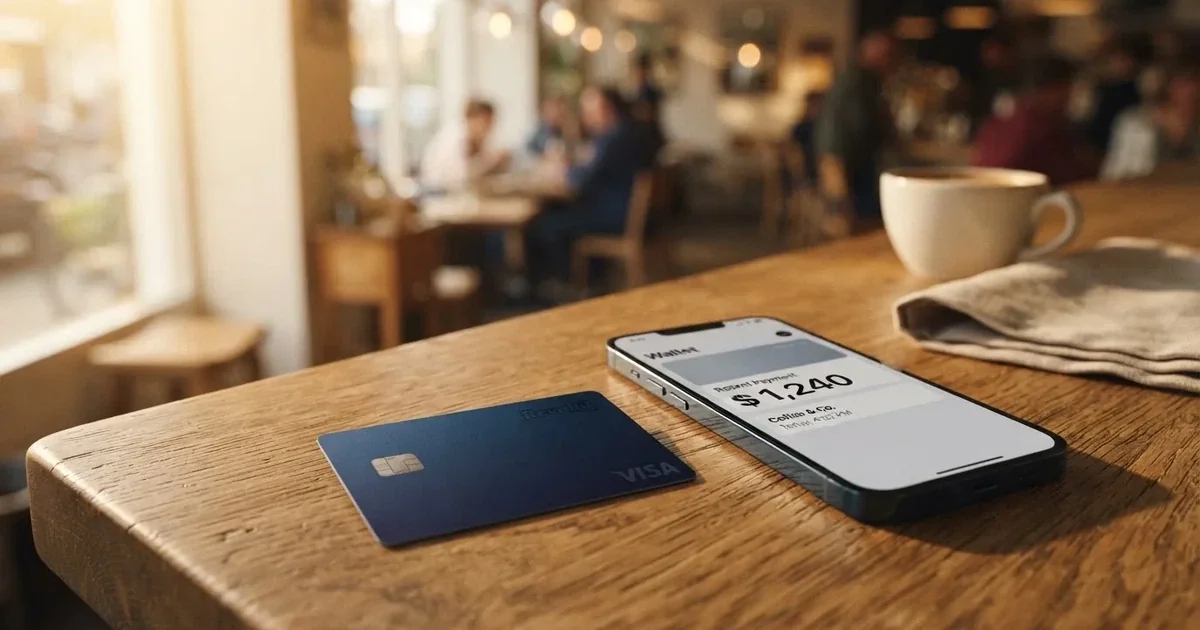
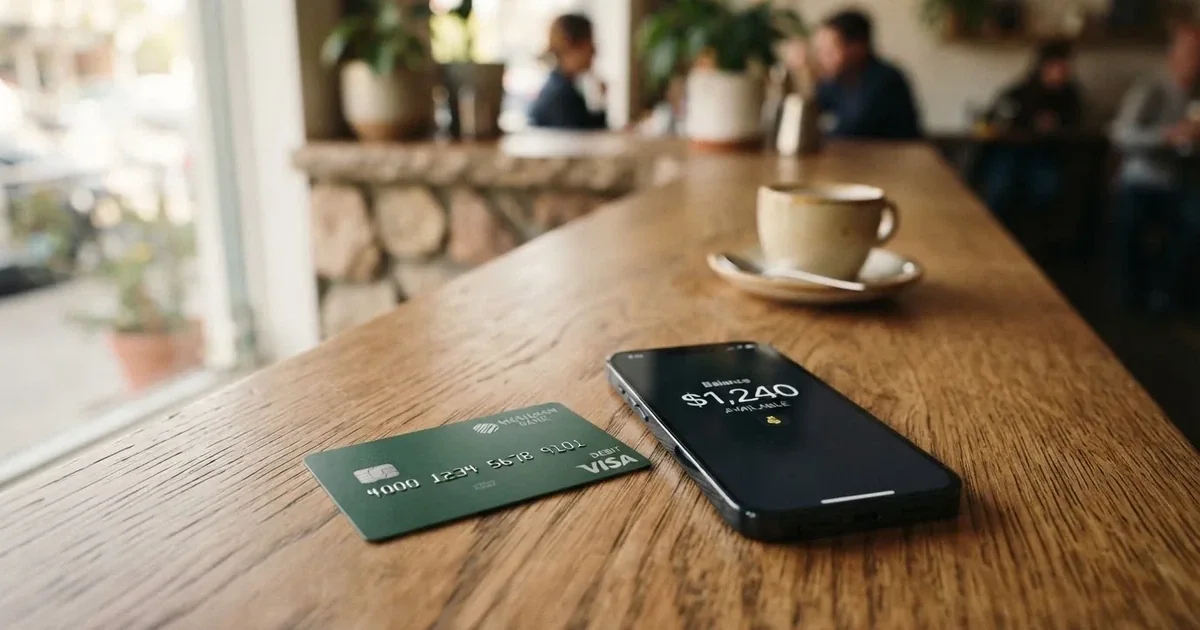

Pintopay Card Review: What It Is, What It Costs, and Where It Falls Short
The Pintopay card is a Visa-powered crypto payment card that turns a balance you hold in stablecoins into ordinary spending money, delivered partly through Telegram. On paper it is a clean, low-friction proposition: payments in 180+ countries, virtual and physical cards, Apple Pay, cash out at ATMs, and a flat 2.5% top-up fee with no minimum published. That is the pitch, and for a Telegram user who just wants to spend USDT without opening a bank account, it is genuinely tempting.

Read the documents behind that pitch, though, and the picture gets more complicated. The card’s own website does not name the bank that issues the card, does not publish the FX rate it charges, and does not state the daily or monthly limits. Its terms reserve the right to ask for documents at any time and to suspend accounts that fail KYC. The Trustpilot profile for the company’s site sits at 2.0 out of 5 from 42 reviews, with a running theme of frozen balances and refunds that never arrive. Against that, the day-to-day experience — the virtual card in a phone wallet, paying in a café — is described as smooth.
My verdict is 6.1 out of 10. This is not a warning about a scam; it is a card that works well for its narrow, obvious use case and asks you to accept more unknowns than you would with a regulated mainstream provider. It suits people who want a quick spending card for USDT and are comfortable treating it as a wallet rather than a bank account. It does not suit anyone who needs predictable fees, published limits, a named issuer, or a real dispute process.
The conditions described below are current as of 21 October 2026.
Score card
| Criterion | Mark | Why, in short |
|---|---|---|
| Who can get it | 9 / 10 | Payments in 180+ countries, no exclusion list; only Hong Kong persons/citizens excluded |
| Cost | 4 / 10 | Card is $35 and top-up is 2.5%, but official FX figures are missing (“competitive rates”) |
| Top-up options | 7 / 10 | USDT and other crypto; unofficial sources add BTC, ETH, BNB, TRX and up to 12-hour top-ups |
| Reliability and complaints | 3 / 10 | Issuer unnamed, operator UANT Limited (Hong Kong); Trustpilot 2.0/5 from 42 reviews on blocked balances |
| Everyday use | 8 / 10 | Virtual and physical Visa, Apple Pay, ATMs; strong for tap-to-pay day to day |
Total: 6.1 / 10. The strength here is access and everyday convenience; the weakness is transparency and the complaint record.
Who Will They Give You the Card
The site leads with “Global Payments in 180+ Countries” and publishes no exclusion list beyond the terms. That is a genuinely broad claim on paper, and for readers who cannot open an ordinary bank account it is the main reason to look at a card like this at all. Two things you should know before you invest time, though.
First, and more importantly: the terms state that the services are not available to persons located in, resident in, or citizens of Hong Kong. That is the only exclusion the company’s own documents spell out.
Second, on the practical question of who qualifies, the public pages are quiet. The site does not list which documents you need, whether proof of address is required, or what minimum age applies. It does not separate citizenship from residence — it simply does not say which one it screens. If you are a Russian speaker, this matters in two different directions. If you live in Russia or another CIS country, the card’s marketing claim of 180+ countries is not a guarantee that your residence country is served at onboarding; whether a specific address works is something you can only learn by applying. If you are a Russian citizen living elsewhere, citizenship by itself is not listed as a bar — the only named citizenship restriction is Hong Kong — but the Terms let the company request information and documents at any point and suspend an account that fails verification, so your documents will be judged on their own merits. What that means practically: keep your passport, a proof of address, and any local ID handy before you start.
The identity checks are one genuine area of contradiction between official and third-party material. Officially, the site lists “KYC” and “ISO AML/KYC” among the security credentials, and the Terms require verification, allow ongoing requests for information and documents, and permit suspension where KYC or AML checks fail. Unofficial card directories, by contrast, list Pintopay as “No KYC” with email, phone, ID, address and selfie all “not required” — which directly contradicts what the company itself publishes. I would trust the company’s own documents over the directory. Treat Pintopay as a card that will verify you, because that is what its Terms say it will do.
The card itself is described officially as Visa-powered, virtual and physical. Here too the third-party directories disagree with the company, listing Visa for the “PintoPay Card” and Mastercard for the “Virtual Card”; that conflicts with the official “Visa-powered debit cards” line and I would not plan around it without testing both in your own wallet. Card currency is not stated anywhere official.
So: will they give you the card? For most adults outside Hong Kong with a verifiable identity, on the company’s own account, probably yes — but you are relying on a broad marketing claim rather than a published eligibility list, and the real gatekeeper is the unnamed issuer the card is issued through.
How to Get It
Getting started runs through Telegram. The site’s call to action is literally “Get Card with Telegram,” and the account runs as a Telegram bot / mini-app alongside a mobile application. That is a deliberate design choice — the whole on- and off-ramp is meant to live inside the messaging app you already use — but it has a practical consequence: there is no App Store or Google Play link or user rating published on the site, so you are installing or using the card from a channel the company controls rather than from a reviewed app store.
The signup sequence itself is not documented. The site does not state the KYC levels, how long verification takes, or on what grounds an application is rejected. The Terms only tell you the shape of the risk after the fact: the company may request information and documents at any time, and may suspend an account where KYC or AML checks fail. So the honest description of “how to get it” is: you find the bot, you start the flow, and you supply whatever identity documents it asks for — and the Terms give the company a wide margin to ask for more later.
On delivery, the site promises you can “receive your card in just 2 minutes.” That line almost certainly refers to the virtual card, which you add to a wallet and can use immediately. For the physical card, the delivery countries, delivery time, delivery cost and replacement process are all not stated. If you are outside the main markets, do not assume a plastic card will arrive; the virtual card is the one you can count on being immediate.
What It Really Costs: Fees and Limits
This is where I have the most reservations, and it is why the Cost criterion scores 4 out of 10. A card that is simple to understand on the surface — one purchase price, one top-up percentage — is hiding its most important number: what it charges when you spend in a currency other than the one you funded. The official answer is the phrase “competitive rates.” That is a marketing adjective, not a rate.

Here is what is officially published, and what third-party sources say instead. Everything in the third-party column is unofficial and not confirmed by the card; I am showing it because the official page leaves these fields blank and a blank is not a plan.
| Fee or limit | Official (card’s own site) | Unofficial (third-party, not confirmed) |
|---|---|---|
| Card issuance | $35 | $10 (PintoPay Card) and $35 (Virtual Card) |
| Monthly or annual fee | not stated | free |
| Top-up fee | Just 2,5% | — |
| Crypto-to-fiat conversion / FX | “competitive rates”, no figure | FX free on PintoPay Card; 1% on Virtual Card |
| ATM | works at ATMs; fee and allowance not stated | ATM fee free on both cards; withdrawal limit unlimited |
| Daily spend limit | not stated | $25,000 physical card; $1,500 virtual card (unofficial) |
| Monthly limit | not stated | unlimited; up to $300,000/month with withdrawal fees after $1,000/month (all unofficial) |
| Per-transaction charge | not stated | $0.25 listed among cons |
| Decline fee | not stated | free |
Notice how much of the unofficial column contradicts the official one, and in which direction. The unofficial directories generally look cheaper and friendlier than the real site — $10 issuance, free FX, free ATM, unlimited withdrawals. I would not budget on any of it. Where the two disagree, the card’s own published price ($35) is the one to assume.
The $35 is the price for a card that the site also calls a “Premium card” with VIP access, though no tier structure or differences between tiers are spelled out. There is no stated monthly or annual fee, so the $35 looks like a one-time purchase, but “looks like” is doing work there — the Terms say fees may be debited from your Wallet, Vault or Virtual Account balance and that fee schedules are published in the interfaces, which means the number of charges you can be hit with is not fixed at signup.
Let me run three ordinary payments through this, so you can see which fee actually bites.
A $30 lunch paid in the currency you funded. If you topped up in the same currency you are spending, the 2.5% top-up fee is your main cost, and the “competitive” FX rate is not really engaged because no conversion is needed. This is the cheapest path and the reason the card feels good in practice.
A hotel booked online in a currency you did not fund. Now the unnamed FX rate applies, on top of the 2.5% you already paid to load the balance, plus whatever the card network or issuer adds. The official page gives you no number to check this against, so you cannot know in advance whether the conversion cost is minimal or significant. This is the payment to be careful with.
A cash withdrawal at an ATM. The site says the card works at ATMs but publishes no fee or allowance, and no daily or monthly limit. The unofficial sources say free and unlimited; the official silence means you should assume a withdrawal may cost something and may be capped.
There is also a category of cost that has nothing to do with the card’s own fees: the on-chain network fee (gas or bandwidth) you pay the blockchain for your deposit. That is charged by the network, not by Pintopay, but it comes out of your crypto wallet on the way in and people forget to budget for it.
And one last thing about limits that is easy to miss: the unofficial numbers put daily spend at $25,000 on the physical card and $1,500 on the virtual card. Even if those are roughly right, they are the wrong benchmark for most people. The real constraint for a casual user is the undiscussed “in-flight” behaviour of the balance itself, not the ceiling.
How to Top Up
Topping up is where this card is at its most straightforward, and it is the reason to consider it in the first place. Officially, you “Spend USDT and other crypto”: you send crypto from your own wallet to the card’s balance, and it is converted to fiat, “instantly” according to the site, so you can then spend it as ordinary money. The top-up fee is a flat 2.5%, which is simple to reason about even if it is not cheap. A minimum top-up is not stated, and fiat top-up — funding the card with bank money rather than crypto — is also not stated.
The official coin and network list is not published either. One customer testimonial on the site mentions USDT TRC-20, which is a useful hint but not a specification. Unofficial sources fill in more: BTC, ETH, USDT, BNB and TRX across networks, with top-ups that can take up to 12 hours to land. If that delay is real, it changes the character of the card from “instant” to “plan ahead,” so I would treat the 12-hour figure as a warning rather than a confirmed SLA.
Network choice is where self-custody users get burned, and it applies here as much as anywhere. Blockchain transfers are irreversible: a deposit sent on a network the provider does not support, or to an address belonging to a different network, can be lost outright or need manual support recovery with no guarantee of success. Before your first transfer, confirm with support which network your chosen coin should go on, and send a small test amount. On stablecoins specifically, the two big ones behave differently across chains: USDT has been issued on networks including Ethereum, Tron, Solana, Polygon and Avalanche, while Circle stopped supporting USDC on Tron in February 2024, so “USDC over TRC20” is not a native option you can rely on.
Getting your money back out is governed by the Terms rather than by a published fee. On termination you are entitled to return of your remaining Wallet Balance, release of your Vault Balance, or withdrawal from your Virtual Account balance, subject to the Terms — but Pintopay may delay, refuse, or reduce that return to cover amounts you owe, and fees already charged are non-refundable. The withdrawal fee itself is not stated.
Paying With It Every Day
The day-to-day experience is the strongest part of this card, and it is why the Everyday Use criterion scores 8 out of 10. Officially you get a virtual and a physical Visa, Apple Pay, and the card is described as working with “Apple Pay, ATMs, online, and offline” — in practice, tap your phone for contactless and hand the plastic over when a reader insists. Unofficial sources add Google Pay as supported on both cards and a physical card that is contactless; treat the Google Pay line as unconfirmed, because the official site does not mention Google Pay at all.
Two things the official pages do not tell you, which you will discover the hard way or not at all. The blocked merchant categories are not stated — meaning you do not know whether gambling, adult, or crypto-exchange merchant codes will simply be declined, a common and usually permanent policy on cards like this. And whether the address-verification check that many online merchants run on a billing address will work for a foreign-issued card is not addressed; that check is mainly a US, Canadian and UK system and is often unavailable for foreign cards, which is one of the more common causes of a decline at checkout.
On rewards, the official offer is narrow: $10 cashback instantly on your first purchase, plus referral cashback on card activations and top-ups for the lifetime of your involvement. No regular ongoing cashback rate is stated. Unofficial sources describe it similarly — no regular cashback, a $10 welcome bonus on the virtual card only, and referral bonuses of $10 and $10.5. So read “cashback” here as a signup nudge, not as an ongoing reason to use the card.
Two protections and one gap round out daily use. The card supports 3-D Secure (Visa’s branded version is Visa Secure), which adds an identity step to online payments and can shift fraud liability away from you. And if a payment goes wrong, the Terms give you a route: raise the dispute through the interface or support, within the payment-system or issuer deadlines, with a review period of up to 90 calendar days. The gap is that the outcome of a chargeback is decided solely by the issuer or card scheme, and no refund is guaranteed — a reminder that with an unnamed issuer behind the card, the usual consumer recourse is thinner than with a bank you can name.
The access picture also explains why some merchants, payment apps, or streaming services will refuse the card: the card network’s rules, and the crypto company’s own risk policy, are both at work here, and neither favours a prepaid-style card as much as a plain debit card from a familiar bank.
What Can Go Wrong
This is the section that pulled the score down hardest, and I want to be direct about it.
The issuer is not named. The card is issued by unnamed third-party licensed issuers, and the operator is a PTP group entity, UANT Limited in Hong Kong (company no. 77341227). The site’s own footer reads “© 2026 Pintopay Inc.” with no registration country or licences stated. When something goes wrong with a card, the first question is always “who is the bank I complain to?” — and here the answer is a structure, not a person.
The complaint record is poor. The company’s official materials contain no complaints I could find; a search for Pintopay-specific complaints on Trustpilot and Reddit returned nothing. But Trustpilot’s own profile for pintopay.me sits at 2.0 out of 5 from 42 reviews, 26 of them in the last 12 months (read 20 October 2026). The themes are consistent: balances frozen or blocked (reports from August 2025 and repeatedly through 2026, sums from $388 to $1.1k), a refund of $1,100 still pending from July–August 2026, generic support replies through February–July 2026, and unexplained fees in July 2025 and January 2026. The company’s replies attribute problems to migrations and partners. Whether that explanation covers every case is for you to judge, but the pattern — money held with no clear reason and no clear timeline — is the single most important thing to weigh before you load a balance you care about.
The Terms contain real triggers for review and suspension. The card may be blocked after 45 days without a successful payment. A deposit of USD 2,000 or more followed by quick disposal of the funds within 48 hours triggers an additional review that can delay or suspend withdrawals. And the Terms allow ongoing requests for information and documents, with suspension for failed KYC or AML. In plain terms: load and immediately spend large amounts, or go quiet for six weeks, and expect friction.
Support is Telegram-first and single-language. Help runs through the Telegram bot, a contacts form (Telegram or X), and the email [email protected], with the in-service support system as the preferred channel. The site is English only — Russian is not listed — and support hours are not stated. Whether there is an instant card freeze in the app is also not stated, which for a card you may freeze the moment you spot a fraudulent charge is a real omission.
The regulatory backdrop cuts both ways. In the EU, customer due diligence covers name, address, date of birth, nationality, identity documents, a sanctions check, the purpose of the relationship, and whether you are a politically exposed person; if due diligence cannot be completed, EU rules require the institution to decline the transaction or relationship and, where necessary, end it. Nationality is screened separately from residence, because sanctions screening and issuer risk policy often apply to citizenship and country of birth as well as country of address — which is the honest reason a card can accept you in one place and decline you in another. On the crypto side, a card depends on two licences rather than one: the payment service (e-money / payment-services law) and, for the crypto side, a crypto-asset service authorisation under MiCA. EMIs must safeguard customer funds in segregated accounts or by insurance, but such funds are not the same as bank deposits and are not covered by a deposit guarantee scheme. Under MiCA, e-money tokens may be issued only by a credit institution or an electronic money institution, and providers operating under national law could continue only until 1 July 2026 or until a MiCA authorisation is granted or refused, whichever came first.
None of that is specific to Pintopay; it is the shape of this whole category. The category has a track record: Visa terminated its global agreements with FTX in November 2022 and the FTX US debit card was wound down; WaveCrest, a Visa issuer that supplied several crypto card brands, was suspended by Visa in Europe in 2018, closing all WaveCrest-issued programmes. Programme closures follow a pattern — a notice period, then spending and loading stop, then users are asked to withdraw remaining balances. I am not saying Pintopay is heading there. I am saying you are trusting a structure that has this history, so you should never leave a balance sitting idle longer than you need it.
And the stablecoin base has its own risk. Stablecoins aim for a stable value but are not actually stable: TerraUSD collapsed in May 2022, and USDC temporarily lost its peg in March 2023 during the US banking crisis. A card that converts and spends USDT is spending an asset with a floor that has slipped before.
Finally, on taxes — I am not giving advice here, only flagging that in the US the IRS treats digital assets as property, so exchanging them for goods, services or dollars generally produces a taxable gain or loss measured in local currency at the fair market value on the transaction date. Each card payment funded from crypto may therefore be a separate taxable disposal depending on where you live. Check the position where you are.
What to Take Instead
Pintopay is not alone, and the honest comparison is that its main competitors publish more of the numbers Pintopay leaves blank. Here is how the alternatives I looked at stack up on the same facts.
| Alternative | Score | Card | Cost published | Fees published | Top-up |
|---|---|---|---|---|---|
| Bitrefill | 6.8 / 10 | Virtual & physical Visa; EUR implied by terms | card free through the app; amounts not stated; inactivity fee after 12 months | SEPA pay-in 1.99%; crypto-to-euro deposit spread % not stated; ATM/processor spreads | Bitcoin, Lightning, Ethereum, USDC, USDT, Solana, BASE, Polygon, plus SEPA |
| UPay | 6.1 / 10 | Virtual and physical, personal and business; network not named | not stated | not stated | BTC, ETH, USDT, USDC; networks not stated |
| Kemy | 6.0 / 10 | Unlimited virtual cards (Visa) and one physical Mastercard | Virtual $15 issuance + $2/mo; physical $250 + $10/mo (both valid 3 years) | Top-up $1.5 under $100 or 1.25% from $100 (min $5); transaction 3.5% + $1; failed $0.80 | USDT and USDC on main networks, plus BTC, ETH, SOL; fiat via mobile money and virtual bank accounts |
Three observations from that table. First, Bitrefill scores higher (6.8) and, crucially, publishes what Pintopay hides: a stated SEPA pay-in fee, a stated 2% total cashback with no cap, and a clearly free card through the app. Its access terms are also more candid — access is “subject to eligibility criteria” with further requirements set by its partners — and it converts to euros by terms. Its trade-offs are an inactivity fee after 12 months of no spending or cash-out, and a conversion spread it does not put a number on either.
Second, Kemy is the opposite of Pintopay on transparency: it publishes its full price ladder, including a 3.5% + $1 transaction fee that is far higher than a 2.5% top-up, and a startling $250 for the physical card. But at least you know on day one. It also does not mention cashback at all.
Third, UPay sits at the same 6.1 as Pintopay and is comparably vague on cost — but it is stricter in one respect that matters: its KYC partner accepts only ID documents issued by the same country as the user. That is a real, concrete eligibility constraint, unlike Pintopay’s blank.
What this comparison comes down to is not “these are better cards.” It is that if your main worry is cost predictability, you have options that will at least tell you the numbers. If your main worry is convenience inside Telegram, Pintopay has a genuine niche there.
Who I Would Recommend It To
I would recommend the Pintopay card to a specific person: someone who lives in a country where opening a mainstream bank account is impractical, holds USDT (or another supported crypto) on their own wallet, spends that balance through Apple Pay, and treats the card as a wallet with a card attached rather than as a bank account. If that is you — and the Telegram-first design genuinely makes day-to-day use pleasant, with Apple Pay and ATMs covered — the card does a reasonable job, and 6.1 out of 10 is a fair reflection of that.
I would not recommend it to someone who is putting savings on it, keeping a large idle balance, or who needs to know exactly what a currency conversion costs before they commit to a purchase. I would be cautious with it if you need a card you can defend in a dispute, because the issuer is unnamed and a chargeback outcome is decided solely by the issuer or scheme with no refund guaranteed. And I would think twice if your identity situation is complicated — citizenship, residence, and documents in different countries — because the Terms allow ongoing document requests and suspension, and because nationality is screened separately from residence in this category as a rule.
My practical advice, whatever you decide: start with the virtual card only, load the minimum you need, keep the balance moving rather than parked, make a small test deposit before a large one, and confirm the network for your coin with support before you send. These are habits, not promises — I cannot promise this card is safe, anonymous, or that any particular payment will go through. I can only tell you what the card publishes, what its terms reserve, and what its users have reported, and let you weigh them.
Frequently asked questions
What is Pintopay card?
Pintopay is a crypto payment card that turns crypto you already hold into ordinary spending money. Officially it offers virtual and physical Visa-powered debit cards, works with Apple Pay, ATMs, online and offline, and markets global payments in 180+ countries. You fund it by sending crypto — USDT and other coins — to the card, which is converted to fiat balance, then spend that balance like a normal card. It is reached mainly through a Telegram bot and mini-app, and the company is Pintopay Inc.
How does Pintopay card work?
It works like a prepaid card. You top up with crypto, it is converted and stored as a fiat (or stablecoin-denominated) balance, and the card spends only that balance, so it cannot overdraw. At payment time the amount is taken from the balance, and crypto is “instantly converted to fiat” as the site puts it. The card itself is Visa-powered and can be virtual or physical. Unlike a bank card, there is no overdraft, and the balance sits with the provider rather than in your own bank account.
Is Pintopay a bank?
No, it is not a bank. The operator is a PTP group entity, UANT Limited in Hong Kong (company no. 77341227), and the cards are issued by unnamed third-party licensed issuers. The site footer reads “© 2026 Pintopay Inc.” but states no registration country or banking licences. That means you are dealing with a card programme manager and e-money structure, not a deposit-taking bank, and your balance is safeguarded as customer funds rather than sitting in a bank deposit with deposit-guarantee cover.
Who owns Pintopay?
The site’s footer names Pintopay Inc., and the Terms state the service is operated by a PTP group that includes UANT Limited, a Hong Kong company (no. 77341227). The Terms are governed by Hong Kong law with HKIAC arbitration, and the card itself is issued by an unnamed third-party licensed issuer. The website lists KYC and ISO AML/KYC among its security credentials. Beyond those names and the Hong Kong registration, the ownership and licensing structure is not spelled out on the public pages.
Does Pintopay card require KYC?
According to the company’s own material, yes. The site lists “KYC” and “ISO AML/KYC” as security credentials, and the Terms require verification, allow ongoing requests for information and documents, and permit suspension where KYC or AML checks fail. Third-party card directories list Pintopay as “No KYC,” but that contradicts the official pages and I would not rely on it. Treat it as a card that will verify you. The specific documents, address proof, and minimum age are not stated on the public pages.
How much does Pintopay cost?
The card costs $35, with no monthly or annual fee stated, and the top-up fee is a flat 2.5%. Cashback is $10 instantly on your first purchase, plus referral cashback on activations and top-ups for life; no ongoing cashback rate is stated. The weakest point is the FX rate: the site calls it “competitive” without giving a figure, so what a foreign-currency purchase really costs you is unknown. Third-party directories claim cheaper issuance and free FX, but that is unofficial and contradicts the card.
How do I top up the Pintopay card?
You send crypto from your own wallet to the card — officially USDT and other crypto — and it is converted to a fiat balance, with a 2.5% top-up fee. Unofficial sources add BTC, ETH, BNB and TRX across networks, with top-ups that can take up to 12 hours to land. Because blockchain transfers are irreversible, confirm the correct network with support before sending and test with a small amount first. You will also pay the blockchain’s own network fee on the way in, which comes from your crypto wallet, not from Pintopay.
Is Pintopay card safe and who can get one?
The card is marketed as available for payments in 180+ countries with no exclusion list on the site; the Terms exclude persons in, resident in, or citizens of Hong Kong, and that is the only restriction they name. On safety, treat it as a wallet you are trusting, not a bank: it is described as “bank-grade” with 3-D Secure, but Trustpilot for the company’s site sits at 2.0/5 from 42 reviews, with recurring reports of frozen balances and pending refunds. It suits people comfortable with that trade-off; it is not a place for savings.
How do I use the Pintopay virtual card?
You create it through the Telegram bot or the app and add it to a mobile wallet — Apple Pay is officially supported, and Google Pay is listed as supported only by third-party directories, so treat it as unconfirmed. From then on you tap to pay in shops, online, and at ATMs. The site’s “receive your card in just 2 minutes” most likely refers to the virtual card being ready to use immediately; a physical card takes shipping whose countries, time, and cost are not stated. Blocked merchant categories are also not published, so some purchases may simply be declined.
Is Pintopay card worth it?
Worth it if you want a quick, convenient spending card for USDT inside Telegram, treat it as a wallet rather than a bank account, and keep the balance moving. Not worth it if you need published limits, a known FX rate, a named issuer, or a strong dispute process — Pintopay publishes none of those, and its card is issued by an unnamed third party with a 2.0/5 Trustpilot score. My overall mark is 6.1 out of 10, and I would start with the virtual card and a small balance rather than committing real money at once.
Published by the Crypto Card Rating team.