Trade Republic card review: a German broker’s card, spent from crypto
If you hold crypto and you would rather spend it than sell it and pay by card, the Trade Republic card is one of the few mainstream broker products that tries to do exactly that. It is not a crypto-only fintech: it is issued by Trade Republic Bank GmbH in Berlin, it comes in three versions including a metal one, and the crypto side sits inside a wider investing app with savings plans, shares and funds. That combination is the appeal and, in places, the complication.
I gave it 7.2 out of 10. Not because anything here is a scam or badly built — quite the opposite — but because the public information about who qualifies, what the limits are and which coins are spendable is thinner than you would expect from a licensed bank. I could confirm the issuer, the complaints picture and the headline reward from the company’s own material. I could not confirm the entry rules, the daily limits or the fee schedule from readable official pages, and the rest of what I know about fees and limits comes from third-party sites that the bank has not itself confirmed.
Who it suits: EU residents who already keep money at this broker, trust it with their savings anyway, and want their crypto to be usable the moment a card is presented rather than after a manual sale. Who it does not suit: anyone who needs a card issued in a specific country, anyone who wants a list of supported coins written down somewhere official before they move money, and anyone whose priority is not paying for things but keeping custody of their coins themselves.
The conditions described here are current as of 2026-10-20. Currency stamp: 21 October 2026 (verified against official Trade Republic disclosures). Some information on fees and limits is not officially published and comes from third-party reviews; you should verify these details with Trade Republic support before deciding.
| Criterion | Mark | Why |
|---|---|---|
| Who can get it | 5 / 10 | German bank, EU-based, site versions for Germany and the Netherlands; no country list published in readable form |
| Cost | 8 / 10 | Officially undisclosed; unofficial sources show 0 EUR virtual, 5 EUR Classic once, 50 EUR Mirror, no annual or monthly fee |
| Top-up options | 5 / 10 | Crypto already held with the broker can be spent directly; coin list not published, SEPA free and card top-up 1% per third parties |
| Reliability and complaints | 9 / 10 | Issued by Trade Republic Bank GmbH, Berlin; Trustpilot 4.6 out of 5 from 67,608 reviews; complaints concern support and account blocks, not the card |
| Everyday use | 9 / 10 | Virtual, Classic and metal versions, Apple Pay and Google Pay, free ATM withdrawals worldwide from 100 EUR per third parties |
| Total | 7.2 / 10 | Strong everyday card attached to a serious broker; weak public disclosure on eligibility, limits and fees |
Who will they hand the card to
Here I have to be blunt: the readable official pages do not tell me who qualifies. The product is German and EU-based — the site publishes English-language versions aimed at Germany and the Netherlands — but I could not find a country list, a citizenship rule or a residence rule written out anywhere I could read. Russia and Belarus are not mentioned at all, which is not the same as being permitted or refused; it means the question is simply unanswered on the pages I could access.
That matters if you are reading this outside the EU. The card is issued by a German bank to customers of a German broker under German and EU rules. The practical position is that this is an EU product, and your ability to open an account and receive a card depends on where you live and on what the bank decides when it reviews your identity documents — not on anything I can tell you in an article. If you live in Russia or Belarus, expect that the answer is no, and expect it to arrive as a decline at the verification stage rather than as a published rule you could have read in advance. If you live in Kazakhstan, Armenia or Georgia, you are in a similar position: neighbouring the EU is not the same as being inside it. If you are a Russian citizen living in Germany, the Netherlands or another member state, your citizenship is not what is being tested — your residence and your ability to complete identity verification are, and German brokers do run sanctions screening as part of that process.
One more point about citizenship, because people ask it directly: EU rules record nationality separately from residence, and sanctions screening and issuer risk policy are frequently applied to citizenship and country of birth as well as to your address. “I live in Europe” is therefore not automatically the whole answer, and no page I read explains how this broker handles it in detail.
There is a structural reason the answer is unlikely to be generous to readers in Russia and Belarus, and it is worth naming so you are not left guessing. Since March 2022 Visa and Mastercard suspended operations in Russia, and cards issued by Russian banks stopped working abroad. That is why many people look for cards issued elsewhere. The rules that follow from it are not designed to be solved — they are sanctions and issuer risk policy, and the correct response to being outside them is to find an issuer whose published list includes you, not to look for a route around the list.
I would not try to work around any of this. If the rules do not cover you, they do not cover you, and the wrong move here is not finding a cleverer route but finding a different issuer whose published list actually includes you.
Getting the card in the first place
The application process is also largely undocumented in public. Identity verification requirements, delivery times, activation steps — none of it appears in readable form on the official card page, so I am going to say plainly that I cannot walk you through the steps without inventing them, and I would rather not.
What I can confirm is the shape of the product. The card is issued by Trade Republic Bank, Berlin, and it is called “The Trade Republic Card”. The card network, and whether the physical versions are debit or credit, are not stated in the text I could read — which is a small oddity for a licensed bank, and worth asking support before you rely on any of it.
Third-party German sites report a few practical details that the bank has not published and that I am passing on as unconfirmed: that the virtual card is usable immediately after the account is opened, and that a replacement costs the same as the original — 5 EUR for the Classic card, 50 EUR for the metal Mirror card — whether the card was lost, stolen or simply expired. Delivery times were not stated even by those sources. If a replacement costing the full original price sounds harsh, that is worth factoring in before you order, because these appear to be the only figures published anywhere.
Fees and charges: what it really costs
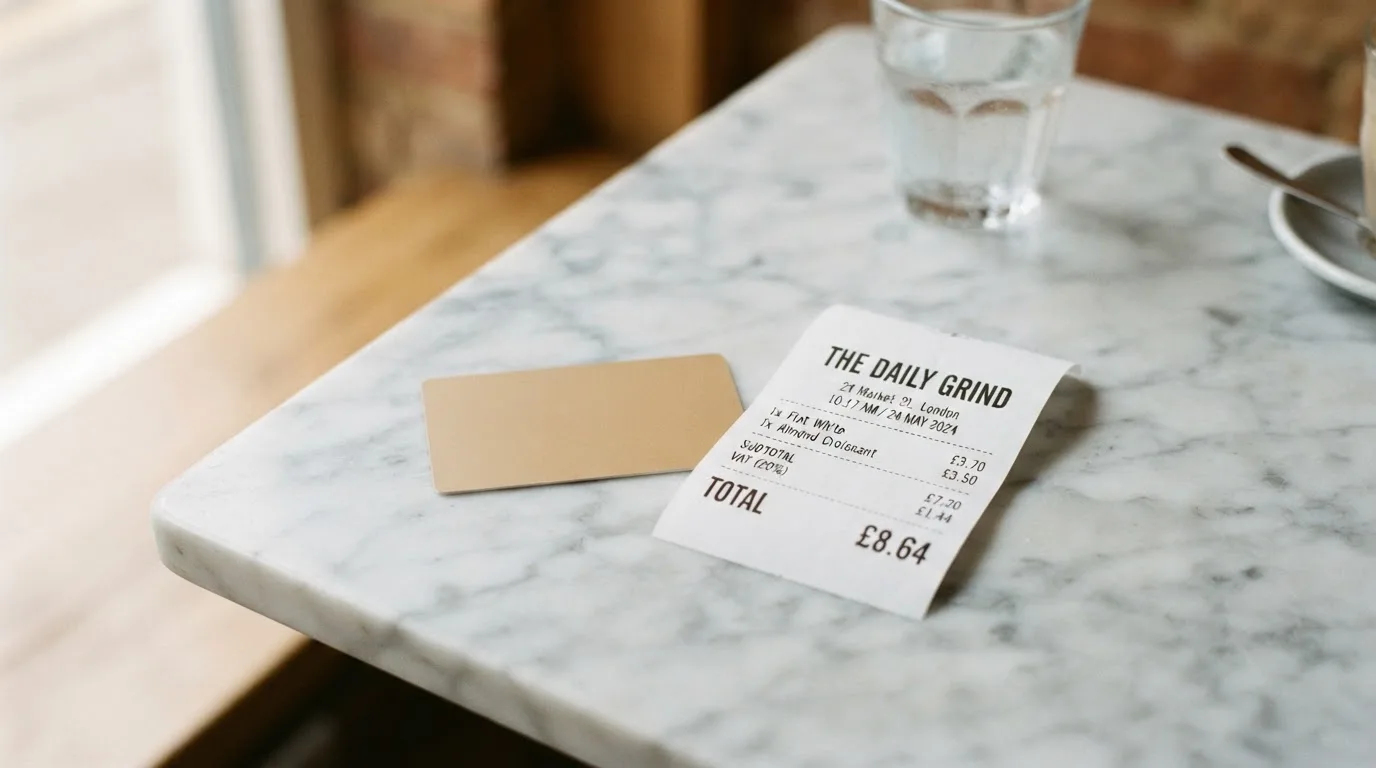
This is the section where I have to flag the gap most clearly. Trade Republic’s own public pricing pages do not disclose the card’s fee amounts. What you will find repeated across the internet — and I include it here only as unofficial, not confirmed by the company — is the schedule in the table below.
| Item | Amount | Source |
|---|---|---|
| Virtual card | 0 EUR | third-party, not confirmed officially |
| Classic card | 5 EUR one-time | third-party, not confirmed officially |
| Mirror card (metal) | 50 EUR one-time | third-party, not confirmed officially |
| Monthly or annual account fee | none reported | third-party, not confirmed officially |
| Foreign-currency surcharge | none reported; official Visa rate said to apply | third-party, not confirmed officially |
| Top-up by card, Apple Pay or Google Pay | 1% of the amount | third-party, not confirmed officially |
| Top-up by SEPA transfer | free | third-party, not confirmed officially |
| ATM withdrawal of 100 EUR or more | free worldwide, at Visa ATMs | third-party, not confirmed officially |
| ATM withdrawal below 100 EUR | 1 EUR | third-party, not confirmed officially |
| Card replacement | same as original price: 5 EUR Classic, 50 EUR Mirror | third-party, not confirmed officially |
Two things above deserve your attention more than the rest. The first is the 1% charge for topping up by card: if you load fifty euros, you pay fifty cents to add it, and if you do that monthly that is a real, recurring number. Use SEPA transfer instead and the same top-up is free — that single switch is the difference between a card that costs you something every month and one that does not. Free withdrawals only start at 100 EUR, and below that you pay a euro each time. So if you travel and make small cash withdrawals, the machine charges you more than a coffee for every note. One more source says there is no cap on the amount or the number of free withdrawals; that is a single third-party claim I could not confirm, and the ATM operator may still charge its own fee on top, which happens everywhere and is not the bank’s doing.
Now let me follow three ordinary payments through this schedule, because a fee table rarely tells you what you will actually pay.
- Coffee in Berlin. You tap the card in a shop in the euro zone. Nothing in the table applies: no conversion, no currency surcharge, no top-up fee because the money is already sitting in your account. You pay the price of the coffee.
- Dinner in a tourist city paid in dollars. Your euro balance is converted at the rate Visa applies, and third parties say there is no markup on top. Whether that rate beats your bank’s is worth checking on the day you travel rather than assuming.
- Topping up 200 EUR by debit card, then spending it. You paid 2 EUR to load, then spent the 200 EUR. The 1% has already happened before a single coffee was bought, and it happened whether you spend the balance or not.
There is a fourth case worth running through, because it is the one people are actually here for. Say you have 200 EUR worth of a supported coin sitting in the account and you buy the 45 EUR dinner directly from it. The company’s press release says spending crypto with the card counts as a sale of that crypto. So the 45 EUR disappears from your coin balance, the transaction is treated as a disposal, and there may be a taxable gain or loss on the difference between what you paid for the coin and its value at that moment — measured in your local currency on the day. Ten such dinners is ten separate disposals. I am not telling you what that means for your tax return; I am telling you the mechanics exist, because almost nobody realises this before they spend the first one.
The second ATM case is worth repeating too, because the threshold is unusual. Free withdrawals only start at 100 EUR, and below that you pay a euro each time. So if you travel and make small cash withdrawals, the machine charges you more than a coffee for every note.
Where I quote figures below, I am quoting third parties, and I mark them as such. This matters more than usual in this category: one example among many is an unofficial claim that the accounts of a Portuguese customer who sent a crypto deposit without a network warning were never credited, in July 2026. That is a single unverified report and not a finding against the company — but it is the kind of thing that gets smoothed over in a marketing summary and is worth knowing before you send anything.
Two cost facts from the company’s own material deserve adding. The company’s press release says that spending crypto with the card counts as a sale of that crypto, which carries tax implications in most countries — I am not going to interpret that for you, but read it as “each card payment may be a taxable disposal”. The help centre also says crypto trading is commission-free, with a third-party cost of 1 EUR per trade. So the money you save on trading you partly give back on the transactions.
Top up: funding the card
The core idea here, and the reason this card exists, came from the company’s own press release: customers can use the crypto they already hold with Trade Republic for card payments. That is the headline. It means the card spends from a crypto balance rather than requiring you to sell first and wait.
What is missing is the detail. Which coins are supported is not stated, and neither the pricing page nor the card page fills that in. There is no published minimum, no published conversion method, no published list of networks. That is a genuine gap rather than a small one, because “spend your crypto” is only useful if you know which of your coins you can actually spend.
Third-party sources report the top-up mechanics for fiat instead: SEPA transfer free, and card, Apple Pay or Google Pay top-up at 1%. Those are the numbers from the cost table above, unconfirmed by the bank. Withdrawals are not stated officially either, which is a strange omission for a bank advertising free ATM withdrawals.
One warning worth carrying with you. Blockchain transfers are irreversible. If you send on a network the provider does not support, or to an address belonging to a different network, the money can be gone and recovery becomes a support ticket with no guarantee attached. There is a real user complaint from July 2026 about exactly this: a Portuguese customer reporting a crypto deposit that never credited, with no network warning given. You do not need to be careless to lose money here; you need only to send USDT on one network when the app expected another.
Paying with it day to day
Everyday use is where this card scores best, and it is the part I would describe as genuinely good.
There are three versions: virtual, Classic, and Mirror, the last being the metal one. The third-party comparison is useful and simple — Mirror differs from Classic only by its metal casing, with the same fees and the same limits. So if you want the metal card, you are paying 50 EUR for the material, not for extra functionality. That is an honest design decision, and at least it is a clear one.
Apple Pay and Google Pay are both supported, with the card added through the app. This matters more than it sounds: tokenised mobile wallets are among the standard safeguards on any card, and the fact that this one supports them properly suggests the bank has done the ordinary security work.
Now the reward, and here the company’s own material and the third parties partly disagree, which is itself informative.
- The card page advertises 1% Saveback on card payments.
- The press release dated 14 November 2025 announces 2% Crypto Saveback on card spend, reinvested into a savings plan, up to 1,500 EUR of monthly spend.
- Third-party reviews describe a 1% Saveback into a savings plan of at least 50 EUR a month, capped at 15 EUR — which is exactly 1% of 1,500 EUR of spending. They also list the usual exclusions: transfers, ATM withdrawals, investments, top-ups, PayPal, gambling and quasi-cash.
- One third-party review says crypto-funded payments earn 2% with a cap of 30 EUR since the end of 2025, which fits the press release’s 2% figure rather than the card page’s 1%.
Read that as a small window of uncertainty rather than a scandal. The likely shape is that ordinary payments earn 1% and crypto-funded payments earn 2%, with a spend cap either side of 1,500 EUR a month. But I want to be honest that the official pages do not reconcile the two numbers, so do not build a budget around the higher one until support tells you which applies to you.
What I could not verify at all: how well the app performs, and what the dispute process looks like if a payment goes wrong. Neither appears in readable official form, and a card is only as good as its chargeback route when something is charged twice or never arrives.
One everyday detail that catches people out, and it is not specific to this card: a declined payment can leave a hold on your funds for several days, in some cases up to seven. It is the reason a card that works perfectly well can still leave you short of money at the wrong moment.
What can go wrong
The complaint picture is genuinely strong, and I want to lead with that rather than bury it.
Trade Republic’s Trustpilot rating stands at 4.6 out of 5 from 67,608 reviews, read on 20 October 2026, with 11% one-star. The visible reviews are mostly positive, and one of them simply says the card works worldwide. I looked for a complaint theme specific to the card and found none. That is not nothing — for a product sold to crypto users, it is a good sign.
The complaints that do exist are about the broker rather than the card: slow or hard-to-reach support, high crypto spreads, and account blocks that are hard to resolve. German press has reported rising numbers of complaints to BaFin. A French blog citing Trustpilot and Reddit puts the sentiment at around 3.3 out of 5 from roughly 33,500 reviews — a much older reading than the current one, and the gap between the two is itself worth noting.
The pattern that concerns me most for a card user is the account block. If your account is frozen, your card stops working, and if your crypto sits inside that account, so does your spending ability. That is the structural weakness of holding both your money and your payment method in one place.
There is also a live example of how rules can change under you: German outlet GIGA reported that Trade Republic changed its Saveback terms and a user lost the 1% reward as a result. I have not been able to read the date of that report. The lesson is not that the bank is dishonest — it is that promotional rates are the first thing to be revised, and a card’s value in your life is often built on the promotion rather than on the card.
A word on the wider category, because it explains why scepticism is not paranoia. Card programmes have been shut down before. Visa terminated its global agreements with FTX on 13 November 2022 and the FTX US debit card was wound down. WaveCrest, a Visa issuer that supplied several crypto card brands, was suspended by Visa in Europe in 2018, closing all of its Visa programmes. Closures follow a pattern: a notice period, then loading stops, then spending stops, then you are asked to withdraw whatever is left. A secondary source reported one such closure in 2026 with loading ending 8 July 2026 and spending stopping 8 August 2026 — single source, unconfirmed, and I include it only as an illustration of the shape rather than as a fact about any particular company.
The company behind the card is Trade Republic Bank GmbH, Brunnenstrasse 19-21, 10119 Berlin, and the card page names Trade Republic Bank as the issuer. The licence and BIN sponsor are not stated in the text I could read. Who you are actually dealing with is a bank with a physical address, which is the main reassurance available here; the risk is not that the issuer vanishes but that your access is restricted.
Three structural points that apply to any card of this kind. A card number starts with an issuer identification number that merchants can look up, and if the issuer country differs from the billing address a shop may apply extra scrutiny — this is the mundane, non-malicious reason a card can be refused somewhere it should have worked. Some merchants decline prepaid or foreign-issued cards for exactly this reason, and address verification, which compares the street number and postcode you type against the issuer’s records, is mainly offered in the US, Canada and the UK and is often unavailable for a foreign-issued card. In the US, digital assets are treated as property, so exchanging them for goods generally produces a taxable gain or loss measured at the value on the transaction date; each card payment funded from crypto can therefore be a separate taxable event. I am not giving tax advice and you should not treat any of this as such — if this matters in your jurisdiction, ask someone qualified before the payments add up.
And one point about who actually controls the coins. On a card like this the crypto sits with the provider’s custodian, not with you, which means your protection is the provider’s promise and its balance sheet rather than your own. That arrangement has a history: custodial platforms have failed badly — roughly US$350 million reported stolen from Mt. Gox between 2011 and 2014, about US$400 million from Coincheck in 2018, US$625 million from the Ronin Network in 2022. I am not suggesting Trade Republic is in that category, and its reputation is much better. I am saying that when you convert a coin into a coffee, you have chosen a counterparty, and that is worth doing consciously.
What to take instead
If the Trade Republic card does not fit — because of where you live, because you want custody, because you want published limits — these are the three I would look at, with the same candour about what I could and could not confirm.
| Trade Republic | RedotPay | Bitpanda | Wirex | |
|---|---|---|---|---|
| My score | 7.2 / 10 | 6.9 / 10 | 6.5 / 10 | 6.7 / 10 |
| Issuer basis | German bank | Not stated in what I read | Not stated in what I read | Regional |
| Card form | Virtual, Classic, metal Mirror | Virtual and physical | Physical Visa debit, EUR only | Virtual and physical |
| Published eligibility | Not stated | Yes, two official lists | Residence in euro-area country | No official country list read |
| Card application cost | 0 / 5 / 50 EUR (unofficial) | 10.00 USD virtual, 100.00 USD physical | Free first shipment | Free in listed regions |
| Ongoing fee | None reported | No maintenance fee; Pro tier 12.90 USD monthly | Not stated | No annual fee reported |
| Crypto spending | Yes, coin list not stated | On-chain deposit plus in-app purchase | Chosen main asset converted to EUR | Cash, stablecoins and crypto |
| Main catch | Nothing published | Exclusion lists include Russia, Belarus, Ukraine | Euro area only, one card | Terms vary by region |
RedotPay is the interesting one for anyone outside the EU, and also the one requiring the most care. It is the only one of the three that publishes proper eligibility lists — two of them, in fact, and they do not say the same thing. The identity-verification list states that citizens of the listed countries cannot complete verification or use the service, and it includes Russia, Belarus and Ukraine, alongside Iran, North Korea, Syria, Cuba and others, with the reasoning given as local regulation and sanction policy rather than anything about individuals. A second list, dated 28 August 2026 and covering 47 places, adds India, Indonesia, Morocco, Nepal, Singapore and Turkey and says residents there cannot get either virtual or physical cards and cannot use those addresses for billing. Georgia, Armenia, Kazakhstan and the UAE appear on neither list. Pricing is heavier: 10.00 USD for a virtual card, 100.00 USD for a physical one, non-refundable once paid, plus a 1.00% crypto conversion fee and 1.20% in a non-default currency. In exchange you get one of the few genuinely readable fee schedules in this category.
Bitpanda requires a verified account and residence in a euro-area country, and users verified through a route called Bankident cannot order the card at all. It is a physical Visa debit card in euros, one active card at a time, with free first shipment and a reissue charge. Its own pages do not reconcile the cashback rate — the body says 1% on crypto spending, the summary says “up to 2%” — which is a small but telling version of the documentation problem that runs through this whole category.
Wirex is the vaguest of the three. Availability “depends on your region”, and the official supported-countries page returned an error when I looked, so there is no official country list to check. Its own terms for Singapore bar cash withdrawals and transactions with prohibited countries. The fee pages are published by region, the metal card carries an order fee of 45 GBP in the UK, and the Cryptoback scheme pays between 0.5% and up to 8% depending on tier — the largest headline reward here, and the one with the longest list of merchant categories that do not qualify.
The honest comparison is that RedotPay publishes and the others do not, Bitpanda is the most restrictive on residency, and Wirex has the most attractive advertised reward with the least visible eligibility information. If your priority is knowing exactly where you stand before you move money, RedotPay’s documentation is currently the best of the three.
Who I would recommend it to
I would recommend this card to someone who already has a Trade Republic account, keeps savings there without drama, lives in the EU, and holds crypto they are comfortable having converted at the moment of payment. For that person it is a good, cheap, well-built everyday card that happens to be able to spend coins — and 7.2 out of 10 is a fair expression of that.
I would not recommend it as your only card. Not because it is unreliable — the ratings argue against that — but because your spending ability and your crypto would sit inside one account, subject to one set of terms and one company’s support desk, in an industry that has a documented history of programmes closing and rewards being revised.
And if you are reading this from outside the EU, which is where much of the interest in foreign cards comes from, the answer is that the public information is not there. The bank does not publish who qualifies, the limits are not published, the supported coins are not listed, and the fee amounts come from third parties. I would not open an account on the strength of a review, including this one. I would ask their support your specific questions and see how the answers come back.
Frequently asked questions
What actually is the Trade Republic card?
It is a payment card issued by Trade Republic Bank GmbH, a bank in Berlin, and offered inside a broader investing app that also covers savings plans, shares and funds. The card comes in virtual, Classic and metal Mirror versions. Its distinguishing feature, per the company’s own press release of 14 November 2025, is that crypto held with Trade Republic can be used directly for card payments rather than needing to be sold first. The card network is not stated in the readable official text.
Do I need KYC to get it?
Almost certainly yes — every licensed bank in the EU is required to verify customers and screen them under anti-money-laundering rules, which in practice means name, address, date of birth, nationality and identity documents, plus a sanctions check. What I could not find is Trade Republic’s own published description of its verification process, so the specific documents and steps are not something I can walk you through from public sources.
Is Trade Republic a bank, and who is behind it?
The card issuer is Trade Republic Bank GmbH, listed at Brunnenstrasse 19-21, 10119 Berlin, and the card page names Trade Republic Bank as issuer. So the entity behind the card is a bank with a physical address, not an anonymous fintech. The licence details and the BIN sponsor are not stated in the text I could read, and the wider group structure is not something the public card pages explain.
Is the Trade Republic card really free?
The figures you see everywhere come from third parties, not from the bank: a 0 EUR virtual card, 5 EUR one-time for Classic, 50 EUR one-time for the metal Mirror, and no annual or monthly fee. Official pages do not disclose the amounts. The one cost that genuinely bites is the 1% for topping up by card, Apple Pay or Google Pay — a SEPA transfer is reported free, and that switch alone can save you the fee every month.
Can I use the card in my country?
That depends on where you live, and the bank does not publish a country list. Russia and Belarus are not mentioned either way in the readable pages. Georgia, Armenia and Kazakhstan are not EU member states and should be treated as outside the product. If you are a Russian or Belarusian citizen legally resident in Germany or the Netherlands, your residence and documents are what get assessed — nationality is screened separately under EU rules. Do not expect an exception.
How do I top the card up from crypto?
You spend the crypto you already hold with Trade Republic directly, which is the whole point of the card. Which coins are supported, the minimum amounts and the conversion method are all not stated officially. For fiat, third-party sources report SEPA transfers as free and card, Apple Pay or Google Pay top-ups at 1%. Whatever you send on-chain, check the network carefully: transfers are irreversible and one 2026 complaint involved a deposit sent without a network warning and never crediting.
Does it work with Apple Pay and Google Pay?
Third-party German sources say both are supported and the card is added through the app, which is consistent with the card page offering a customer service link and the bank being an ordinary EU issuer rather than an experimental one. I could not confirm the wallet support from readable official text, so treat it as likely but check it yourself in the app when you sign up.
What are the daily and monthly spending limits?
I cannot give you these. The limits are not stated on the official card page, and the only figures I found are unofficial: 1,500 EUR per day and 6,000 EUR per week, with no separate point-of-sale limit given, from a single third-party source. If your spending pattern runs to more than that, ask support before you rely on the card for anything large.
Is it safe, and can I get my money back if something goes wrong?
Safety here means two different things. The issuer is a regulated bank with a Berlin address and a 4.6 out of 5 Trustpilot rating from 67,608 reviews, which is reassuring. But the category carries history — Visa ended FTX’s agreements in November 2022, and WaveCrest’s Visa programmes were suspended in 2018. Support and account blocks are the recurring complaints. If a payment goes wrong, the dispute process is not documented publicly, which is the gap I would want closed first.
Is the cashback worth choosing this card for?
Possibly, but read the numbers carefully. The card page advertises 1% Saveback on card payments, while the November 2025 press release announces 2% Crypto Saveback up to 1,500 EUR of monthly spend. Third parties describe 1% capped at 15 EUR a month, with one review claiming 2% capped at 30 EUR for crypto-funded payments since the end of 2025. Payments to transfers, ATM, investments, top-ups, PayPal and gambling are excluded. And GIGA reported the terms being changed in a way that cost one user the 1% — so treat the reward as a bonus, not the reason.
Written by the editors at Crypto Card Rating.